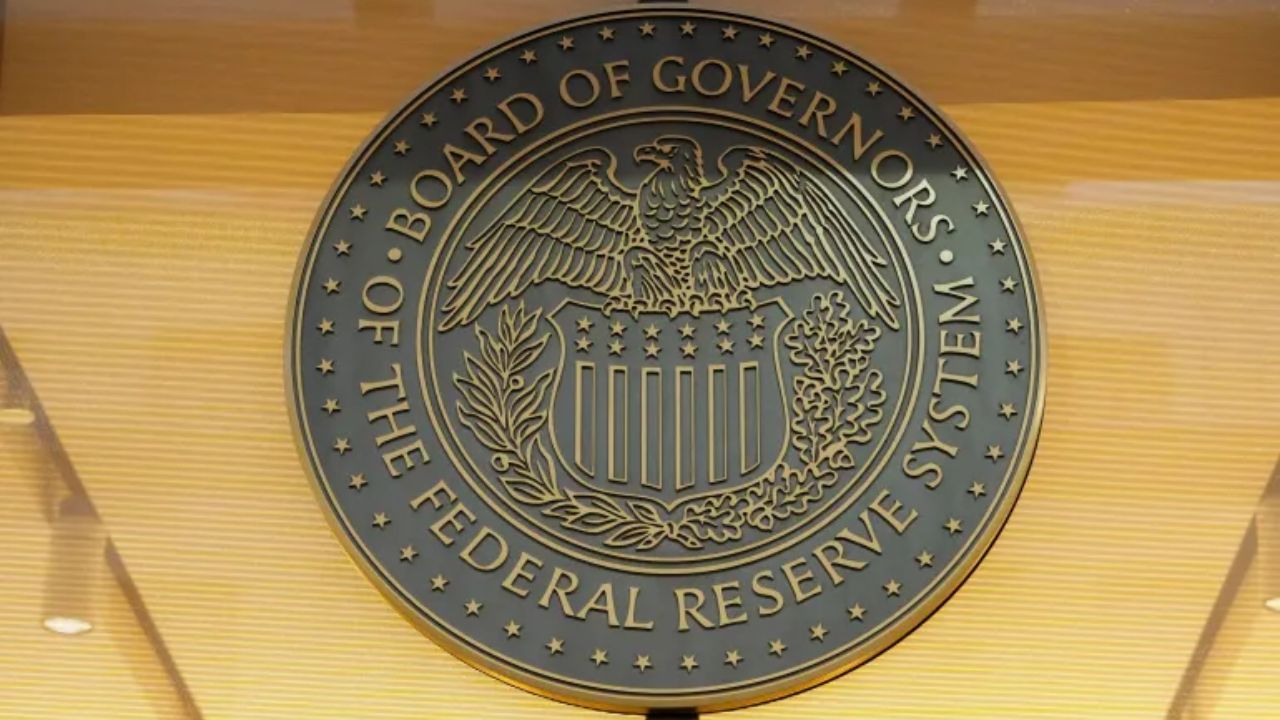
Avoiding any surprise for global markets, the Jerome Powell–led Federal Open Market Committee (FOMC) on December 10 announced its third consecutive interest-rate reduction, lowering the federal funds rate to 3.50%–3.75%, the lowest level since 2022. The move follows quarter-percentage-point cuts in September and October, taking the total rate reduction to 75 basis points for the year.
The December decision was not unanimous. Nine of the 12 voting members supported the rate cut, while one member pushed for a deeper 50-basis-point reduction. However, policymakers remained divided on the outlook for 2025, with various projections indicating anything from one to several rate cuts next year.
Despite easing policy, the Fed reiterated that the path ahead hinges on economic data, noting conflicting indicators—slowing employment momentum alongside lingering inflation pressures.
“Job gains have cooled this year, and unemployment has edged up. At the same time, inflation has climbed from earlier lows and remains somewhat elevated,” the FOMC said. The next policy review is set for January 27–28.
Economists React: ‘No Risk-Free Path’
Jeffrey Roach, Chief Economist at LPL Financial, noted that the Fed appears to be counting on productivity improvements to support economic growth even as job creation moderates.
“With stronger growth projections and lower unemployment estimates, the Fed will remain focused on the inflation battle. Investors should anticipate a pause in the first quarter, with the next cut likely in Q2,” Roach said.
Some analysts believe the latest move may mark the end of the current easing streak. Charlie Ripley of Allianz Investment Management highlighted the challenge before the Fed, pointing to dissent within the committee and structural shifts in the labour market that may limit the benefits of further easing.
“This could potentially be the last cut under Chair Powell. The next leadership at the Fed will face an equally difficult balancing act,” Ripley added.
Impact on Indian Markets: Only Mild Ripples Expected
Market watchers in India expect the Fed’s decision to have limited influence on domestic equities, largely because the rate cut was widely anticipated and the central bank did not offer a clear forward-guidance signal.
“Indian markets are unlikely to react meaningfully. Liquidity is strained by a heavy pipeline of IPOs, and this needs to ease before the indices can gain strength,” said G. Chokkalingam, founder of Equinomics Research.
Typically, a dovish Fed weighs down the US dollar and Treasury yields, improving the outlook for foreign inflows into emerging markets. Following the policy announcement, the dollar index slipped 0.25% to 98.54, while US 10-year yields remained largely unchanged—suggesting only a moderate impact on Indian equities.
VK Vijayakumar, Chief Investment Strategist at Geojit Financial Services, pointed out that the latest Fed dot plot continues to indicate gradual easing through 2026 and 2027, but the unusual 9–3 split vote underscores growing divergence within the Fed.
“While the market sees this as a balanced outcome, the absence of recent US inflation data—due to the government shutdown—adds uncertainty. For India, the direct impact will remain small. Domestic issues such as sustained FII selling and weak corporate earnings over the last six quarters are exerting more pressure,” he said.
Bottom Line
With India’s market narrative currently driven by local earnings trends, liquidity conditions, and developments like the emerging US–India trade discussions, the Fed’s latest move is expected to create only a muted ripple in Indian equities. The broader direction for domestic markets is likely to be shaped more by internal fundamentals than external policy shifts in the near term.
About the Author
