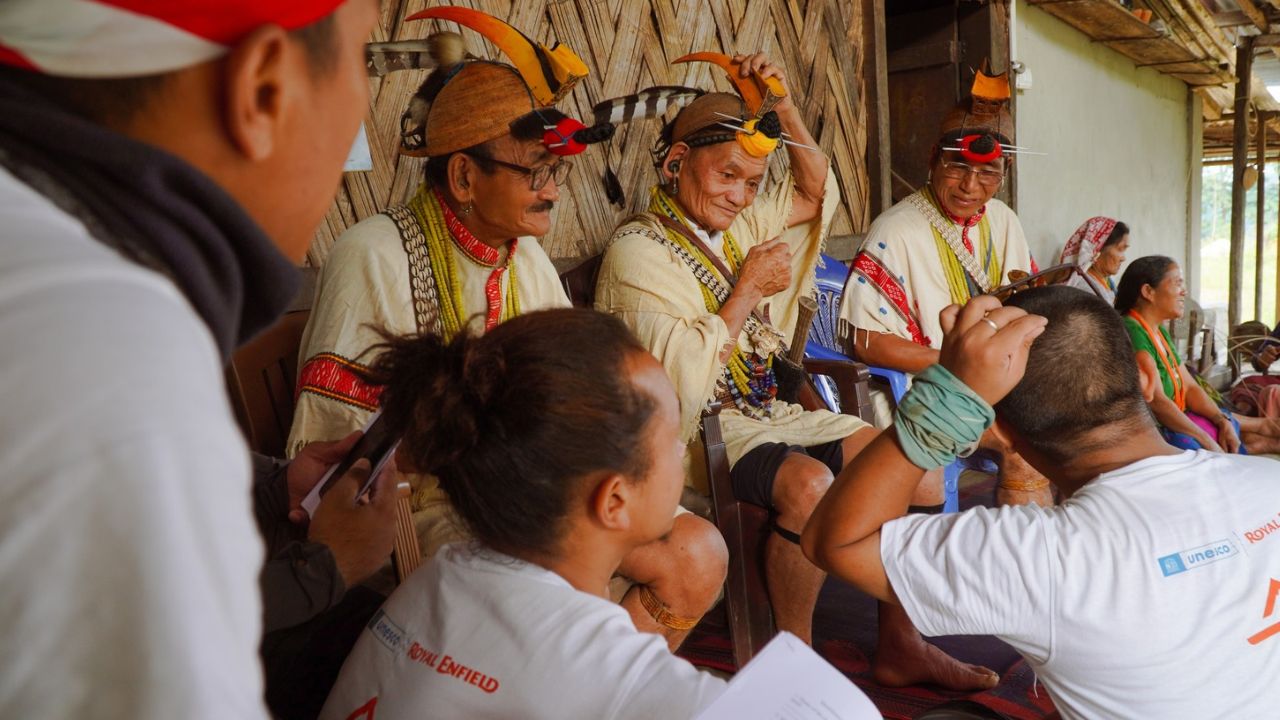
New Delhi, October 13, 2026: Royal Enfield Social Mission (RESM), the Wikimedia Foundation and the International Institute of Information Technology Hyderabad (IIIT Hyderabad) have signed a tripartite Memorandum of Understanding (MoU) to digitally preserve and promote the Intangible Cultural Heritage (ICH) of the Indian Himalayan Region.
The collaboration aims to create an open-access digital repository of Himalayan cultural traditions, making valuable knowledge freely available to audiences worldwide through Wikimedia platforms, including Wikipedia and Wikimedia Commons.
Under the partnership, nearly 1,000 high-resolution photographs, videos and research resources covering more than 150 intangible cultural heritage practices will be made publicly accessible through Wikimedia Commons.
IIIT Hyderabad, through its Open Knowledge Initiatives (OKI) programme, will provide technical assistance and training to Wikimedia volunteers, enabling them to contribute to, manage, and expand this cultural knowledge across multiple Indian-language Wikimedia projects.
The announcement comes ahead of International Intangible Cultural Heritage Day, observed on October 17, highlighting the importance of safeguarding traditional knowledge, cultural expressions and community practices for future generations.
Preserving Over 150 Himalayan Cultural Traditions
The initiative builds on Royal Enfield Social Mission’s flagship programme, The Great Himalayan Exploration (TGHE), developed in collaboration with UNESCO.
Since 2022, the programme has documented more than 150 intangible cultural heritage practices across the Eastern and Western Himalayas.
These traditions include indigenous knowledge, cultural expressions, traditional skills and community practices passed down through generations.
The ongoing documentation initiative currently covers 11 geographical regions: Ladakh, Himachal Pradesh, Uttarakhand, Sikkim, Arunachal Pradesh, Meghalaya, Mizoram, Tripura, Nagaland, Assam and North Bengal.
The programme aims to expand its coverage to all Himalayan states and union territories in India.
Royal Enfield Emphasises Community-Led Heritage Preservation
Bidisha Dey, Executive Director of the Eicher Group Foundation, highlighted the importance of preserving Himalayan traditions while ensuring that local communities remain central to the documentation process.
She explained that Royal Enfield Social Mission has been working with UNESCO since 2022 to document the intangible cultural heritage of Himalayan communities.
According to Dey, these practices are deeply connected to community identity, intergenerational knowledge and climate adaptation.
She emphasised that cultural preservation must extend beyond documentation to include publications, audiovisual storytelling, exhibitions and wider public engagement.
The partnership with Wikimedia will help bring this knowledge to global audiences while maintaining open access and supporting long-term cultural continuity.
Wikimedia Foundation to Expand Global Access to Himalayan Knowledge
The Wikimedia Foundation will play a central role in making the documented heritage accessible through its global knowledge-sharing platforms.
Wikimedia Commons is a freely accessible media repository where contributors can upload photographs, videos, audio recordings and other resources under free licences.
These materials can also support Wikipedia articles, allowing readers around the world to discover and understand Himalayan cultural traditions.
Praveen Das, Lead Regional Partnerships, South Asia at the Wikimedia Foundation, stressed that cultural preservation is not simply about documenting the past but also about ensuring that communities and their knowledge remain represented in the future.
He noted that the Himalayan region possesses a remarkable wealth of living traditions and indigenous knowledge that remain underrepresented online.
The collaboration aims to address this gap by enabling wider access to information about Himalayan communities and their efforts to preserve traditional practices.
IIIT Hyderabad to Support Multilingual Digital Documentation
IIIT Hyderabad will contribute technical expertise through its Open Knowledge Initiatives programme to support the integration of Himalayan heritage documentation into Wikimedia projects.
The institute will assist with uploading multimedia resources, engaging volunteer contributors, and expanding content across Indian-language Wikipedia editions.
Training workshops and collaborative editing events, known as edit-a-thons, will also be organised to encourage participation from Wikimedia volunteers and local-language communities.
Tanveer Hasan, Chief Architect of Open Knowledge Initiatives at IIIT Hyderabad, said the collaboration brings together knowledge, technology and India’s diverse linguistic communities.
He expressed hope that the partnership would encourage more people to contribute to and enrich Himalayan cultural knowledge in their own languages while strengthening community participation in how local heritage is represented globally.
Promoting Open Knowledge and Sustainable Cultural Preservation
A key objective of the partnership is to ensure that Himalayan cultural heritage remains accessible, inclusive and community-driven.
The three organisations will support ongoing capacity-building programmes, technical training sessions and community edit-a-thons to strengthen the participation of Wikimedia contributors.
By combining Royal Enfield Social Mission’s cultural documentation efforts, the Wikimedia Foundation’s global knowledge-sharing infrastructure and IIIT Hyderabad’s technical expertise, the initiative seeks to establish a sustainable model for preserving and sharing living heritage.
The partnership also recognises the importance of traditional knowledge in understanding local ecosystems, climate adaptation and community resilience.
A Step Towards Protecting India’s Living Heritage
The collaboration represents an important effort to connect traditional cultural knowledge with modern digital platforms.
Making Himalayan heritage resources freely accessible in multiple Indian languages can help researchers, students, cultural practitioners and the wider public engage with traditions that might otherwise remain difficult to access.
As the initiative expands, it is expected to support greater awareness of the Indian Himalayan Region’s cultural diversity while empowering local communities to participate in documenting and sharing their own heritage.
Through open-access technology and community participation, the three organisations aim to help preserve Himalayan cultural knowledge for future generations.
About the Author
