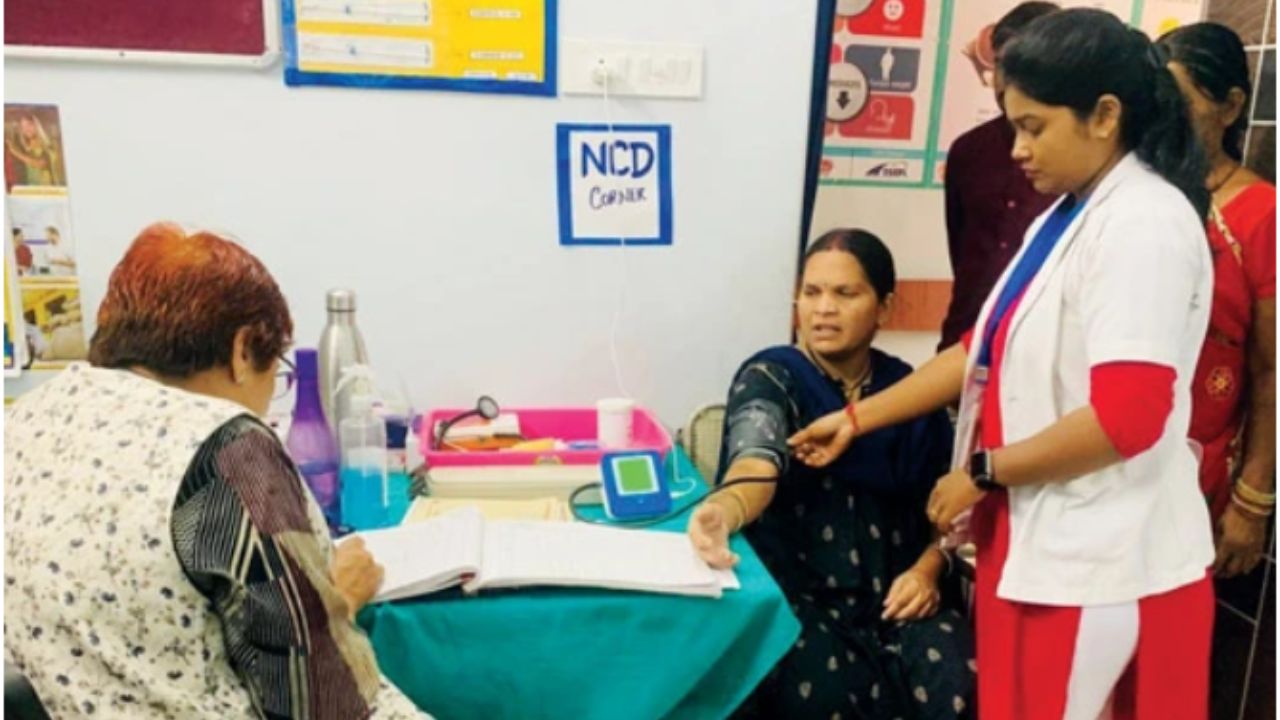
When digital health systems were introduced at primary healthcare levels, not everyone felt prepared to embrace the change. In Shivaji Nagar, Durg district of Chhattisgarh, Auxiliary Nurse Midwife Gomtee Sinha found herself standing at the intersection of healthcare delivery and unfamiliar technology.
The launch of the National Non-Communicable Disease (NCD) portal by the Government of India was aimed at strengthening the screening and management of chronic conditions such as diabetes and hypertension. While the intent was clear, for frontline health workers like Mrs. Sinha, who had spent years relying on manual registers and face-to-face reporting, the shift initially felt overwhelming.
Limited exposure to digital tools made her hesitant. The portal seemed complex, and the fear of making errors added to her anxiety. Yet, recognising that technology could play a vital role in improving community health outcomes, structured support was put in place.
Through regular hand-holding, training sessions, and ongoing encouragement under a non-communicable disease project supported by Tata Trusts, Mrs. Sinha gradually gained confidence. The training focused not only on how to operate the portal, but also on why digital record-keeping mattered for patient care.
Over time, the NCD portal became an integral part of her daily work. What once felt intimidating turned into a powerful ally. Patient records could now be digitally maintained, screenings conducted more systematically, and follow-ups scheduled without relying on memory or paperwork. The system enabled the timely identification of high-risk cases and ensured the continuity of care for patients living with chronic illnesses.
For the community she serves, the impact has been tangible. Patients now experience more organised screenings, consistent follow-ups, and quicker referrals when required. For Mrs. Sinha, the journey marked a personal transformation-from hesitation to confidence, from manual burden to digital efficiency.
Her story reflects a broader shift underway in India’s public health system, where empowering frontline workers with the right digital tools and training is strengthening healthcare delivery at the grassroots. By bridging the gap between technology and human care, initiatives like these are ensuring that digital solutions translate into real-world health benefits, one health worker and one patient at a time.
About the Author
