
At 13, Ronjali Boro had already learned what responsibility meant-just not in the way a child should. Living in Charan Janghal village in Assam’s Baksa district, her mornings were no longer about lessons or school bells. Instead, they revolved around escorting her younger step-brother to school. After completing Class 7, Ronjali quietly slipped out of the education system, her own schooling sacrificed to household duties.
Not far away, in Mahendra Nagar village, 10-year-old Sujit Barman made a different but equally final decision. With no immediate pressure forcing him to earn or work, Sujit simply stopped attending school. Learning no longer interested him, and no one around him seemed able to change his mind.
Ronjali and Sujit are not exceptions. They represent a troubling reality across Assam, where thousands of children fail to complete elementary education. Poverty, domestic responsibilities, weak academic foundations, and limited awareness about the long-term value of schooling all contribute to the state’s high dropout rates. For many families, survival today outweighs the promise of education tomorrow.
Rekindling the Desire to Learn
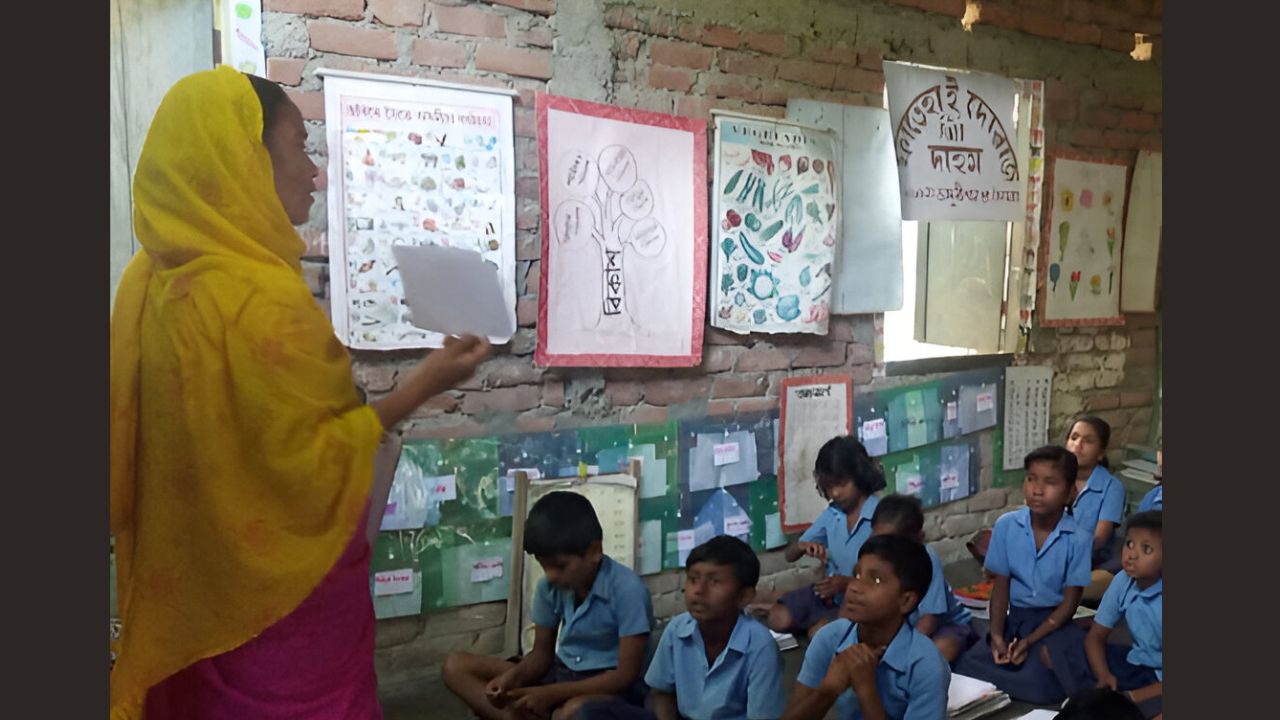
Recognising that dropout is as much a social issue as an academic one, a state-level education initiative was launched in 2019 to address the problem at its roots. The programme focuses on identifying out-of-school children, engaging with their families, and rebuilding children’s confidence in learning through structured motivational camps and remedial education.
When facilitators first encountered Ronjali, she was on her way back from dropping her step-brother at school. Conversations with her family revealed hesitation and deep-rooted constraints rather than outright opposition to education. After sustained dialogue, Ronjali was allowed to attend a motivational camp. What followed surprised everyone involved-she participated eagerly, displaying curiosity, leadership, and enthusiasm that had long been suppressed by circumstance.
Yet, returning to school was not immediate. Ronjali was still expected to manage household responsibilities. It took collective intervention, facilitators working alongside the local school headmaster and community members-to finally shift perceptions at home. In March 2021, Ronjali was enrolled in a residential girls’ school in Nagrijuli, reclaiming her place in the classroom.
Changing Mindsets, One Family at a Time
For some children, fear rather than poverty stands in the way of education. Deepak Lal Choudhury’s mother had withdrawn him from school after he was injured in a fight. Concerned for his safety, she stopped allowing him to interact with other children altogether. It took patience and repeated engagement from an education facilitator to reassure her that school could be a safe and nurturing environment.
Deepak’s participation in a motivational camp marked a turning point. Encouraged by his confidence and engagement, his mother agreed to re-enrol him. Today, Deepak attends school regularly and is slowly rebuilding both his academic and social confidence.
Sujit Barman’s story followed a similar arc. Once indifferent to learning, his exposure to a residential training environment helped him rediscover interest in studies. Removed from distractions and supported through structured learning, Sujit no longer talks about dropping out.
Choosing Education Over Income
Economic shocks, particularly during the Covid-19 pandemic, pushed many children into the workforce. Mir Alom was one of them. With no access to digital devices for online classes and a sharp decline in household income, Mir was sent to work at a local tea stall. School became an unaffordable luxury.
Intervention came through sustained counselling with Mir’s father and a short motivational camp that helped rebuild trust in the education system. Mir was eventually re-admitted to school and is now attending classes regularly, back on track with his peers.
Impact Beyond Numbers
Over the last three years, the initiative has worked across 90 schools in 121 villages spanning four districts of lower Assam-Baksa, Bongaigaon, Goalpara, and Nalbari. More than 1,200 children have been successfully brought back into formal schooling, while nearly 6,000 students have received remedial academic support.
But the real impact lies beyond statistics. It is found in children like Ronjali, Sujit, Deepak, and Mir-each representing a reclaimed future. Their journeys underscore a simple yet powerful truth: when communities, educators, and families work together, education can once again take priority over circumstance.
In a state where dropping out has long felt inevitable for many, these stories offer something rare and essential-proof that change is possible, one child at a time.
About the Author
