
In late 2025, the United States unveiled a new strategic framework quietly but decisively shaping the future of global technology supply chains: Pax Silica. Framed as a cooperative initiative to secure silicon, critical minerals, semiconductors, and artificial intelligence infrastructure, Pax Silica reflects a deeper shift in geopolitics-where control over materials and processing capacity is as important as military power or financial dominance.
Just as the term Pax Americana once described a U.S.-led global security order, Pax Silica represents an emerging tech-industrial order, anchored in trusted supply chains, resilient mineral access, and allied manufacturing ecosystems. At its core lies silicon-the foundational material of semiconductors, solar energy, data centres, AI chips, and digital infrastructure.
For India, Pax Silica presents both a strategic signal and a strategic gap. India is not among the founding signatories, yet it sits at the intersection of global manufacturing ambitions, Global South leadership, and multipolar diplomacy. The question is not whether India should join Pax Silica-but how India should respond, and whether it should simultaneously build a parallel, inclusive mineral ecosystem for the Global South, much as UPI reshaped global digital payments.
What is Pax Silica?
Pax Silica is a U.S.-led multilateral initiative aimed at securing supply chains for:
- High-purity silica and silicon
- Semiconductors and advanced chip manufacturing
- AI hardware and data-centre infrastructure
- Critical minerals required for clean energy and digital systems
The initiative is coordinated by the U.S. Department of State, in collaboration with economic, trade, and technology agencies. Unlike traditional trade agreements, Pax Silica is not a tariff-focused pact. It is a strategic coordination framework covering:
- Trusted sourcing of raw materials
- Secure processing and refining
- Joint investment and R&D
- Export-control alignment
- Infrastructure security standards
The underlying logic is simple: technological leadership cannot survive without supply-chain control.
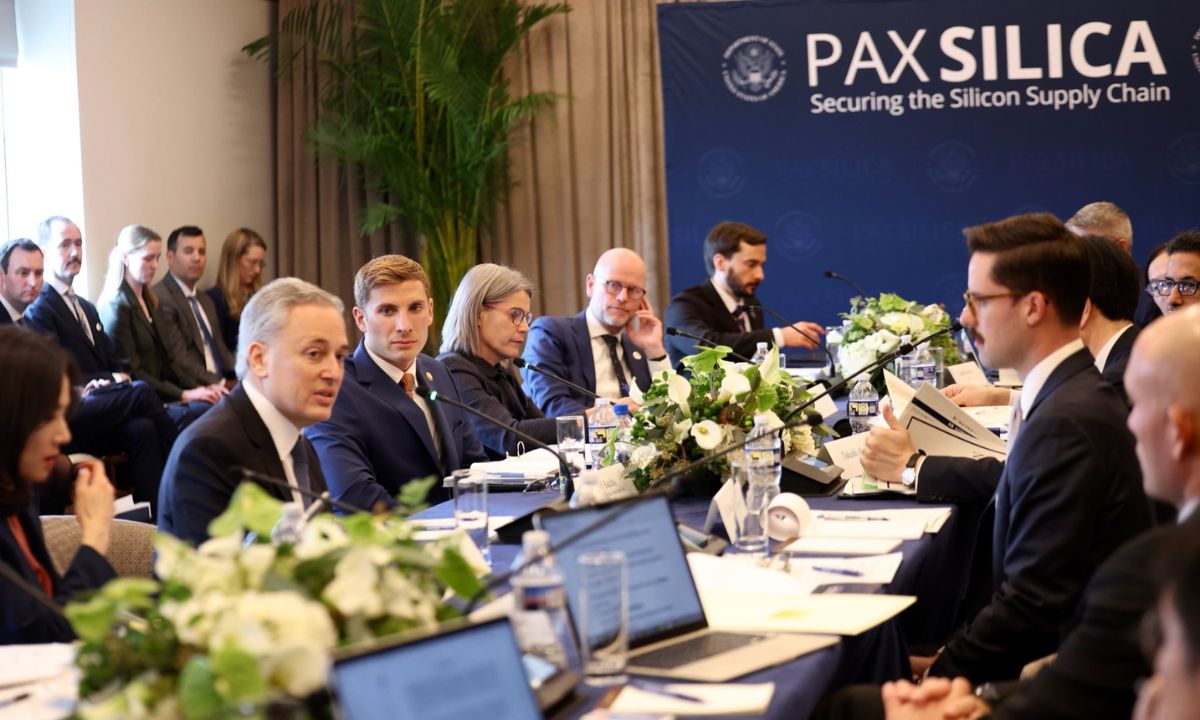
Countries Involved in Pax Silica
The founding and core participants in Pax Silica reflect U.S. alliance structures in technology and security:
- United States
- Japan
- South Korea
- Australia
- United Kingdom
- Singapore
- Israel
- Netherlands (engaged through semiconductor supply chains)
- Select European Union partners (observer/sectoral role)
These countries collectively dominate:
- Semiconductor design (US, UK, Israel)
- Advanced fabrication and equipment (Japan, Netherlands, South Korea)
- Mineral extraction and logistics (Australia)
- Data-centre and AI ecosystems (US, Singapore)
Notably, China and Russia are excluded, and India is not a founding member, though discussions are ongoing.
Taiwan Factor: Why the U.S.-Taiwan Silicon Axis is Central
No discussion of Pax Silica is complete without Taiwan.
The U.S. State Department’s Taiwan Fact Sheet repeatedly underscores Taiwan’s role as a linchpin of global semiconductor manufacturing, producing over 60% of the world’s chips and nearly all advanced nodes below 5nm.
Key points from U.S. policy documents include:
- Taiwan as a “trusted technology partner”
- Strategic cooperation on semiconductor resilience
- Joint efforts to prevent supply-chain coercion
This places Pax Silica within a broader U.S.–Taiwan–Japan–South Korea technology arc, designed to de-risk dependence on any single geography-while simultaneously reducing China’s leverage in critical technologies.
For India, this has two implications:
- Strategic sensitivity: Any deep alignment with Pax Silica must consider India’s delicate China equation.
- Industrial opportunity: As companies seek diversification beyond Taiwan, India can position itself as a processing and packaging hub-if policy moves fast enough.
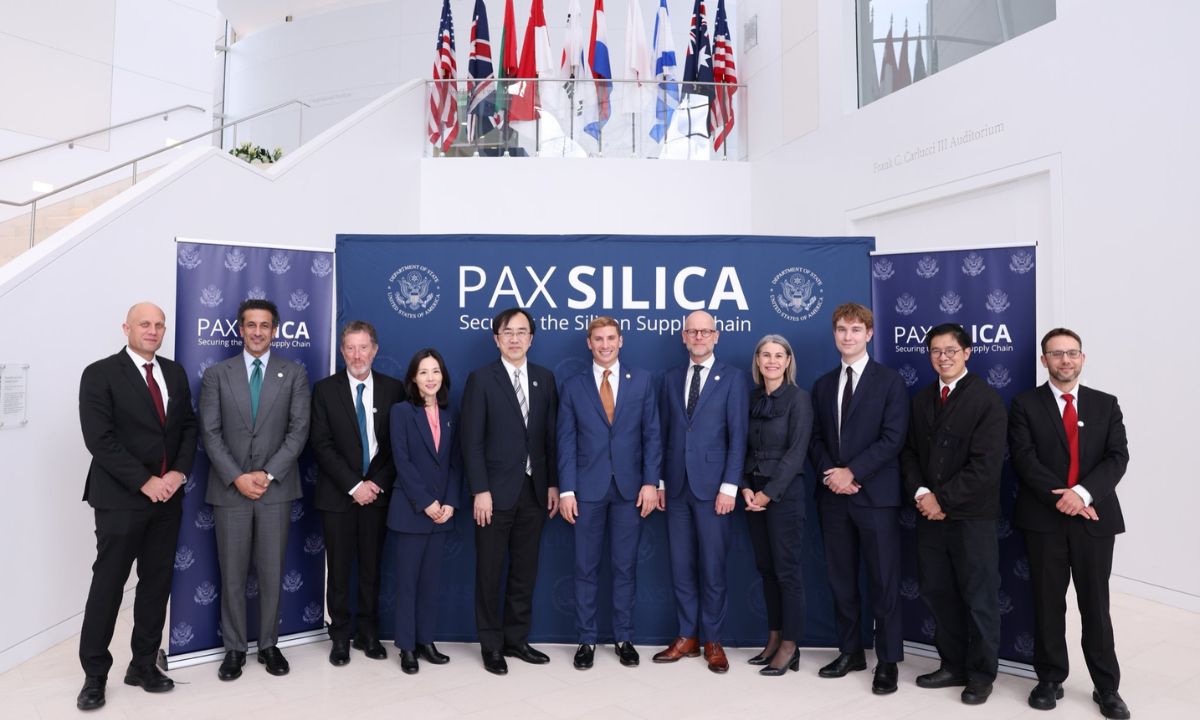
Why Pax Silica is Not Just About Silicon
Despite its name, Pax Silica is not limited to silica or silicon alone. It represents a systems approach to future power:
- Silicon → chips → AI → economic competitiveness
- Minerals → clean energy → climate leadership
- Data centres → digital sovereignty → national security
In this sense, Pax Silica mirrors financial systems like SWIFT or card networks-except this time the infrastructure is physical, material, and industrial.
This is precisely why India’s response must be structural, not reactive.
India’s Strategic Position: Outside the Room, But Not Out of the Game
India’s absence from the founding group has triggered debate, but it also reflects India’s long-standing preference for strategic autonomy.
India currently faces three structural challenges:
- Import dependence for high-purity silicon, wafers, and advanced semiconductor inputs
- Limited domestic processing capacity, despite mineral availability
- Fragmented Global South supply chains, where raw materials are exported but value addition happens elsewhere
At the same time, India holds three major advantages:
- A massive domestic market for electronics, energy, and AI
- Strong diplomatic credibility across the Global South
- Proven capability to build alternative global infrastructure, as demonstrated by Unified Payments Interface
Learning from UPI: A Blueprint for Mineral and Silicon Sovereignty
UPI did not defeat Visa or Mastercard by confrontation. It succeeded by offering:
- Low cost
- Open standards
- Interoperability
- Sovereign control with global scalability
India can apply the same philosophy to critical minerals and silicon.
Instead of merely joining Pax Silica, India can design a parallel but compatible ecosystem-one that serves the Global South while remaining open to cooperation with the West.
Case for a Parallel Global South Mineral Ecosystem
India is uniquely positioned to anchor a Global South–oriented mineral and processing framework, working with:
- BRICS
- African mineral-rich economies
- ASEAN manufacturing hubs
- Middle-East energy and logistics partners
Such a framework would focus on:
- Joint processing and refining (not just extraction)
- Long-term offtake agreements
- Technology transfer and skills development
- Green processing standards
- Local value creation
This would correct a historic imbalance where the Global South exports raw materials but imports finished technology at a premium.
Cooperation with Russia and China: A Realist, Not Ideological, Approach
India’s cooperation with Russia and China in minerals should be selective and pragmatic, not ideological.
- Russia offers energy security, metallurgy expertise, and Arctic logistics routes.
- China dominates mineral processing and refining capacity.
India does not need to replicate China’s model-but it can learn from its scale, while ensuring diversification and safeguards.
This dual-track diplomacy-engaging Pax Silica on technology while working with BRICS on resources-allows India to hedge risks without choosing sides.
Policy Pillars for India’s Pax Silica Response
- Domestic Processing First
India must prioritise:
- High-purity silica processing
- Polysilicon and wafer manufacturing
- Semiconductor packaging and testing
Mining without processing only deepens dependency.
- A “Silicon for Development” Initiative
India can propose a Global South framework focused on:
- Affordable chips
- Clean-energy materials
- Digital infrastructure for emerging economies
This reframes minerals as development tools, not geopolitical weapons.
- Standards, Not Sanctions
Rather than exclusion, India should push:
- Open technical standards
- Interoperable certification
- Green and ethical sourcing norms
This keeps India aligned with its non-aligned tradition.
Risks and Constraints
India must also be realistic:
- Capital intensity of fabs and processing plants
- Technology access restrictions
- Geopolitical pressure from multiple blocs
But these risks are manageable with sequencing, partnerships, and policy clarity.
Way Forward: Strategic Autonomy Through Capability
Pax Silica is not a threat to India-it is a signal.
It signals that:
- The world is moving from free trade to trusted trade
- Materials matter as much as markets
- Infrastructure is power
India’s answer should not be reactive alignment, but capability creation.
Just as UPI gave India leverage in global fintech conversations, a Global South–focused mineral and silicon ecosystem can give India long-term influence in the next technological era.
The future will not belong solely to those who control capital or code-but to those who control materials, standards, and trust.
India still has time to shape that future.
About the Author
