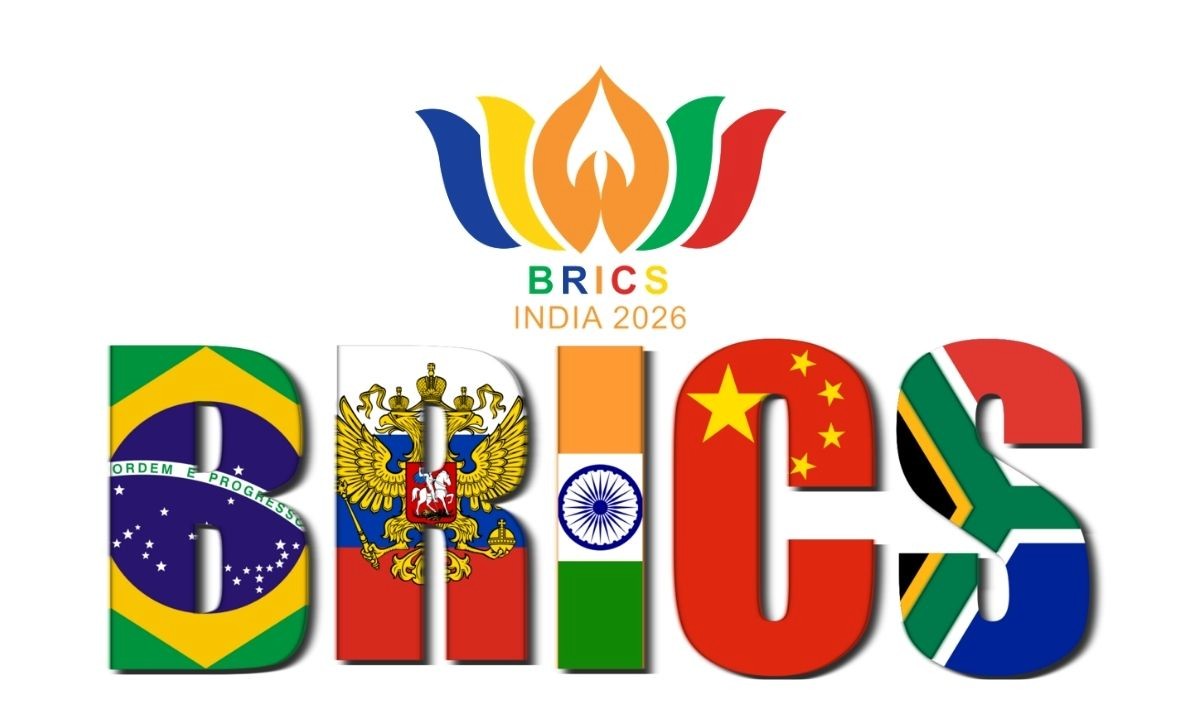
On January 13, India formally assumed the BRICS Chairship for 2026, unveiling the official logo, theme, and digital platform at a ceremony in New Delhi. The launch, led by External Affairs Minister S. Jaishankar, was deliberately timed on the eve of Makar Sankranti-a harvest festival celebrated across India under different names such as Lohri, Pongal, Magh Bihu, and Uttarayana.
The symbolism was intentional. Makar Sankranti marks renewal, prosperity, and the sun’s northward journey- Uttarayana, a period associated with hope, progress, and positive transformation. Drawing a parallel between the festival’s spirit and India’s leadership of BRICS, Jaishankar noted that just as these celebrations foster goodwill and harmony, India’s chairship will aim to bring together the collective potential of BRICS nations for greater global welfare.
As BRICS approaches its 20th anniversary in 2026, India’s fourth term as chair comes at a moment of profound global transition-defined by geopolitical uncertainty, economic fragmentation, climate stress, and technological disruption.
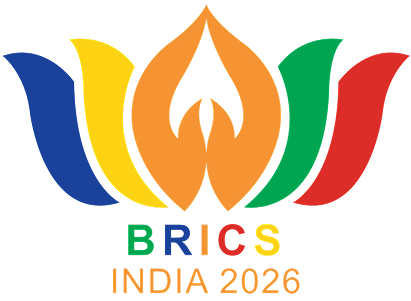
A Logo That Speaks of Unity and Respect
The BRICS 2026 logo, unveiled during the ceremony, is a refined evolution of India’s 2021 design. At its heart lies the lotus, a symbol deeply rooted in India’s cultural heritage, representing resilience, balance, and renewal. The petals radiate the vibrant colours of all BRICS member countries, visually expressing unity amid diversity.
At the centre is the “Namaste” gesture, symbolising mutual respect, dialogue, and cooperation-values India seeks to foreground during its chairship. Each petal reflects a distinct national identity, yet together they form a shared purpose.
India’s BRICS Sherpa, Sudhakar Dalal, described the logo as a reflection of cooperation, partnership, and a shared commitment to development and progress, blending tradition with a modern, forward-looking global vision.
BRICS 2026 Theme: Four Pillars for a Changing World
India’s BRICS 2026 Chairship is anchored in a single, integrated theme:
Building for Resilience, Innovation, Cooperation, and Sustainability
This framework reflects Prime Minister Narendra Modi’s “humanity first” approach to global governance and development.
1. Resilience
India aims to strengthen collective resilience against global shocks by focusing on:
- Health systems and pandemic preparedness
- Vaccine research and equitable access
- Disaster risk reduction and response
- Food and energy security
- Resilient supply chains
The objective is to help BRICS nations withstand crises without deepening inequalities.
2. Innovation
Innovation will be positioned as a development enabler rather than a privilege. Priorities include:
- Digital public infrastructure
- Fintech and real-time payments
- Startup ecosystems and MSMEs
- Green and climate-friendly technologies
- Knowledge sharing and digital inclusion
India’s experience with scalable digital systems will inform collaborative solutions across the Global South.
3. Cooperation
India has placed renewed emphasis on reforming global governance institutions such as the United Nations, World Trade Organization, International Monetary Fund, and the World Bank to better reflect contemporary realities.
BRICS, India maintains, should complement-not replace-the multilateral system, guided by sovereign equality, consensus, and mutual respect.
4. Sustainability
Sustainability will cut across all BRICS engagements, with focus on:
- Clean energy transitions
- Green finance and climate action
- Biodiversity conservation
- Sustainable lifestyles and development pathways
India has stressed that sustainability efforts must respect national circumstances and development priorities, especially for emerging economies.
A Digital Gateway for Transparency and Engagement
India also launched the official BRICS 2026 website, designed as a central information hub throughout its chairship. Developed by the National e-Governance Division, the platform prioritises accessibility, clarity, and real-time updates.
The website will host:
- Meeting calendars and outcomes
- Policy initiatives and statements
- Youth and academic engagement programmes
- Business and civil society updates
Targeting media professionals, students, researchers, youth, business chambers, and the wider public, the platform aims to ensure transparency, inclusivity, and timely dissemination of information.
Why BRICS 2026 Matters
From its origins as BRIC in 2009 to its evolution into BRICS, the grouping has expanded both its agenda and membership. Today, BRICS brings together 11 major emerging and developing economies: Brazil, Russia, India, China, South Africa, Egypt, Ethiopia, Iran, Saudi Arabia, the UAE, and Indonesia.
Additional partner countries-including Belarus, Bolivia, Kazakhstan, Cuba, Malaysia, Nigeria, Thailand, Uganda, Uzbekistan, and Vietnam-joined in 2025, underscoring BRICS’ growing global footprint.
India has previously chaired BRICS in 2012, 2016, and 2021, with the 2021 term unfolding during the COVID-19 pandemic. The 2026 chairship, however, coincides with a broader debate on global power shifts, de-dollarisation, development finance, and South-South cooperation.
A key institutional pillar of BRICS, the New Development Bank, will remain central to India’s agenda. India has reiterated its support for strengthening the bank as a credible, responsible, and financially sustainable institution for infrastructure and sustainable development financing.
Three Pillars of Engagement
India’s chairship will coordinate BRICS cooperation across three foundational pillars:
- Political and Security Cooperation
- Economic and Financial Collaboration
- Cultural and People-to-People Exchanges
The third pillar will receive renewed attention, focusing on youth engagement, education, tourism, sports, academic exchanges, and cultural dialogue-areas seen as essential for long-term trust and cooperation.
Challenges Ahead
Despite its growing relevance, BRICS faces structural and political challenges:
- Absence of a permanent secretariat
- Diverse political and economic priorities among members
- Economic imbalances, particularly China’s dominant GDP share
- Limited intra-BRICS trade integration
- Modest scale of BRICS financial institutions compared to global counterparts
- External geopolitical pressures and scepticism
Critics often label BRICS a “talk shop,” pointing to gaps between declarations and implementation.
The Way Forward
India’s chairship offers an opportunity to address these concerns by:
- Exploring stronger institutional coordination mechanisms
- Enhancing trade, investment, and economic integration
- Scaling digital, health, and climate cooperation
- Strengthening people-centric and outcome-oriented initiatives
- Deepening engagement with partner countries and global institutions
A Defining Moment
India’s BRICS 2026 Chairship begins not merely as a diplomatic milestone, but as a statement of intent-to make global cooperation more inclusive, pragmatic, and human-centred.
As Jaishankar noted, India views BRICS as a constructive platform for dialogue and development, capable of responding to today’s uncertainties while remaining grounded in shared values.
In a fragmented world searching for balance, India’s leadership of BRICS in 2026 seeks to align diversity with solidarity-and ambition with responsibility.
About the Author
