What Is the Invisible Space Hazard That Could Influence Human Missions Beyond Earth?
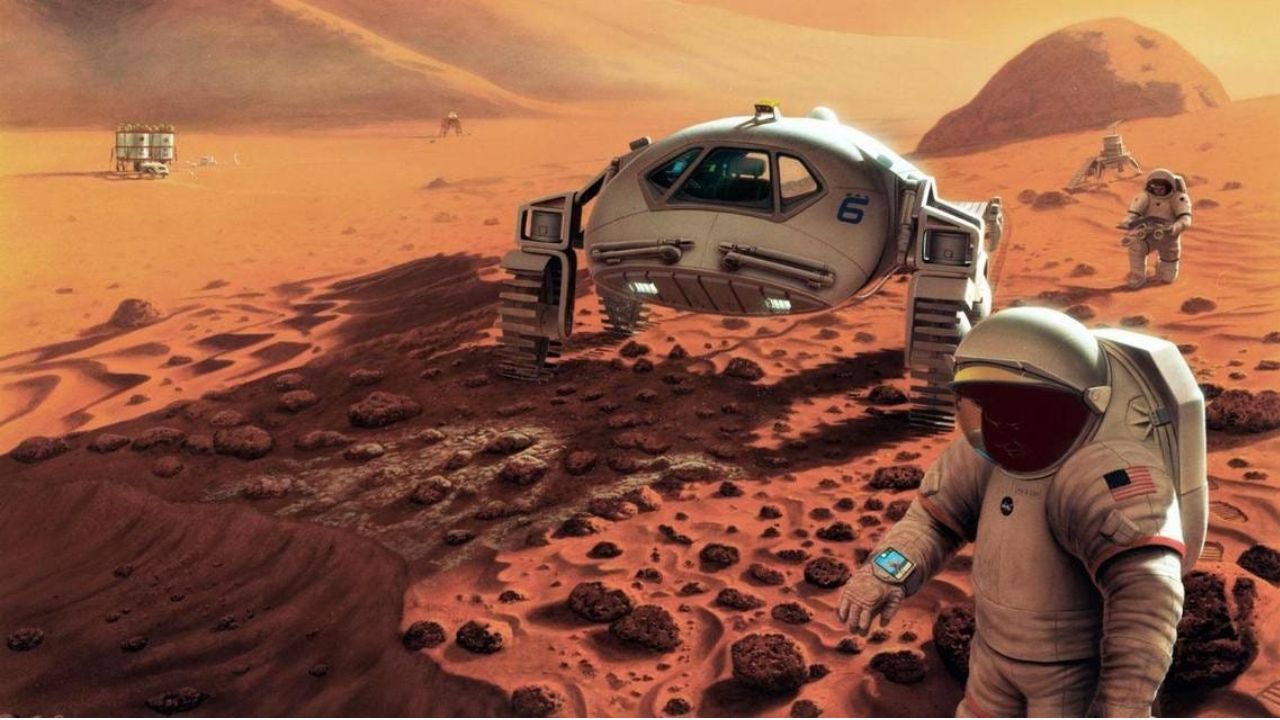
Humanity is preparing to step back onto the Moon—and eventually set its sights on Mars—but an unseen danger threatens these ambitions: cosmic radiation.
More than five decades after the first lunar landing, space agencies are gearing up for a new era of exploration. NASA’s Artemis II mission, scheduled for next year, will carry four astronauts around the Moon to test critical systems. Artemis III, expected the following year, aims to land astronauts on the lunar surface for an extended stay. Beyond that, crewed missions to Mars are being planned for the 2030s.
Yet unlike missions in low-Earth orbit, deep-space travel exposes astronauts to intense cosmic rays—high-energy particles originating from the Sun and distant exploding stars. These particles, made up of protons, helium nuclei, heavy ions and electrons, are invisible but extremely destructive. Moving at near-light speeds, they can damage spacecraft electronics and penetrate human tissue, breaking DNA strands and increasing the risk of cancer and other serious diseases.
On Earth, the planet’s magnetic field and atmosphere block most of this radiation. Outside that protective shield, however, astronauts face continuous exposure. Understanding how cosmic rays affect living organisms—and how to protect against them—has become one of the biggest scientific challenges of future spaceflight.
Simulating Space on Earth
Studying cosmic radiation directly in space is costly and logistically complex. As a result, scientists rely heavily on particle accelerators on Earth to mimic space radiation. Facilities in the United States and Germany already expose plants, tissues and laboratory animals to simulated cosmic rays. A new international accelerator complex under construction in Germany is expected to reach even higher energies, matching radiation levels astronauts would experience in deep space.
However, researchers caution that current simulations fall short of reality. Many experiments deliver a mission’s worth of radiation in a single dose, rather than the continuous, mixed exposure astronauts would face over months or years. Scientists have proposed next-generation accelerators capable of firing multiple particle beams simultaneously to better replicate real cosmic radiation, though such facilities remain in the planning stage.
Why Shields Aren’t Enough
Traditional protection methods rely on physical shielding. Materials rich in hydrogen—such as water, polyethylene and specialized hydrogels—can slow charged particles and are already used in spacecraft design. But their effectiveness is limited. Highly energetic galactic cosmic rays can penetrate thick shielding and even generate secondary radiation, sometimes increasing overall exposure.
Because of these limitations, researchers are increasingly turning to biology for answers.
Nature’s Clues to Survival
One promising approach involves antioxidants, which neutralize harmful molecules produced when radiation interacts with cells. Studies have shown that a synthetic antioxidant can prevent cognitive decline in mice exposed to simulated cosmic radiation, suggesting potential benefits for astronauts.
Scientists are also studying organisms that naturally withstand extreme radiation. Hibernating animals, for example, become more resistant to radiation during dormancy, though the exact mechanisms are still under investigation. Tardigrades—tiny creatures known for surviving harsh environments—are exceptionally radiation-resistant, especially when dehydrated. While humans cannot hibernate or dehydrate, understanding these natural defense strategies could inspire new ways to protect cells during long missions.
Another emerging idea focuses on activating the body’s own stress-response systems. Research suggests that certain diets or drugs might trigger cellular defenses evolved to protect DNA under extreme conditions on Earth, potentially offering added protection in space.
A Long Road Ahead
Experts agree that no single solution will eliminate the risk of cosmic radiation. Instead, a combination of improved simulations, biological countermeasures, smarter spacecraft design and expanded research infrastructure will be needed.
Fully protecting astronauts from cosmic rays may still be decades away. But as missions to the Moon and Mars draw closer, investment in space radiation research is accelerating. The ultimate goal is clear: enabling humans to travel beyond Earth’s protective bubble without the constant threat of invisible, high-energy particles damaging their bodies—or their spacecraft.
About the Author

UI NEWZ Team
Administrator
The UI NEWZ Team is a multidisciplinary newsroom combining experienced journalists, policy researchers, development practitioners, and content creators. Our mission is to produce high-quality, evidence-based impact journalism across sustainability, governance, social equity, global affairs, innovation, and community impact. (Email: [email protected])