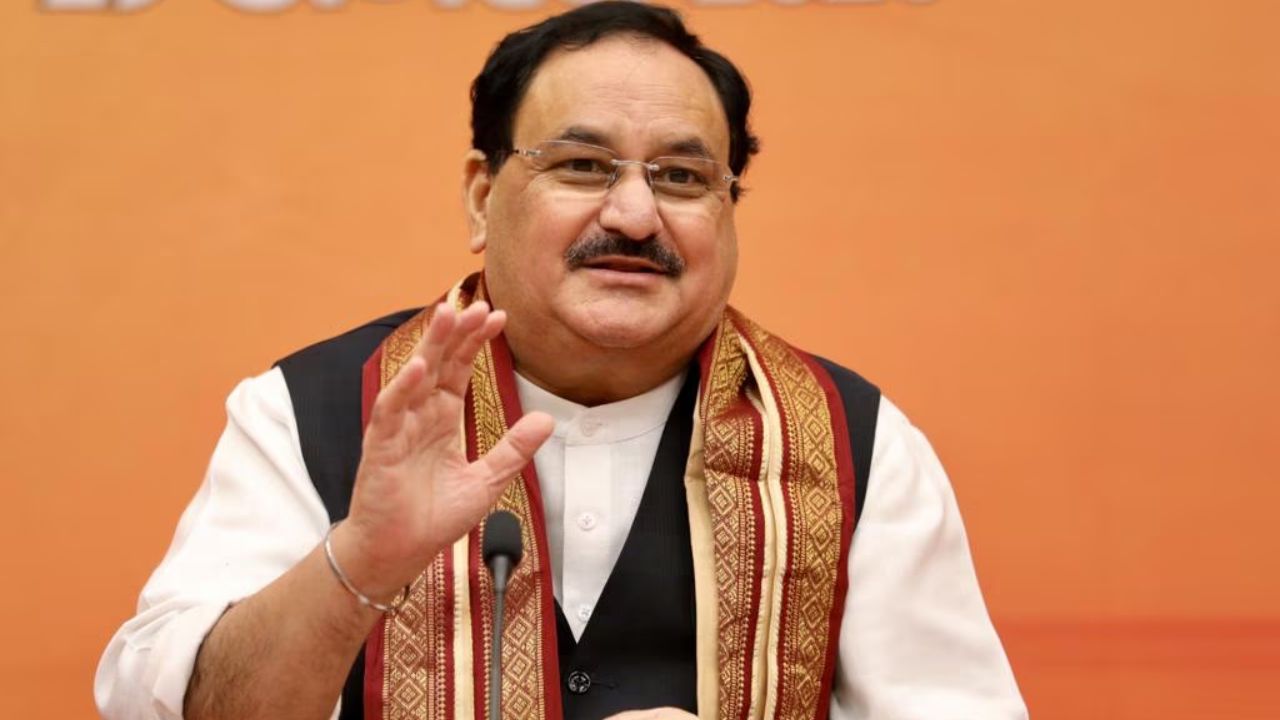
Union Health Minister J P Nadda on Saturday unveiled a domestically produced Tetanus and Adult Diphtheria (Td) vaccine at the Central Research Institute (CRI) in Kasauli, describing the development as a significant milestone in India’s pursuit of self-reliance in vaccine manufacturing and public health security.
The launch marks the addition of another indigenous vaccine to India’s expanding immunisation basket under the Universal Immunisation Programme (UIP), the world’s largest public vaccination initiative. The UIP currently provides 12 vaccines that protect against 11 life-threatening diseases, ensuring free immunisation to millions of beneficiaries across the country every year.
Speaking at the event, Nadda underscored the importance of strengthening domestic manufacturing capabilities to ensure uninterrupted vaccine supply and reduce dependence on imports. He said the production of the Td vaccine at CRI reflects the government’s commitment to enhancing healthcare infrastructure while safeguarding citizens against preventable diseases.
The Central Research Institute is expected to supply approximately 55 lakh doses of the Td vaccine to the Universal Immunisation Programme during the current year. This contribution will support routine immunisation efforts targeting adolescents and adults, particularly in preventing tetanus and diphtheria—two serious bacterial infections that can lead to severe complications or even death if left untreated.
Highlighting India’s growing stature in the global vaccine landscape, Nadda pointed out that the country has achieved the World Health Organization’s Maturity Level 3 status. This certification signifies that India’s national regulatory authority operates under a stable, reliable, and well-functioning regulatory framework. The recognition enhances global confidence in vaccines manufactured in the country and strengthens India’s role as a trusted supplier in international markets.
Reflecting on India’s vaccination journey, the minister noted that in earlier decades, the country often had to wait many years before gaining access to critical vaccines developed abroad. He cited the example of the Japanese Encephalitis vaccine, which was introduced globally in 1906 but became available in India only in 2006. Such delays, he said, highlighted the need for stronger domestic research and production capabilities.
In contrast, Nadda recalled the swift response during the COVID-19 pandemic as a turning point in India’s healthcare narrative. The country developed two indigenous COVID-19 vaccines in record time and administered more than 220 crore doses within nine months. In addition to meeting domestic demand, India extended vaccine supplies to over 100 countries, reinforcing its reputation as the “pharmacy of the world.”
The minister also praised the role of the ‘Digital India’ initiative in transforming vaccine delivery and monitoring systems. He said the digital platform enabled the issuance of online vaccination certificates and improved tracking mechanisms, ensuring transparency and efficiency in the immunisation process. The integration of technology into public health initiatives, he added, has strengthened data management and facilitated better outreach.
Dr Dimple Kasana, Director of CRI Kasauli, outlined the institute’s recent achievements during the launch ceremony. She highlighted ongoing efforts to modernise infrastructure, upgrade manufacturing standards, and expand production capacity. The introduction of the Td vaccine, she said, reflects CRI’s commitment to contributing meaningfully to national immunisation goals.
Established more than a century ago, CRI has played a crucial role in India’s vaccine history, producing life-saving vaccines and biological products. The new milestone is expected to further consolidate its legacy while aligning with the government’s vision of Atmanirbhar Bharat in the healthcare sector.
Public health experts believe that strengthening adult immunisation is essential for reducing disease burden and preventing outbreaks. By scaling up domestic production and ensuring steady supplies to the Universal Immunisation Programme, the government aims to enhance coverage and improve overall community immunity.
The launch of the indigenous Td vaccine at CRI Kasauli thus represents not only a boost to vaccine self-sufficiency but also a reaffirmation of India’s resolve to protect its population through robust, accessible, and technology-driven healthcare systems.
About the Author
