
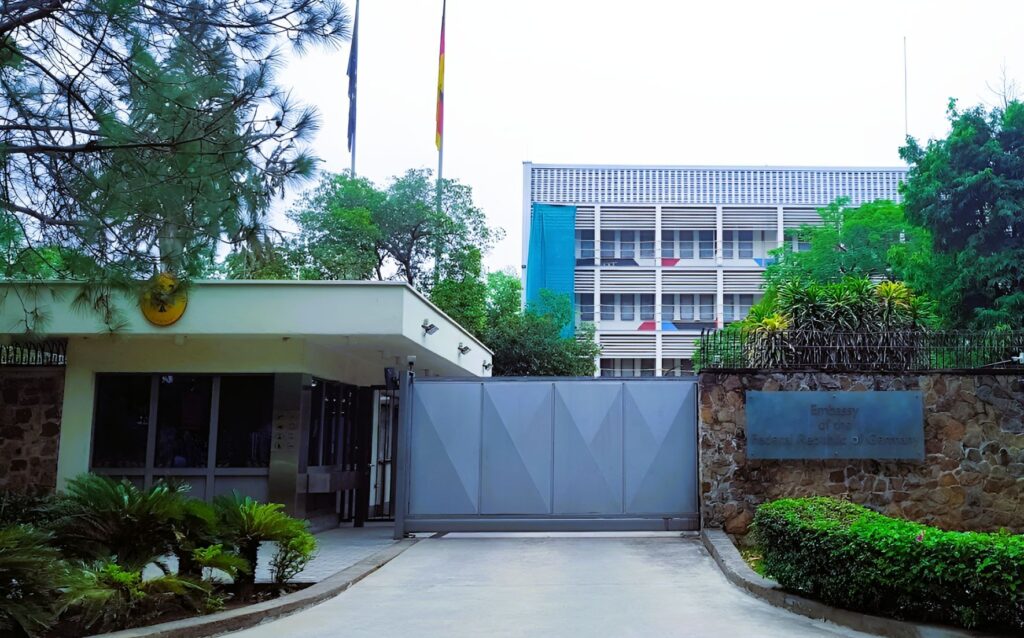
India and Germany share a historically strong and steadily evolving strategic partnership built on democratic values, economic cooperation, technological collaboration, and a shared commitment to sustainable development. Over the decades, bilateral ties have expanded across trade, clean energy, climate action, skill development, and agriculture- reflecting deep mutual trust and a long-term vision. Against this backdrop of growing engagement, UI NEWZ interacted with German Ambassador to India, Dr. Philipp Ackermann, on the sidelines of a high-level edition of the ‘Climate Talks’ series held at the German Embassy in New Delhi, themed “COP30: Reflections from Belém,” where global climate priorities and future pathways for cooperation were deliberated.
UI NEWZ: India and Germany have enjoyed a long-standing strategic partnership. Recent reports suggest increasing enthusiasm among German investors towards India. What, in your view, is driving this growing confidence?
Dr. Philipp Ackermann: The strength of the Indo-German relationship rests on multiple foundations. One important similarity is our political structure-Germany is also a federal country with strong state governments. German businesses understand the role that state administrations play in facilitating investment. This familiarity creates comfort and confidence when investing in India, whether in Delhi, Chennai, or Bhubaneswar.
Although trade imbalances remain a reality, the overall sentiment among German companies toward India is increasingly optimistic. Many see India as a promising and reliable investment destination with long-term growth potential.
UI NEWZ: Which sectors are currently witnessing the highest German engagement and investment in India?
Dr. Philipp Ackermann: More than 2,000 German companies operate in India, representing nearly every industrial segment. This includes major corporations like Siemens as well as numerous small and medium-sized enterprises.
These companies are engaged in producing advanced technological solutions- from precision manufacturing to aerospace components. Pune, for example, has become an important hub for digitization initiatives. German businesses recognize India’s strong education ecosystem, innovation capacity, and skilled workforce. That confidence in India’s potential continues to attract sustained German investment.
UI NEWZ: A notable development has been the export of Indian mangoes to Germany under the Indo-German Agriculture Development collaboration. Could you elaborate on this initiative?
Dr. Philipp Ackermann: Strengthening agricultural trade between our countries is extremely important. Recently, the first consignment of North Indian mangoes was shipped to Europe. This was a significant milestone under a joint project aimed at ensuring compliance with phytosanitary standards required for exports.
Meeting those standards was not easy, but through cooperation and technical support, we successfully facilitated the export of mangoes from Uttar Pradesh to Germany. It represents a meaningful achievement for farmers and bilateral trade alike.
Additionally, Germany is supporting organic farming initiatives in India. In Andhra Pradesh, we are implementing a large project to train farmers in organic cultivation. The focus is on export-oriented crops such as ginger, turmeric, and cardamom- products that have strong demand in Germany when produced organically.
UI NEWZ: Transitioning to organic farming can be challenging. How is Germany supporting Indian farmers in this shift?
Dr. Philipp Ackermann: The transition from conventional to organic farming is indeed complex, particularly for small-scale farmers. Our experts assist farmers in understanding certification requirements and compliance standards necessary for organic exports.
We provide training and advisory support so farmers can fully grasp the long-term economic and environmental benefits of organic practices. At the same time, discussions around a potential Free Trade Agreement between India and the European Union could further simplify agricultural trade, making such exchanges more efficient in the future.
UI NEWZ: How significant is the shift towards organic farming within Germany itself?
Dr. Philipp Ackermann: There is growing consumer awareness in Germany regarding healthy and sustainable food, especially in the context of climate change. Organic produce is now widely available in supermarkets across the country.
Currently, around 10–15 percent of German farmers practice organic agriculture. This reflects a broader transformation in consumer preferences and environmental consciousness.

UI NEWZ: There is also a visible global trend towards vegetarian and plant-based diets. How is this evolving in Germany?
Dr. Philipp Ackermann: Meat consumption in Germany is gradually declining as consumers explore alternative dietary choices. The vegan movement is gaining strength, and vegetarian options are becoming more mainstream in the German market. This shift is closely linked to health awareness, sustainability concerns, and changing lifestyle preferences.
UI NEWZ: From your perspective, what lessons could India draw from Germany in the agricultural sector?
Dr. Philipp Ackermann: Agriculture remains central to India’s economy. However, while nearly half of the population is engaged in farming, the sector contributes a comparatively smaller share to GDP. Modernization is therefore essential.
Organic farming offers significant income potential for farmers. One of Germany’s strengths lies in its cooperative system. Agricultural cooperatives enable small farmers to share machinery and infrastructure, reducing costs and increasing efficiency. Such collaborative models could greatly benefit Indian farmers by improving productivity and profitability.
UI NEWZ: Conversely, what can Germany learn from India’s agricultural and food culture?
Dr. Philipp Ackermann: Germany can learn from India’s deep emotional and cultural connection to food and agriculture. In India, farming is not merely an economic activity- it is closely tied to tradition, identity, and community life. This sense of connection is something that Germany can appreciate and reflect upon.
UI NEWZ: Finally, how do you view the Indian farming community?
Dr. Philipp Ackermann: I hold the highest respect for farmers. Agriculture forms the foundation of our livelihoods. India produces exceptional vegetables, fruits, and spices.
There is tremendous potential within India’s agricultural sector. With sustained policy support, innovation, and the continued dedication of farmers, significant progress can be achieved in the years ahead- further strengthening Indo-German cooperation and deepening the strategic partnership between both nations.
About the Author
