When a powerful cloudburst struck Himachal Pradesh in July 2023, torrential rains triggered floods and landslides across multiple districts. Homes were swept away, farmland was destroyed, and thousands of families were displaced overnight. While emergency relief operations provided food, medical aid, and temporary assistance, many households soon found themselves caught in a familiar yet often overlooked limbo- the long, uncertain period between immediate relief and permanent rehabilitation.
India’s disaster response systems are largely effective at addressing emergencies, but transitional recovery remains a critical gap. For families who lose their homes, the months- sometimes years- before reconstruction can be the most vulnerable phase of all.
Designing for the in-between
To respond to this challenge, Tata Trusts partnered with the People’s Science Institute (PSI) and the Rural Technology and Development Centre (RTDC) to pilot a transitional shelter initiative in the disaster-affected districts of Kullu and Mandi. The objective was clear: create dignified, climate-appropriate shelters that could safely house families while they rebuilt their lives.
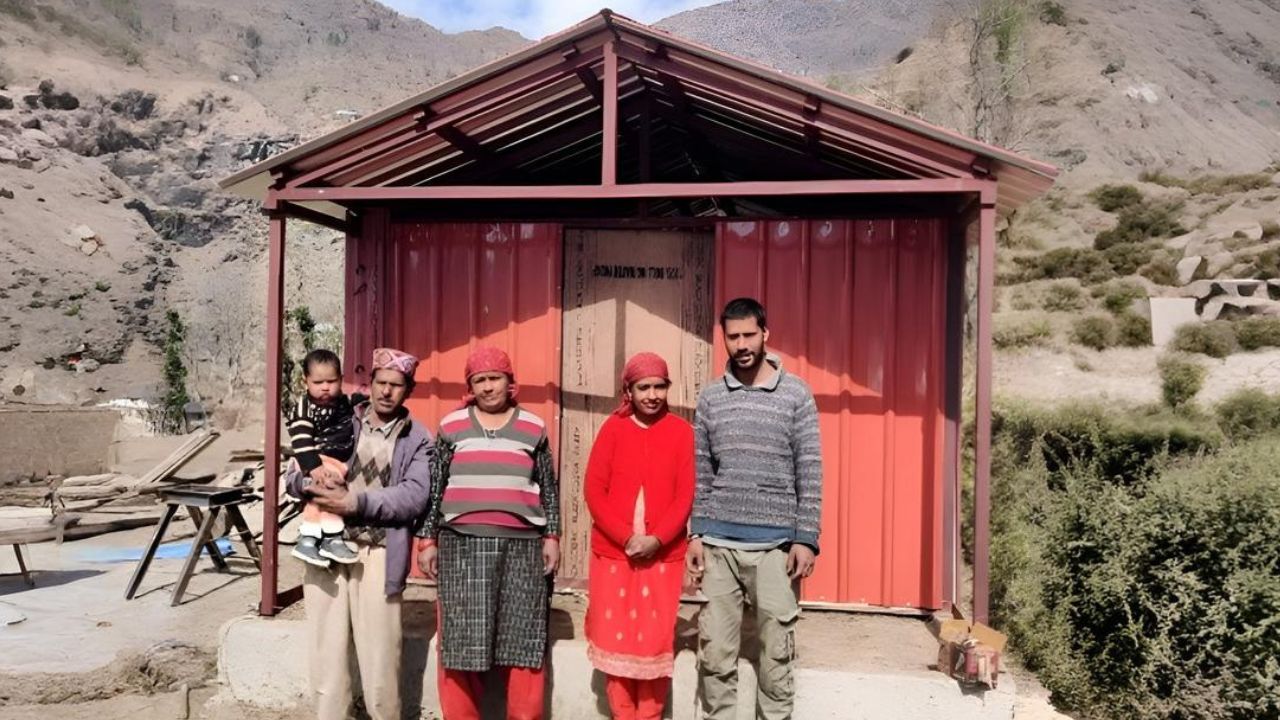
Unlike ad-hoc temporary structures, these shelters were designed as insulated, reusable units- bridging the gap between emergency tents and permanent housing. Developed with architectural inputs coordinated by PSI, the shelters were conceived as modular, rapidly deployable structures that could be reused multiple times in future disasters.
Each unit measured approximately 200 square feet and included an attached toilet and bathroom. Designed to accommodate families of five to six members, the shelters were insulated to remain around 5°C warmer during harsh Himalayan winters and 5°C cooler during summer months. With an expected lifespan of 10–12 years, each shelter could potentially be reused across five to six disaster cycles.
Living through Loss
For Khube Ram, a farmer from Saraugi village in Siraj Block, the floods washed away more than just a house. His family lost their home and nearly a bigha of farmland- their primary source of income. With his wife, two young children (including an infant), and a younger brother with disabilities, Khube Ram initially sought refuge with relatives.
But overcrowding and uncertainty soon forced the family into a makeshift shelter constructed from wooden poles and tarpaulin sheets near their damaged home. As winter set in, survival became a daily struggle. The flimsy structure offered little protection from cold winds, rain, or snowfall. To stay warm, the family relied on layers of blankets and an open fire inside the shelter- an unsafe but unavoidable risk.
Food insecurity compounded their hardship, and caring for an infant in such conditions placed immense strain on the family.
A Timely Intervention
In November 2023, RTDC identified Khube Ram’s household as one of the most vulnerable families in the area. Beneficiary selection was carried out in coordination with local panchayats using transparent criteria, prioritising families who had lost homes and included vulnerable members such as children, persons with disabilities, and pregnant women.
Despite persistent winter rains, the insulated shelter was completed and handed over by February 2024. The transition was immediate and transformative. For the first time in months, the family had a secure, weather-resistant living space- allowing them to focus on recovery rather than daily survival.
Each shelter came with a detailed design blueprint, serial-numbered components for easy assembly, and a usage manual to ensure proper maintenance and longevity.
Rebuilding with Dignity
After eight months in the shelter, Khube Ram described the change as life-altering. The insulated structure protected his family from extreme temperatures and provided stability during a period of profound uncertainty. With his children safe and his household secure, he and his wife were finally able to focus on restoring their farmland and livelihoods.
Beyond individual families, the initiative also strengthened institutional preparedness. Tata Trusts signed an agreement with the State Disaster Management Authority for the shelters to be taken over and stored after two years- ensuring they can be rapidly redeployed in future emergencies.
Beyond Shelter
This initiative demonstrates how disaster response can move beyond short-term relief toward resilient recovery. By addressing the often-ignored transitional phase, such models help families recover with dignity while strengthening state capacity for future crises.
In disaster-prone regions, recovery does not begin with permanent housing alone- it begins with safe, humane spaces that allow people to restart their lives. For families like Khube Ram’s, that space made all the difference.
About the Author
