
Indian agriculture has long been constrained not by the absence of effort, but by fragmented systems. Smallholder farmers- who form the backbone of the country’s food economy- often navigate disjointed supply chains, unreliable advisory services, opaque markets, and delayed access to quality inputs. It is this structural inefficiency, rather than productivity alone, that continues to suppress farm incomes.
Founded in 2012, DeHaat emerged with a clear ambition: to redesign how small farmers access information, inputs, and markets- at scale. Built by IIT and IIM alumni Shashank Kumar and Manish Kumar, DeHaat began as a research-driven effort to solve last-mile delivery failures in Indian agriculture. The founders identified a critical gap- farmers were receiving fragmented advice, delayed inputs, and poor price discovery, all while bearing disproportionate risk.
DeHaat’s response was to create a full-stack, AI-enabled agricultural platform that integrates digital intelligence with a strong on-ground presence- designed specifically for India’s small and marginal farmers.
From Pilot Villages to Platform Scale
The DeHaat model was first tested in Bihar, Odisha, and eastern Uttar Pradesh- regions dominated by small landholdings and diverse cropping patterns. In its early phase, the platform relied heavily on human relationships. Trained field extension officers worked directly with farmers, building trust while collecting granular data on crops, pests, soil conditions, and farming practices.
This combination of farmer engagement and data collection laid the foundation for DeHaat’s machine-learning systems. By 2019, the platform had reached nearly 65,000 farmers, supported by a network of 168 local micro-entrepreneurs operating DeHaat Centres- physical touchpoints that bridged digital advisory with doorstep services.
What distinguished DeHaat early on was its hybrid architecture: technology supported by dense physical infrastructure. Rather than replacing field presence with digital tools, the platform strengthened last-mile delivery through data.
AI at the Farm Gate
As the platform matured, DeHaat integrated advanced artificial intelligence capabilities into its advisory engine. The system began analysing satellite imagery, weather forecasts, soil profiles, and pest-incidence data to generate crop-stage-specific recommendations. Farmers could now receive real-time alerts on disease outbreaks, nutrient deficiencies, and climate risks- delivered in regional languages and tailored to local conditions.
Simultaneously, DeHaat expanded its supply-chain layer. Input packages were regionally optimised, ensuring farmers received the right seeds, fertilisers, and crop protection solutions at the right time. On the output side, the platform enabled direct market linkages, connecting farmers to institutional buyers and improving price transparency.
This integration- advisory, inputs, and markets within a single system- became the platform’s defining strength.
A National Agritech Network
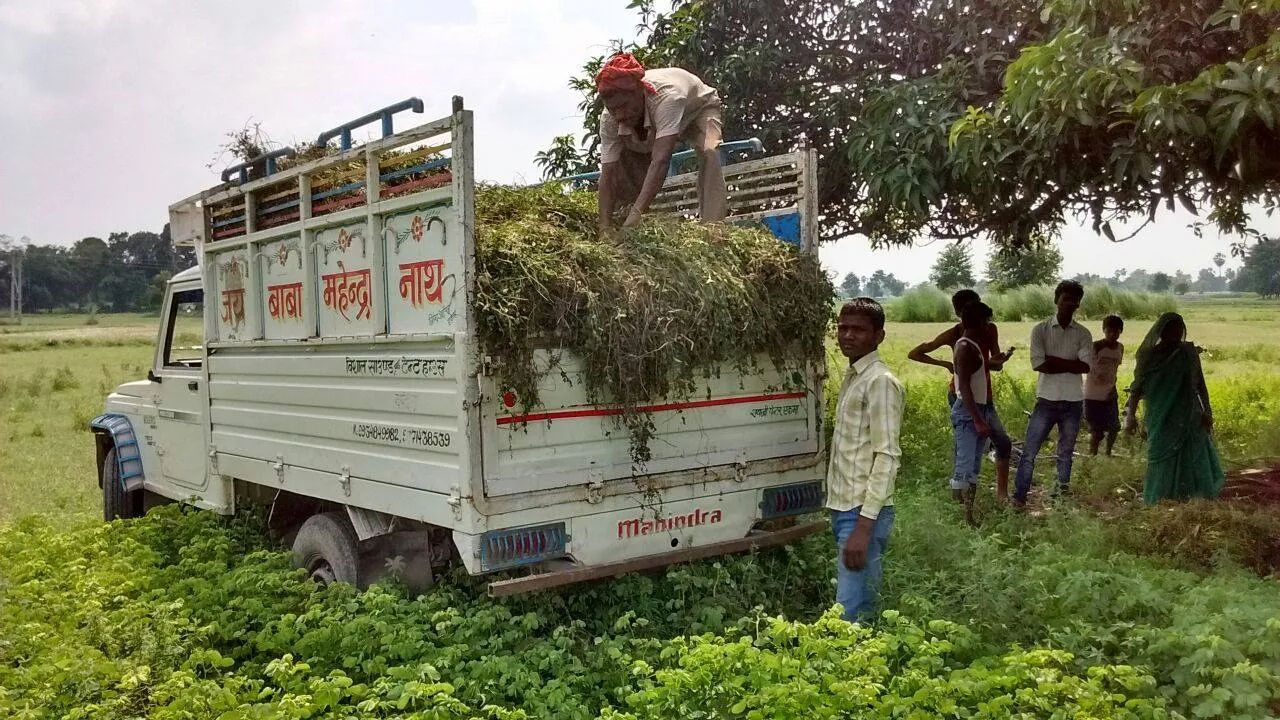
Today, DeHaat operates across 12 agrarian states, serving more than 1.8 million farmers. Its ecosystem includes over 11,000 DeHaat Centres and partnerships with 503 Farmer Producer Organisations (FPOs). The platform delivers AI-enabled advisory for over 30 crops, supporting farmers through the entire production cycle- from sowing decisions to post-harvest sales.
The impact is multi-dimensional. Farmers benefit from reduced input costs, improved yields, and better price realisation. Risk is mitigated through timely, data-driven decision-making. Rural entrepreneurship is strengthened as thousands of DeHaat Centres generate sustainable livelihoods for local operators who act as last-mile agritech service providers.
DeHaat’s growth and credibility have earned recognition from institutions including NASSCOM, NITI Aayog, Forbes, and the Bill & Melinda Gates Foundation. Internally, its organisation-building efforts have also been acknowledged through Great Place to Work certifications in consecutive years.
Strengthening the Agricultural Ecosystem
Beyond individual farms, DeHaat is reshaping the broader agricultural value chain. Its digital infrastructure generates visibility into crop lifecycles, procurement trends, and regional demand patterns- benefiting buyers, input manufacturers, and policymakers alike. FPOs integrated into the network gain access to institutional markets, financial services, and capacity-building support, enhancing collective bargaining power.
By reducing inefficiencies and information asymmetries, the platform helps lower wastage, improve procurement predictability, and stabilise supply chains across states.
Road Ahead
As climate volatility intensifies and demand for traceable, high-quality produce grows, Indian agriculture will increasingly depend on integrated digital systems. DeHaat’s model demonstrates how AI, when combined with local trust networks and physical infrastructure, can bridge long-standing structural gaps in farming.
Rather than positioning farmers as passive recipients of technology, the platform embeds them as active participants in a connected agricultural economy. In doing so, it offers a pathway toward farming that is not only more productive but also more resilient, transparent, and equitable.
In a sector often shaped by fragmentation, DeHaat is proving that scale- with empathy, data, and last-mile intelligence- can be transformative.
About the Author
