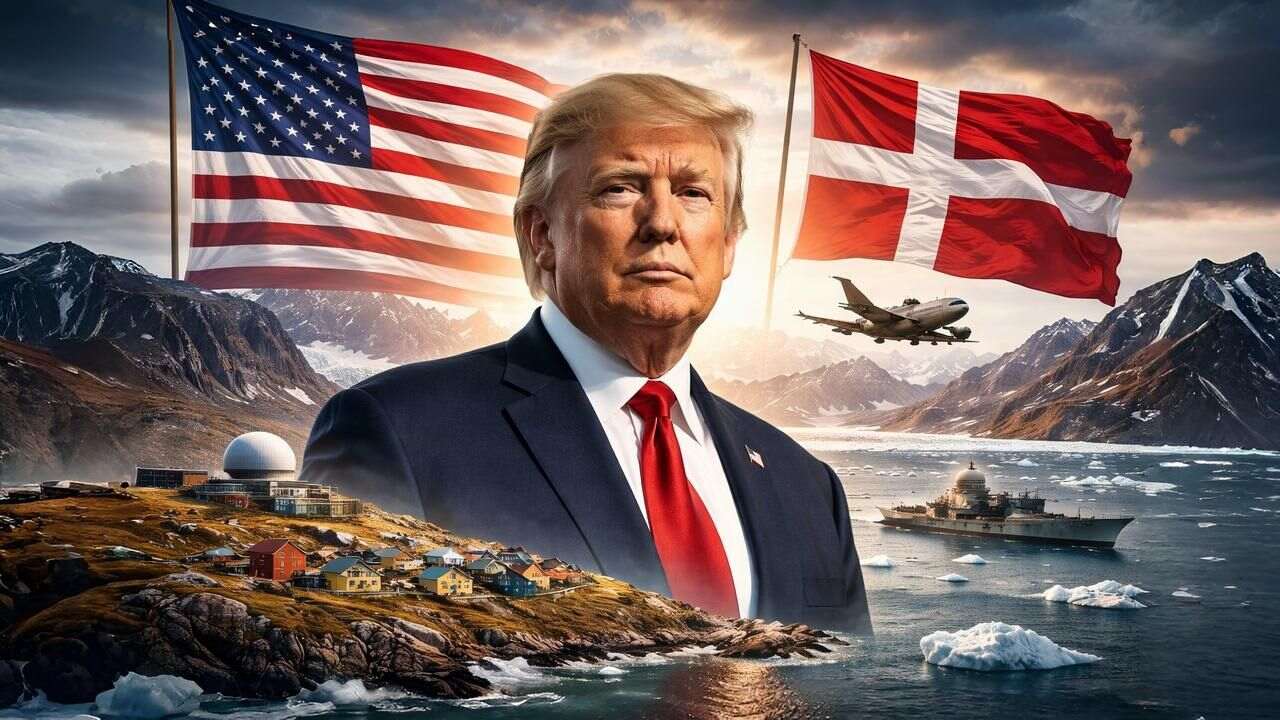
United States President Donald Trump has revived proposals to acquire or exert greater control over Greenland, the world’s largest island and an autonomous territory of Denmark. The move has sparked significant diplomatic friction with Copenhagen and drawn international attention to growing geopolitical competition in the Arctic region.
Trump first publicly expressed interest in purchasing Greenland during his previous presidential term in 2019, a proposal that Denmark firmly rejected. Following his return to the White House in January 2025, Trump has escalated his rhetoric and actions regarding Greenland’s strategic importance, according to statements reported by Reuters and other international news agencies.
What is the current situation?
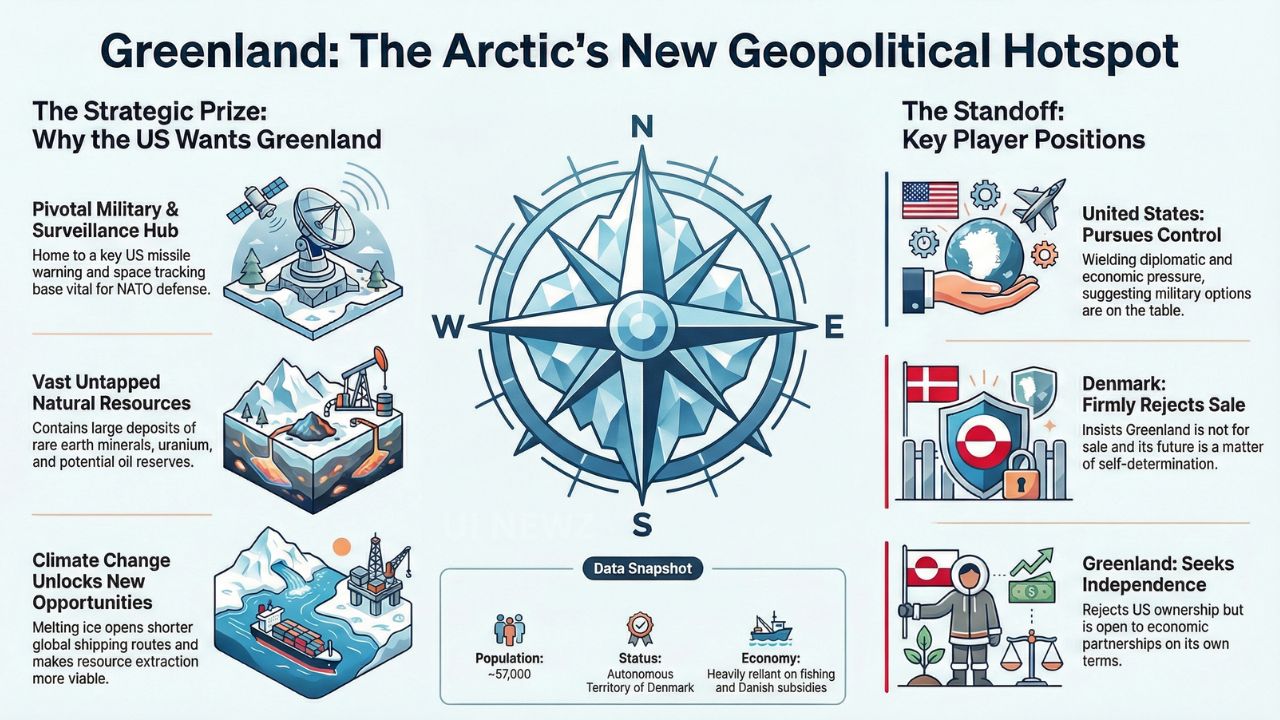
Since his inauguration in January 2025, Trump has intensified efforts to advance US interests in Greenland through both public statements and concrete actions. He has not ruled out economic pressure, including potential tariffs against Denmark, and has made controversial remarks suggesting that military options remain on the table. The White House has reinforced this stance, stating that “utilising the US military is always an option at the commander-in-chief’s disposal,” while refusing to rule out the use of force to pursue this foreign policy goal.
The Trump administration has appointed special envoys to explore US interests in the Arctic and Greenland specifically. Additionally, the US has suspended certain cooperative projects with Denmark, signalling political pressure beyond mere diplomatic discussion.
Danish officials have strongly rejected any notion of selling or transferring Greenland. Denmark’s Prime Minister Mette Frederiksen has reiterated that Greenland is not for sale and that any decisions about the territory’s future rest exclusively with the Greenlandic people and their self-governing administration based in Nuuk. Denmark has reportedly increased its military presence in the Arctic in response to the heightened tensions.
Greenland’s government has also firmly stated that it does not support becoming part of the United States. Greenlandic leaders have expressed a clear desire for independence while maintaining economic and security partnerships with multiple nations, but under terms of their own choosing.
Why does the US want Greenland?
Greenland holds significant strategic, military, and economic value for the United States. The territory is located at a critical juncture between North America and Europe, making it vital for Arctic defence and surveillance operations.
The US has maintained the Thule Air Base (now Pituffik Space Base) in northern Greenland since 1951, under a defence agreement with Denmark. Thule serves as a key installation for missile warning systems and satellite tracking, integral to US and NATO defence infrastructure. According to US Department of Defense documents, the base plays a central role in monitoring ballistic missile threats and space operations.
Greenland is also rich in natural resources. The territory possesses vast deposits of rare earth minerals, uranium, zinc, and potentially significant oil and gas reserves. Rare earth elements are critical for manufacturing electronics, defence systems, and renewable energy technologies. China currently dominates global rare earth production, and US policymakers have identified Greenland as a potential alternative supply source, according to US Geological Survey reports.
Climate change has increased accessibility to Greenland’s resources and opened new shipping routes through the Arctic. Melting ice has made previously unreachable mineral deposits and maritime passages more viable for commercial and military use, raising competition among global powers including Russia and China.
What is Denmark’s position?
Denmark has consistently and forcefully rejected any notion of selling Greenland. In 2019, when Trump first floated the purchase idea, Danish Prime Minister Mette Frederiksen called the proposal “absurd.” Danish officials have since maintained that Greenland’s political future is a matter for Greenlandic self-determination, not international negotiation.
Under Danish law, Greenland has been a self-governing territory since 1979, with authority over most domestic affairs including natural resources, education, and health. Denmark retains control over foreign policy, defence, and monetary policy. Greenland’s population is estimated at approximately 56,000 to 57,000 people, predominantly Inuit, and the territory has been gradually expanding its autonomy.
Denmark and the United States are both NATO allies, and their bilateral relationship has historically been strong. However, Trump’s renewed interest in Greenland has introduced serious tension. Danish officials have expressed concern that unilateral US actions could undermine regional stability and violate international norms regarding territorial sovereignty. In response to escalating rhetoric, Denmark has reportedly strengthened its military deployments in the Arctic region, according to media reports.
What does Greenland want?
Greenland’s government and political leaders have made clear that the territory is not interested in American ownership or governance. However, Greenlandic officials have expressed openness to expanding economic and investment partnerships with the US and other nations on their own terms.
Greenland’s economy is heavily dependent on fishing and annual subsidies from Denmark. According to various economic reports, Danish subsidies constitute a significant portion of Greenland’s public budget, with estimates ranging from approximately 20% to over half of the territorial government’s revenue depending on how subsidies and grants are calculated. Leaders in Nuuk have long sought economic diversification and eventual independence, but achieving financial self-sufficiency remains a significant challenge.
Greenlandic officials have welcomed foreign investment in mining, renewable energy, and infrastructure, provided such projects respect environmental standards and Indigenous rights. The territory’s government has also sought greater influence in international Arctic forums and climate negotiations.
What is the international context?
The Arctic region has become a focal point of geopolitical competition. Russia has expanded its military presence in the Arctic, establishing new bases and asserting control over northern shipping routes. China has declared itself a “near-Arctic state” and invested heavily in Arctic research, infrastructure, and resource exploration, according to reports from the Arctic Council and the United Nations.
The United States, through its Arctic strategy documents, has identified the region as critical to national security. US officials have expressed concern about Russian and Chinese activities in the Arctic, warning that adversaries could exploit strategic positions or resources at the expense of American and allied interests.
Climate change has accelerated Arctic ice melt, opening the Northwest Passage and Northern Sea Route to more frequent maritime traffic. These routes could significantly shorten shipping times between Asia, Europe, and North America, creating economic and military advantages for nations that control or influence them.
Greenland’s location places it at the centre of these dynamics. Control or influence over Greenland would provide the US with enhanced surveillance capabilities, resource access, and strategic positioning relative to Russia and China.
What happens next?
The Trump administration appears to be pursuing a strategy that combines public pressure, diplomatic engagement, and economic leverage. While no formal purchase proposal has been officially submitted to Denmark, the suspension of certain bilateral projects and appointment of Arctic-focused envoys suggest the US is taking concrete steps beyond rhetoric.
Denmark and Greenland are expected to continue firmly rejecting any purchase or transfer of sovereignty. However, the US may seek to expand military cooperation, investment agreements, or infrastructure projects in Greenland through negotiated partnerships rather than outright acquisition.
Greenlandic leaders are likely to pursue strategies that balance economic development with political autonomy, seeking partnerships that do not compromise self-determination. The territory’s government may use the heightened international attention to advance its own independence goals while diversifying its economic relationships.
International observers will monitor how Denmark, the US, and Greenland navigate this complex issue amid broader Arctic competition. NATO allies are also watching closely, as tensions between the US and Denmark could have implications for alliance unity.
The situation raises important questions about international law and territorial sovereignty. The United Nations Charter and established norms prohibit the forced transfer of territory, and any change in Greenland’s status would require the consent of Greenland’s people and government. However, the combination of economic pressure, strategic competition, and climate change is creating new dynamics in Arctic geopolitics that challenge traditional frameworks.
About the Author
