Menstrual health tracking helps women understand their cycle patterns, spot irregularities early, and make informed choices about reproductive health. In India, searches for menstrual health have surged 145% year-over-year, reflecting growing awareness among urban professionals and students.
This simple guide explains the benefits of tracking, popular methods, and apps suited for Indian users. Experts suggest regular monitoring supports overall wellness without replacing professional medical advice.
Benefits of Menstrual Health Tracking
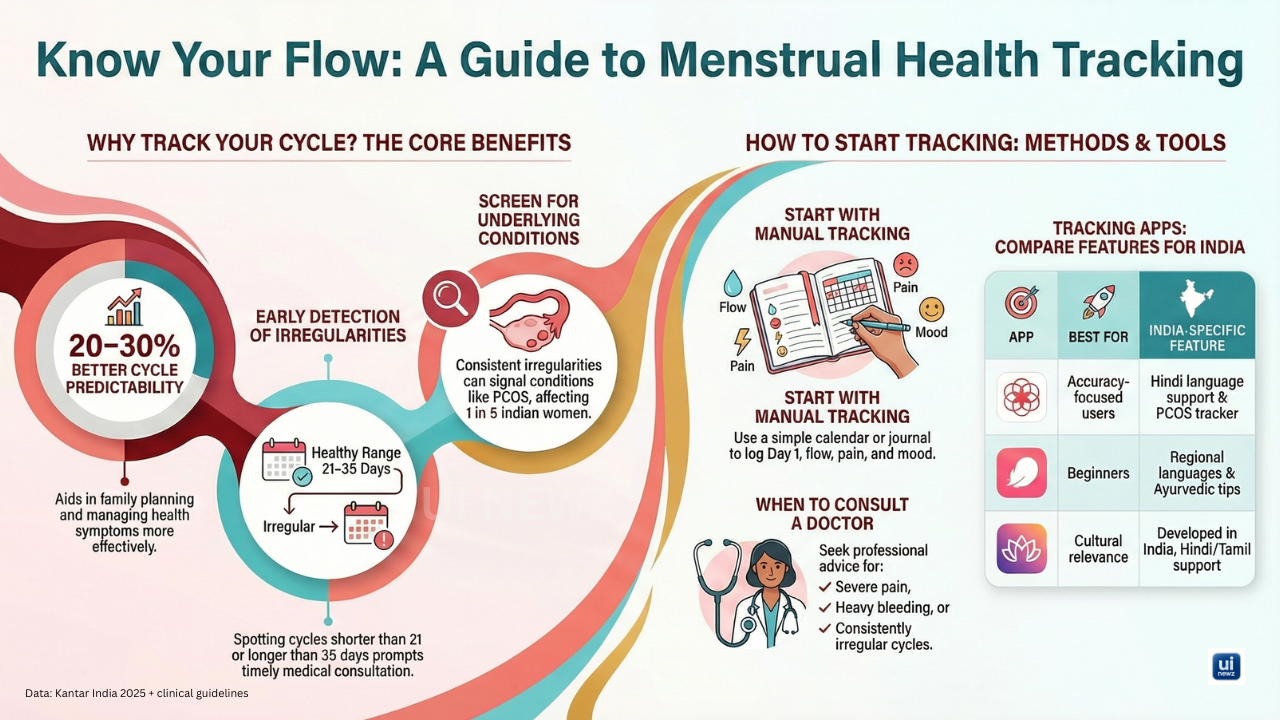
Tracking reveals cycle length (typically 21–35 days), ovulation timing, and symptom patterns. Studies indicate women who track experience 20–30% better cycle predictability, aiding family planning and health management.
Key advantages include:
- Early irregularity detection: Spotting cycles shorter than 21 days or longer than 35 days prompts timely consultation.
- Symptom correlation: Linking PMS, bloating, or mood changes to hormonal phases.
- Fertility awareness: Identifying fertile windows naturally.
- PCOS/thyroid screening: Consistent irregularities may signal underlying conditions like polycystic ovary syndrome, common in 10–20% of Indian women.
Ayurveda emphasizes cycle awareness for dosha balance, aligning modern tracking with traditional wisdom.
Understanding Your Menstrual Cycle Phases
A standard cycle has four phases, each with distinct hormonal shifts:
| Phase | Duration | Key Hormones | Common Symptoms | Tracking Focus |
| Menstrual | Days 1–5 | Estrogen drops | Bleeding, cramps | Flow heaviness, clot size |
| Follicular | Days 6–14 | Rising estrogen | Energy boost | Cervical mucus changes |
| Ovulation | Day 14 | LH surge | Mild pain, discharge | Fertile window marker |
| Luteal | Days 15–28 | Progesterone peaks | PMS, bloating | Mood, breast tenderness |
Apps visualize these phases, helping predict periods with 85–95% accuracy after 3–6 months of data.
How to Track Manually (No App Needed)
Start simple with a calendar or journal:
- Mark Day 1: First day of full flow (red bleeding).
- Log daily signs: Flow level (light/medium/heavy), pain (1–10 scale), mood, energy.
- Note basal body temperature (BBT): Measure first thing morning; post-ovulation rise of 0.5°F signals luteal phase.
- Check cervical mucus: Fertile mucus is clear, stretchy (egg-white consistency).
This method builds cycle intuition. Experts recommend 3 cycles of manual tracking before apps for accurate baselines.
Best Menstrual Tracking Apps for Indian Users
Several apps combine tracking with India-specific features like Hindi support and local healthcare links:
| App | Key Features | Free Tier | India-Specific | Best For |
| Clue | Science-backed predictions, symptom library, doctor chat | Yes (premium Rs 500/yr) | Hindi, PCOS tracker | Accuracy-focused users |
| Flo | AI predictions, community forums, ovulation tests | Yes (premium Rs 300/yr) | Regional languages, Ayurvedic tips | Beginners |
| Maya | Indian-developed, desi food-mood links, telemedicine | Yes (basic free) | Hindi/Tamil, local clinics | Cultural relevance |
| Flo Health | Cycle analytics, pregnancy mode, export reports | Yes | Yoga for cramps integration | Comprehensive tracking |
| Period Tracker | Simple interface, widget, reminders | Fully free | Basic Hindi | Budget users |
Choose based on privacy policy, EU GDPR-compliant apps like Clue offer stronger data protection.
Common Tracking Mistakes to Avoid
Many beginners overlook these pitfalls:
- Ignoring stress impact: High cortisol shortens cycles; log lifestyle factors.
- Overlooking perimenopause: Cycles lengthen after 40; track for thyroid checks.
- Forgetting medications: Birth control alters patterns; note all pills.
- Data silos: Sync across devices for a complete history.
Consistent logging (daily, 2 minutes) yields the best insights. Studies show that tracked users consult doctors 25% earlier for anomalies.
When to Consult a Doctor
Tracking reveals when professional input is needed:
- Cycles consistently under 21 or over 35 days.
- Bleeding lasting over 7 days or soaking a pad hourly.
- Severe pain unresponsive to ibuprofen or heat.
- Sudden changes post-COVID or weight shifts.
In India, consult gynecologists via Practo or local clinics. Early detection improves outcomes for conditions like endometriosis.
Integrating Tracking with Lifestyle
Pair tracking with preventive habits:
- Diet: Iron-rich foods (spinach, dates) during menstruation; anti-inflammatory options luteal phase.
- Exercise: Yoga (bhujangasana) for cramps; walking follicular phase.
- Sleep: Consistent 7–9 hours; poor sleep worsens PMS.
Ayurvedic experts suggest ashwagandha teas for luteal stress, but consult before use.
Key Takeaways
Menstrual health tracking empowers informed wellness decisions through cycle awareness, symptom logging, and app insights. Start today with a simple calendar, upgrade to apps like Maya or Clue, and consult doctors for irregularities.
Consistent tracking fosters proactive health, especially amid India’s rising wellness trends. Prioritize privacy and combine with balanced lifestyle habits.
Health Disclaimer: This is educational content, not medical advice. Consult gynecologists for personalized guidance, especially with irregularities or pain.
Frequently Asked Questions
Q: Can tracking help with PCOS?
Yes, it monitors irregular cycles and symptoms like acne or hair growth, aiding diagnosis. Apps like Clue flag PCOS patterns for doctor discussions.
Q: Is tracking safe for fertility planning?
It provides 76–88% accuracy for fertile windows when combined with BBT/mucus. Not a contraceptive; use protection as needed.
Q: How accurate are app predictions?
After 6 months, 90%+ for period dates. Less reliable first cycle; input symptoms improve forecasts.
Q: Should teens start tracking?
Yes, from menarche, helps normalize cycles (often irregular first 2 years). Parent-supervised apps recommended.
Q: Does stress really affect cycles?
Absolutely, cortisol disrupts ovulation. Tracked users identify triggers like work pressure.
About the Author
