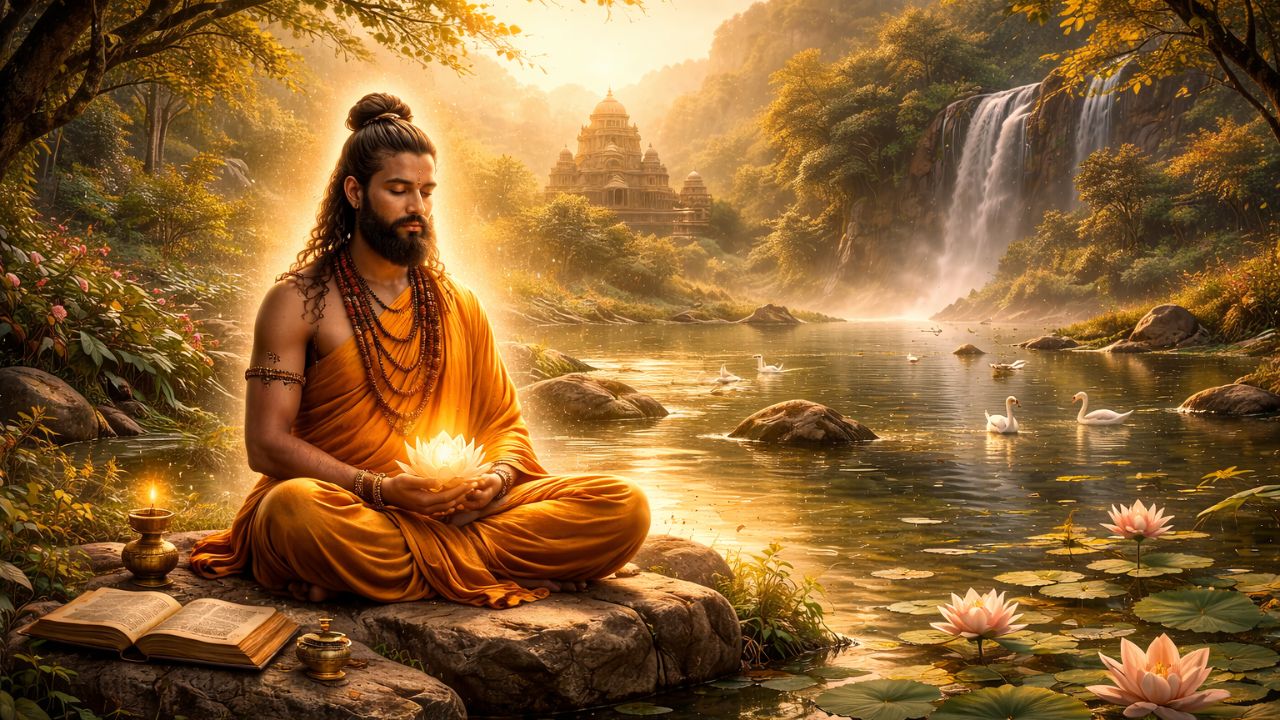
In spiritual discourse, Dharma is often translated as religion, duty, or righteousness. Yet these definitions barely capture its depth. Dharma is not a rigid doctrine imposed from outside; it is the inner law of being, the natural principle that shapes how truth expresses itself through each individual. Like water flowing through different terrains yet remaining water, Dharma adapts to the nature of its vessel while preserving its essence.
Dharma Chooses Its Vessel
A profound spiritual insight suggests that Dharma does not appear the same in every person. It expresses itself according to the maturity, temperament, and inner evolution of the individual. In one person, Dharma may emerge as devotion. In another, it may take the form of service, wisdom-seeking, creativity, or disciplined action.
This diversity does not indicate contradiction. Rather, it reveals that spiritual growth is not a one-size-fits-all journey. Just as a neem tree cannot bear mangoes because its nature is different, a person cannot authentically walk a path that contradicts their inner disposition. True spirituality honours one’s intrinsic nature instead of imitating another’s expression.
Beyond Spiritual Comparison
One of the most subtle errors in modern spiritual culture is comparison. When someone believes their path alone is superior – whether it is meditation, devotion, activism, or intellectual inquiry – they misunderstand Dharma. The genuinely spiritual person does not invalidate another’s path. They understand that the ultimate goal may be shared, but the routes differ.
This perspective dissolves ego-driven spirituality. Claiming exclusive spiritual authority contradicts Dharma itself. Wisdom does not compete; it integrates.
Karma and Dharma: A Dynamic Relationship
Dharma is deeply linked with Karma – the principle of action. Spiritual life is not limited to chanting, rituals, or contemplation. Action performed with sincerity and awareness becomes a powerful spiritual path. A person may not have time for formal worship, yet through honest labour and compassionate engagement, they cultivate inner purity.
The essence of Dharma lies not in outer display but in alignment between intention, action, and truth. When actions are performed selflessly, they refine the heart. Over time, this purification becomes the foundation for deeper awareness.
Ultimate Outcome: Inner Clarity
The highest fruit of Dharma is not recognition, power, or status. It is inner clarity and purity of heart. When a person fulfils their responsibilities with integrity, they gradually shed ego, jealousy, and restlessness. This cleansing of consciousness becomes spiritual liberation in motion.
Spiritual maturity does not necessarily mean withdrawal from life. It means engaging fully with life while remaining anchored in truth. One may appear outwardly ordinary – a worker, teacher, parent, or leader – yet inwardly evolve toward profound self-awareness.
Unity in Diversity
A powerful metaphor describes Dharma as a flowing stream. Water may divide into many channels, but its nature remains unchanged. Similarly, spiritual paths may vary – devotion, knowledge, service, meditation – yet their ultimate purpose is unity with truth.
Modern society, marked by ideological divisions and identity conflicts, urgently needs this understanding. Dharma teaches that diversity in expression does not threaten unity in essence. It encourages coexistence without erasing individuality.
Dharma in Contemporary Life
In today’s fast-paced world, Dharma becomes especially relevant. It calls individuals to act responsibly, think ethically, and live consciously. Whether in governance, business, family life, or community service, Dharma demands alignment with truth rather than convenience.
It reminds us that spirituality is not escape – it is responsibility. It is not dogma – it is self-discovery. It is not comparison – it is authenticity.
Ultimately, Dharma is the silent current guiding every sincere seeker. When understood deeply, it transforms life from a competition of beliefs into a journey of inner evolution.
About the Author
