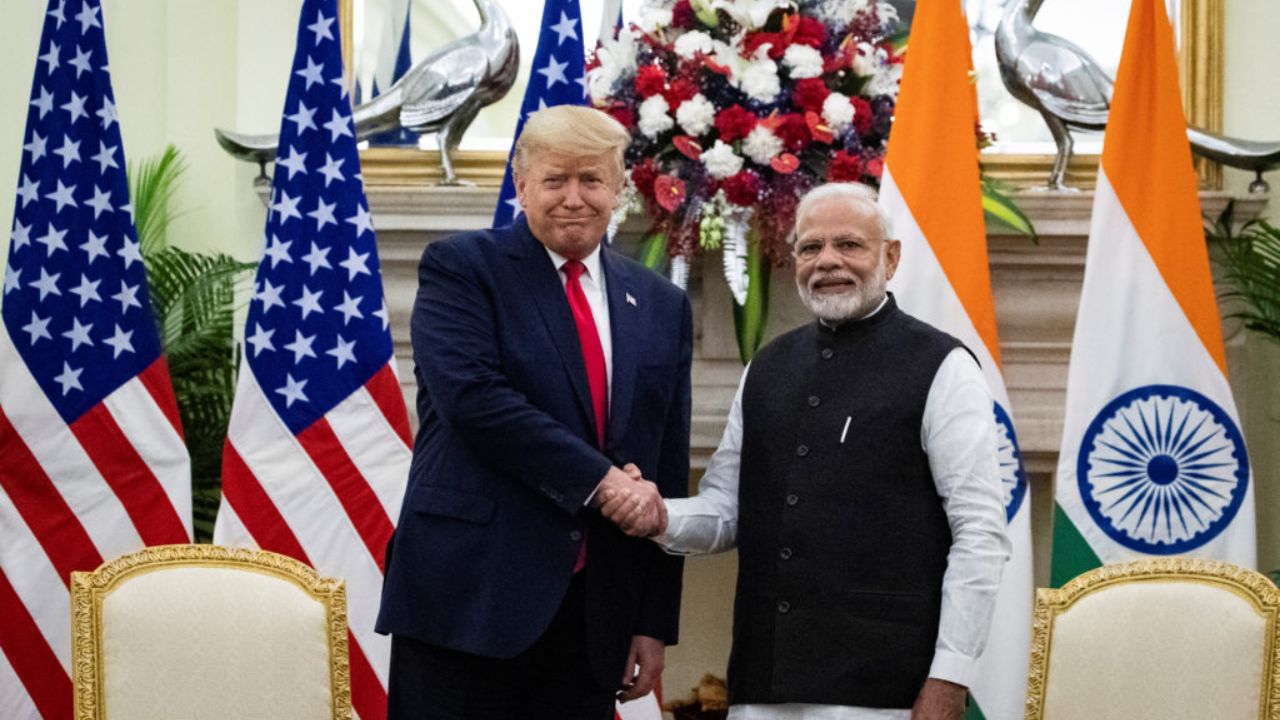
In a significant boost to India–US economic relations, President Donald Trump and Prime Minister Narendra Modi have agreed on a new bilateral trade deal aimed at easing tariff tensions and expanding commercial cooperation between the two countries. The development follows a recent phone conversation between the two leaders, confirmed by US Ambassador to India Sergio Gor in a social media post.
While the ambassador did not disclose details of the discussion, President Trump later announced that the United States would reduce its reciprocal tariffs on Indian goods from 25 percent to 18 percent, citing his friendship and respect for Prime Minister Modi. The move is expected to offer major relief to Indian exporters who had been impacted by higher duties imposed in recent months.
Trump also stated that India had agreed to significantly increase its purchases of American products, including energy, technology, agricultural goods, and defence equipment. According to him, the total value of these purchases could exceed $500 billion over time. He further claimed that India would reduce its reliance on Russian oil and instead source more energy from the United States and potentially other suppliers.
Prime Minister Modi welcomed the announcement, calling his conversation with President Trump “wonderful” and expressing appreciation for the reduced tariff rates on Indian products entering the US market. In a post on X, Modi said the agreement would benefit the people of both nations and unlock new opportunities for cooperation between the world’s largest democracies.
“When two large economies work together, it brings prosperity and stability globally,” Modi wrote, adding that India looks forward to taking its partnership with the US to new heights.
The news of the trade deal triggered a strong positive reaction in Indian financial markets. Stock indices surged sharply, and the rupee strengthened against the US dollar as investors responded to the prospect of improved trade relations and increased foreign investment. Analysts believe the agreement could boost exports, improve business confidence, and support economic growth in the coming months.
However, the deal has not been without controversy. Opposition leaders in India have questioned the lack of clarity around the agreement, pointing out that major announcements appeared to come first from Washington rather than New Delhi. They have called on the government to share full details of the commitments made by both sides, particularly regarding energy imports and tariff concessions.
The Trump administration had previously imposed steep tariffs on several Indian products as part of its push for fairer trade practices and to address trade imbalances. These measures had strained relations between the two countries, prompting months of negotiations behind the scenes.
The new agreement appears to signal a de-escalation of tensions and a renewed focus on cooperation. While the headline tariff reduction has been confirmed, officials have indicated that technical discussions are still ongoing to finalise the full scope of the deal. Specific timelines for implementation and detailed sector-wise changes are expected to be announced in the coming weeks.
This is not the first time Modi and Trump have engaged in high-level talks to strengthen bilateral ties. The two leaders had spoken previously in December, reviewing progress in relations and discussing global and regional developments.
Experts say the trade deal could pave the way for broader strategic collaboration, including in defence, technology, clean energy, and supply chain resilience. If fully implemented, it may also help India expand its presence in the US market while giving American companies greater access to India’s fast-growing economy.
Despite remaining uncertainties, the agreement marks an important step in reshaping India–US trade relations after a period of friction. Businesses on both sides are now awaiting clearer guidelines and formal documentation to understand how the deal will impact specific industries.
As negotiations continue, the focus will remain on ensuring that the agreement delivers long-term benefits while maintaining balance and fairness for both economies.
About the Author
