Finance Minister Nirmala Sitharaman on Saturday announced a range of new initiatives for the agriculture and rural sector in the Union Budget 2026–27, focusing on digital empowerment of farmers, promotion of high-value crops and strengthening women-led enterprises.
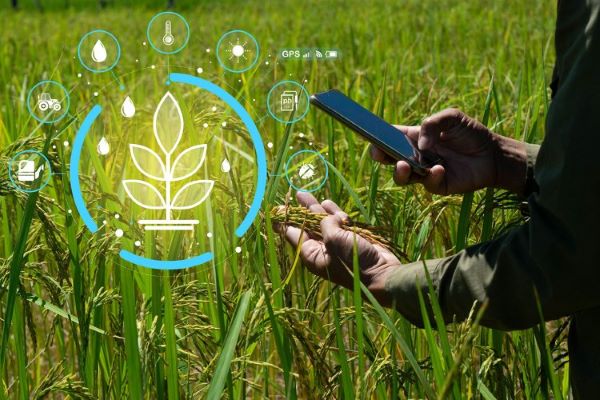
One of the most significant announcements was the launch of Bharat-VISTAAR (Virtually Integrated System to Access Agricultural Resources), a multilingual artificial intelligence-based system aimed at providing customised agricultural advisory services to farmers. The platform will offer information on crop planning, best farming practices, pest control, weather forecasts, market trends and government schemes in farmers’ own languages.
Presenting her ninth consecutive budget, Sitharaman said Bharat-VISTAAR will integrate AgriStack digital portals with knowledge resources from the Indian Council of Agricultural Research (ICAR), supported by advanced AI technologies. The government has earmarked Rs 150 crore for the project in the 2026–27 financial year.
Sources said the initial rollout will support Hindi and English, with plans to gradually include regional languages. The platform is being developed as a national digital backbone connecting central and state agricultural systems while allowing states to retain operational flexibility. It will also involve partnerships with not-for-profit organisations, AI startups, technology firms and Centres of Excellence under the India AI Mission and BHASHINI initiative.
Bharat-VISTAAR is designed to be interactive, enabling farmers to share feedback directly with government systems. This two-way flow of information is expected to support data-driven policymaking and improve agricultural research and extension services.
To further enhance farmers’ incomes and generate rural employment, the finance minister announced a Rs 350 crore allocation for promoting high-value agriculture. The initiative will focus on crops with strong economic and export potential, including coconut, sandalwood, cocoa, cashew, agarwood and premium nuts such as almonds, walnuts and pine nuts.
Highlighting India’s leadership in coconut production, Sitharaman proposed a Coconut Promotion Scheme to boost productivity and competitiveness. The programme will focus on replacing old and low-yielding coconut trees with improved varieties across major coconut-growing states. Nearly 30 million people, including around 10 million farmers, depend on coconut farming for their livelihoods.
A separate dedicated programme for cashew and cocoa will aim to make India self-reliant in raw material production and processing. The government plans to enhance export competitiveness and develop these crops into globally recognised premium brands by 2030.
The Centre will also work with state governments to revive the Indian sandalwood ecosystem through focused cultivation and post-harvest processing. In hilly regions, efforts will be made to rejuvenate ageing orchards and promote high-density plantations of walnuts, almonds and pine nuts. Youth participation will be encouraged to add value and create income opportunities.
Another major initiative announced was the establishment of SHE Marts (Self-Help Entrepreneur Marts) to support rural women-led businesses. Building on the success of the Lakhpati Didi Programme, the scheme aims to help women move from small-scale livelihoods to enterprise ownership.
SHE Marts will be community-owned retail outlets set up within cluster-level federations of self-help groups. They will be supported through enhanced and innovative financing instruments to improve market access for women entrepreneurs and enable them to scale their businesses.
Overall, the agriculture and rural sector announcements in the Union Budget 2026–27 signal a strategic shift towards technology-driven farming, diversification into high-value crops and stronger grassroots entrepreneurship. By integrating digital tools like Bharat-VISTAAR with targeted investments in premium agriculture and women-owned enterprises, the government aims to boost productivity, raise rural incomes and build a more resilient agricultural economy.
About the Author
