Interstellar Comet 3I/ATLAS Set for Closest Earth Flyby on December 19
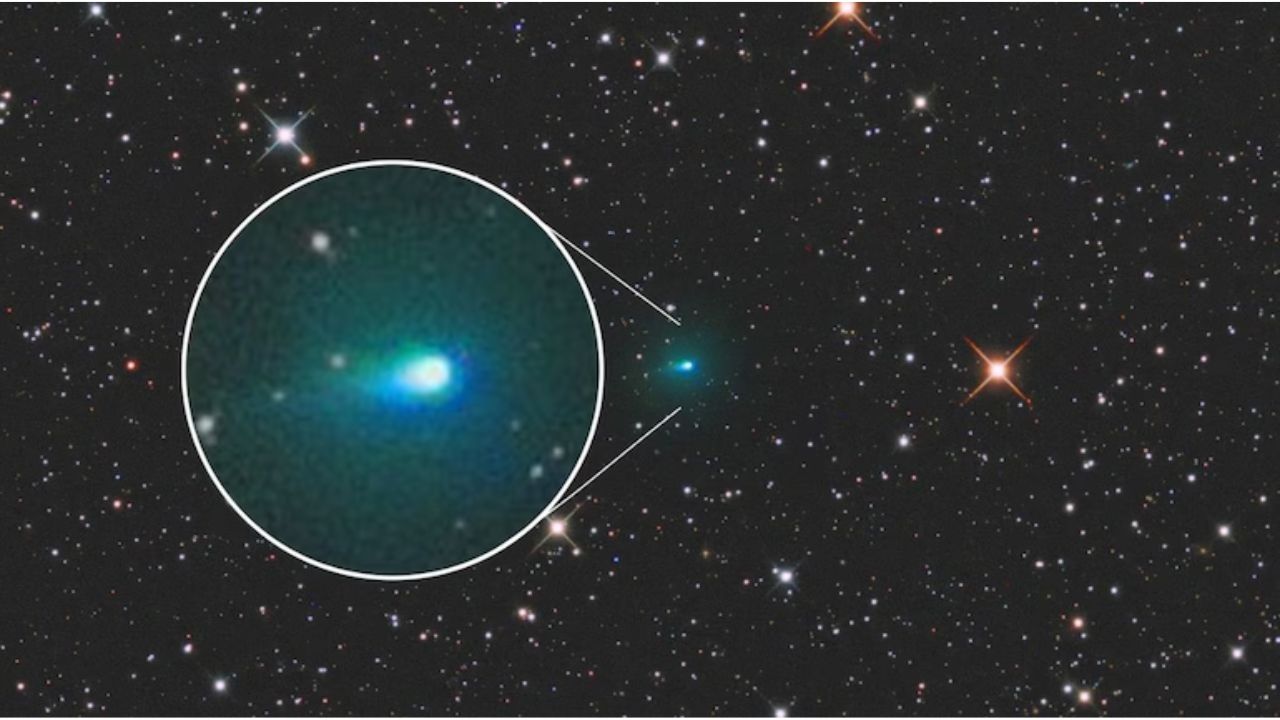
Astronomers around the world are closely watching a rare celestial visitor as interstellar comet 3I/ATLAS reaches its closest point to Earth on Friday, December 19. The event marks a major milestone in the journey of only the third known object confirmed to have entered our solar system from interstellar space.
The comet was first detected on July 1 by NASA-supported ATLAS survey telescopes operating from Chile. Subsequent observations revealed an unusual trajectory, confirming that 3I/ATLAS originated beyond the Sun’s gravitational domain and is merely passing through before continuing its voyage back into deep space. Until now, scientists have identified only two other interstellar objects: 1I/‘Oumuamua in 2017 and comet 2I/Borisov in 2019.
At its closest approach, 3I/ATLAS will remain at a safe distance of about 1.8 astronomical units from Earth — approximately 168 million miles (270 million kilometers). This is nearly twice the average distance between Earth and the Sun. According to the European Space Agency (ESA), the comet poses no threat to Earth or any other planet as it moves through the inner solar system.
Despite its distance, the flyby is of considerable scientific value. As the comet nears the Sun, heat causes gases and dust to stream from its icy nucleus. Studying this material allows researchers to analyze the chemical makeup of a comet formed around another star, offering rare clues about how planetary systems develop beyond our own.
Interest in 3I/ATLAS has intensified in recent weeks, with major observatories and space agencies focusing instruments on the object. Newly released images from the Hubble Space Telescope and ESA’s JUICE mission have captured the comet streaking through space, highlighting its speed and faint, active coma.
Skywatchers can also track the comet’s close approach through a free online broadcast hosted by astronomer Gianluca Masi of the Virtual Telescope Project. The livestream is scheduled to begin at 11 p.m. EST on December 18 (4:00 a.m. GMT on December 19), subject to weather conditions. Additional viewing details are expected closer to the event.
As 3I/ATLAS continues its brief passage through our solar system, it offers scientists a fleeting but invaluable opportunity to study material from another stellar neighborhood — a reminder of the dynamic and interconnected nature of the cosmos.