
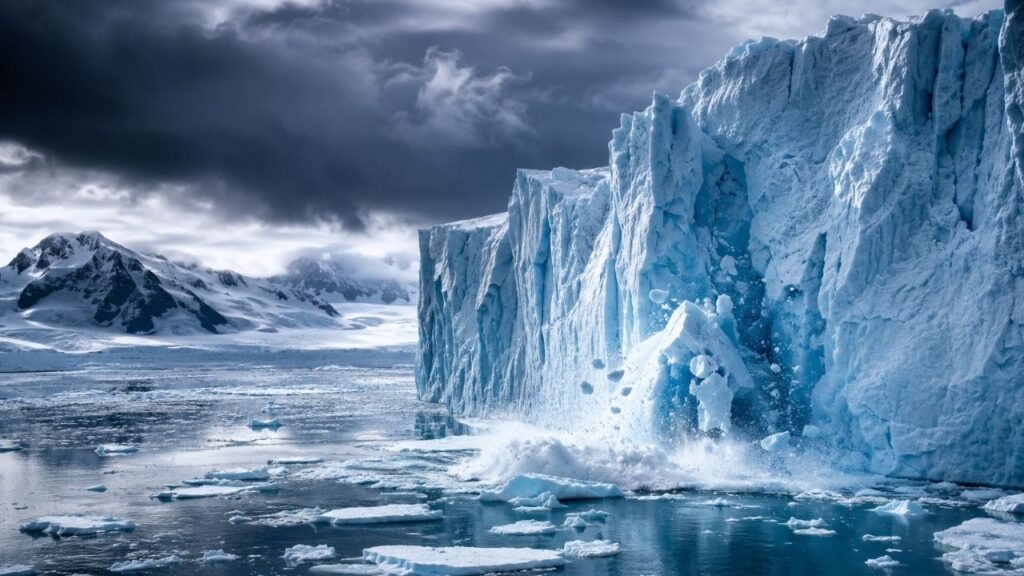


Scientists are raising fresh concerns over Antarctica after new research revealed that the continent’s ice shelves may be melting and weakening faster than previously expected. The findings suggest that the collapse of critical ice barriers could significantly accelerate global sea level rise in the coming decades.
Ice shelves are massive floating extensions of glaciers that slow the movement of land ice into the ocean. These frozen barriers act like natural walls, holding back enormous amounts of ice from rapidly sliding into the sea. However, warming ocean temperatures are steadily weakening these protective structures.
Researchers say the danger is particularly severe in parts of East Antarctica, a region once considered relatively stable compared to West Antarctica. New observations now show that warmer ocean water is reaching beneath several ice shelves, melting them from below and reducing their ability to hold back glaciers.
Hidden melting beneath the ice
Scientists explain that the most dangerous melting is often invisible from the surface. Warm seawater travels deep beneath floating ice shelves through underwater channels and cavities. As this water circulates, it melts the ice from underneath, thinning the shelves over time.
This process weakens the structural stability of the ice. Large cracks begin forming, and eventually huge sections can break away into the ocean in dramatic collapse events.
Researchers warn that if these ice shelves continue to weaken, glaciers behind them could begin flowing much faster toward the sea. This would add more freshwater to the oceans and increase the pace of global sea level rise.
East Antarctica no longer fully stable
For many years, scientists believed East Antarctica was less vulnerable to rapid melting because of its colder temperatures and thicker ice sheets. However, recent studies suggest this assumption may no longer hold true.
Evidence now indicates that some East Antarctic ice shelves are already experiencing significant changes due to warmer ocean conditions linked to climate change.
Scientists involved in the research say even small increases in ocean temperature can have major consequences beneath the ice. Once melting begins, the weakening process may accelerate over time.
The study also highlights how connected Antarctica’s ice systems are. Damage in one area can influence nearby glaciers and ice shelves, increasing instability across wider regions of the continent.
Why sea level rise matters globally
Antarctica contains enough ice to raise global sea levels dramatically if large portions melt over long periods. While a complete melt would take centuries, scientists warn that even partial ice loss this century could threaten millions of people living in coastal areas.
Rising seas increase the risks of flooding, coastal erosion, storm surges, and saltwater intrusion into freshwater supplies. Major cities, island nations, and low-lying communities are especially vulnerable.
Climate researchers say understanding how quickly Antarctic ice shelves are weakening is critical for improving future sea level projections and helping governments prepare adaptation strategies.
Scientists call for closer monitoring
Researchers are now using satellites, underwater observations, climate models, and aerial surveys to track changes in Antarctic ice more accurately. These tools help scientists measure thinning ice, monitor crack formation, and study how warm ocean water moves beneath glaciers.
The latest findings underline the urgent need for long-term monitoring of Antarctica’s rapidly changing environment.
Scientists stress that Antarctica’s future will depend heavily on global warming trends in the coming decades. Reducing greenhouse gas emissions could slow ice loss and limit the long-term impacts of sea level rise.
The new research adds to growing evidence that climate change is reshaping even the coldest and most remote parts of Earth. For scientists, Antarctica is no longer viewed as a distant frozen continent untouched by warming. Instead, it is becoming one of the clearest indicators of how rapidly the planet’s climate system is changing.