
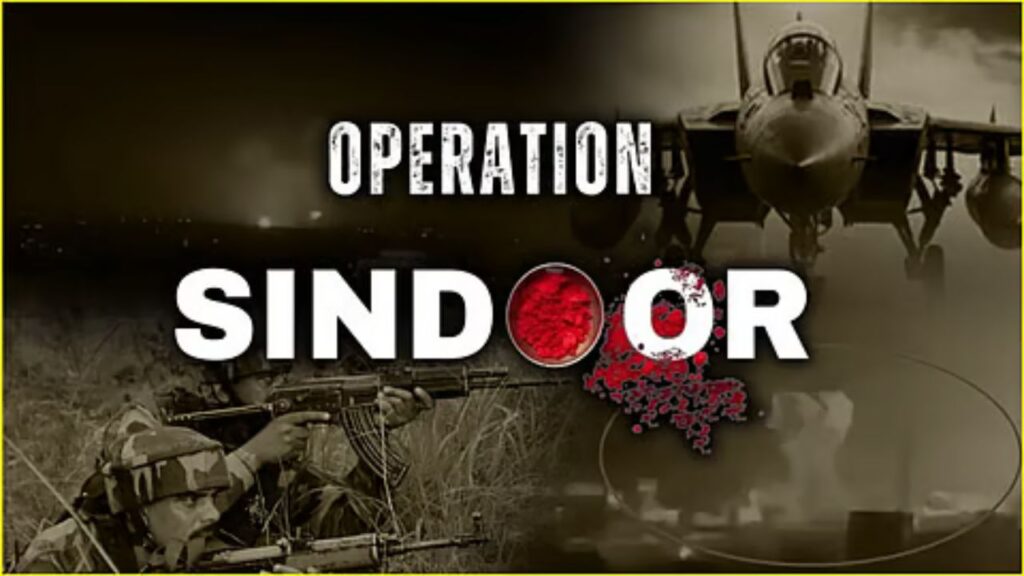


A detailed study by a Swiss military think tank has concluded that the Indian Air Force (IAF) established air superiority over significant parts of Pakistan during Operation Sindoor in May 2025, ultimately compelling Islamabad to seek a ceasefire within four days of intense aerial conflict.
The report, published by the Switzerland-based Centre for Military History and Perspective Studies (CHPM), offers one of the most comprehensive independent assessments of the short but highly escalatory air confrontation between India and Pakistan. Authored by military historian Adrien Fontanellaz and reviewed by a committee of senior defence experts, the study states that by the morning of May 10, the IAF had gained the operational freedom to conduct long-range precision strikes at will.
According to the analysis, Pakistan’s air defences and surveillance capabilities were significantly degraded following targeted Indian operations against radar installations and surface-to-air missile systems. This loss of situational awareness reportedly left the Pakistan Air Force (PAF) unable to mount effective counter-offensives, while Indian aircraft and missile platforms expanded their strike reach deep into Pakistani territory.
The conflict began on the night of May 7, when Indian strike packages involving Rafale and Mirage 2000 fighters targeted terror infrastructure linked to Jaish-e-Mohammed in Bahawalpur and Lashkar-e-Taiba in Muridke. Pakistani air defences responded aggressively, scrambling dozens of fighters and firing long-range PL-15 air-to-air missiles.
While Pakistan claimed to have downed six Indian aircraft, the Swiss report confirmed visual evidence of losses including at least one Rafale, one Mirage 2000, and a third fighter believed to be either a MiG-29 or Su-30MKI. However, the study noted that several Indian pilots successfully evaded missile attacks, as evidenced by recovered missile debris inside Indian territory.
Following the initial clash, Pakistan launched multiple waves of drone and missile attacks aimed at overwhelming Indian air defences and disabling critical military installations. These operations involved hundreds of drones, guided rockets, and air-launched munitions supported by electronic warfare and cyber operations.
Despite the scale of the assault, the report states that India’s integrated air defence network — combining Air Force and Army sensor systems — proved highly effective. Indian forces reportedly destroyed more than half of the incoming drones while preventing Pakistani intelligence from accurately locating missile battery positions.
In response, the IAF initiated a systematic campaign to neutralise Pakistan’s air defence infrastructure. Using loitering munitions and long-range precision weapons, Indian forces struck radar sites and missile systems over two days, significantly reducing Pakistani airspace coverage.
The escalation peaked in the early hours of May 10, when India launched multiple waves of long-range missile strikes using BrahMos, SCALP-EG, and Rampage missiles. These attacks reportedly hit several air bases deep inside Pakistan, damaging runways, hangars, command centres, and radar facilities.
Among the most affected installations were Sargodha, Jacobabad, and Bholari air bases. The IAF assessed that multiple fighter aircraft, an airborne early warning platform, drones, and key infrastructure were destroyed on the ground. While Pakistan disputed some of these claims, it acknowledged casualties and damage at certain locations.
The cumulative impact of these strikes, combined with degraded air defences and mounting operational pressure, led Pakistani military authorities to request a ceasefire by midday on May 10, according to the report.
The study also highlighted that while India suffered early setbacks during the opening night of combat, it quickly adapted its tactics, shifting toward systematic suppression of enemy air defences and long-range precision warfare.
The authors cautioned that both sides’ claims of aerial victories should be viewed carefully, noting that radar data and electronic intelligence can often misinterpret evasive manoeuvres as shootdowns.
Overall, the Swiss think tank concluded that Operation Sindoor marked a significant demonstration of India’s evolving air warfare capabilities, particularly in networked air defence, long-range strike operations, and rapid escalation control — ultimately allowing New Delhi to achieve its military objectives within a limited timeframe.