
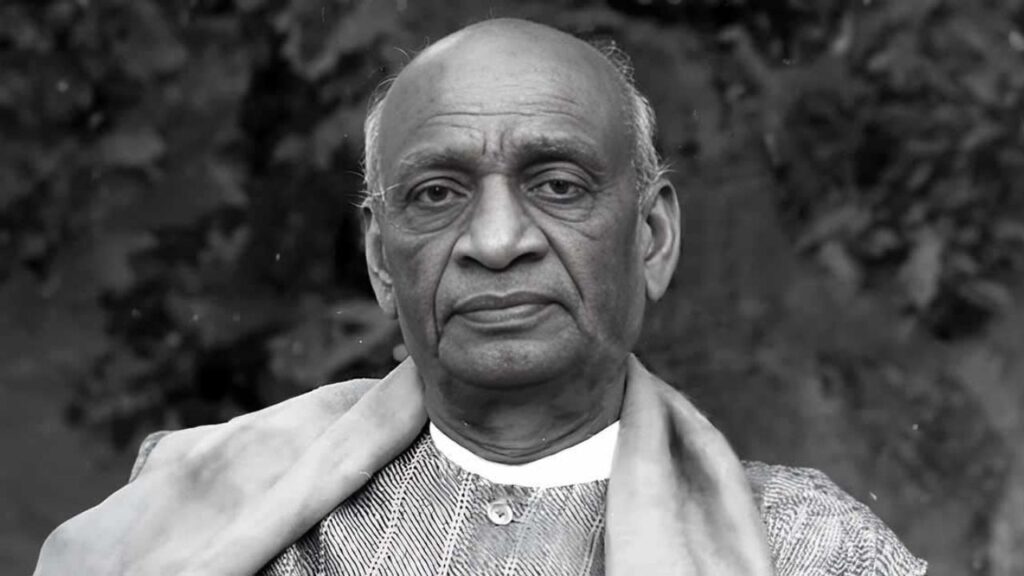


As India observes the birth anniversary of Sardar Vallabhbhai Patel, the nation remembers not just the man who unified its territories but also the visionary who laid the foundations of its modern democratic institutions. Known as the Iron Man of India, Patel’s legacy extends far beyond political integration—he helped shape the administrative and institutional framework that continues to guide the Republic today.
Unifying a Fragmented Nation
When India attained independence in 1947, nearly 40% of its landmass remained under 565 princely states. The enormous challenge of integrating these semi-autonomous regions into the Indian Union fell upon Sardar Patel, then serving as Deputy Prime Minister and Home Minister. Through a blend of diplomacy and firm resolve, he persuaded most rulers to accede to India peacefully.
However, not all complied—most notably the Nizam of Hyderabad. In response, Patel authorised Operation Polo, a swift military action that compelled the Nizam to sign the Instrument of Accession. Despite the turmoil of Partition that had already claimed hundreds of thousands of lives, Patel ensured national unification with minimal additional bloodshed. His determination and pragmatism earned him the enduring title of Iron Man of India.
Laying the Foundation of the Civil Services
Patel’s contribution to building India’s administrative machinery was equally monumental. The civil services, originally designed as the “steel frame” of British rule, faced uncertainty after independence. Many questioned whether a colonial-era institution had a place in a democratic India.
Patel, however, firmly believed that a merit-based, pan-Indian administrative system was vital to preserve national unity. In October 1946, even before independence, he convened a conference of provincial leaders to discuss the structure of future civil and police services. His vision eventually led to the establishment of the Indian Administrative Service (IAS) and the Indian Police Service (IPS)—institutions he saw as the “new steel frame” for a free India. Patel reminded young officers that their duty was to serve citizens with honesty, discipline, and humility.
Architect of India’s First National Census
Few remember that Patel also laid the groundwork for India’s first national census after independence. In February 1950, just months before his passing, he inaugurated a conference of census superintendents in New Delhi. He emphasized that the census should be more than a headcount—it should collect vital data to inform India’s social and economic policies.
“Census,” Patel noted, “affords an opportunity for the Government to reach every home throughout the length and breadth of the country.” His vision shaped the 1951 Census, setting the tone for future exercises that remain central to India’s planning and governance.
Champion of Farmers’ Rights: The Bardoli Legacy
Before his national prominence, Patel had already earned the respect of millions through his leadership in the Bardoli Satyagraha of 1928. The movement, protesting unjust tax hikes imposed by the British, was marked by Patel’s disciplined organisation and unwavering support for farmers. The victory not only forced the colonial government to withdraw the increased taxes but also earned Patel the affectionate title of Sardar (leader).
Earlier, in the Kheda Satyagraha of 1918, Patel had demonstrated similar resolve in assisting Mahatma Gandhi to secure relief for distressed farmers—an early glimpse of his lifelong dedication to people’s welfare.
Patel’s Vision of a Strong Army
Even as he embraced Gandhian ideals, Patel’s pragmatism often guided his policy decisions. Addressing a massive gathering at Mumbai’s Chowpatty on January 17, 1948, he stressed the importance of maintaining a capable army. “If our country is to survive as a nation,” he said, “it must possess the strength to deter any foreign power from interfering in our affairs.”
While Gandhi envisioned moral strength as India’s shield, Patel believed that military preparedness was equally essential to safeguard the nation’s sovereignty.
A Legacy Beyond Time
From uniting a divided land to strengthening its administrative and defence institutions, Sardar Vallabhbhai Patel’s imprint on India’s destiny is indelible. His life’s work reflects not only courage and conviction but also an extraordinary foresight that continues to guide India’s democratic journey.
As the nation pays tribute to the Iron Man, his enduring message of unity, discipline, and nation-building remains as relevant today as it was in 1947.