
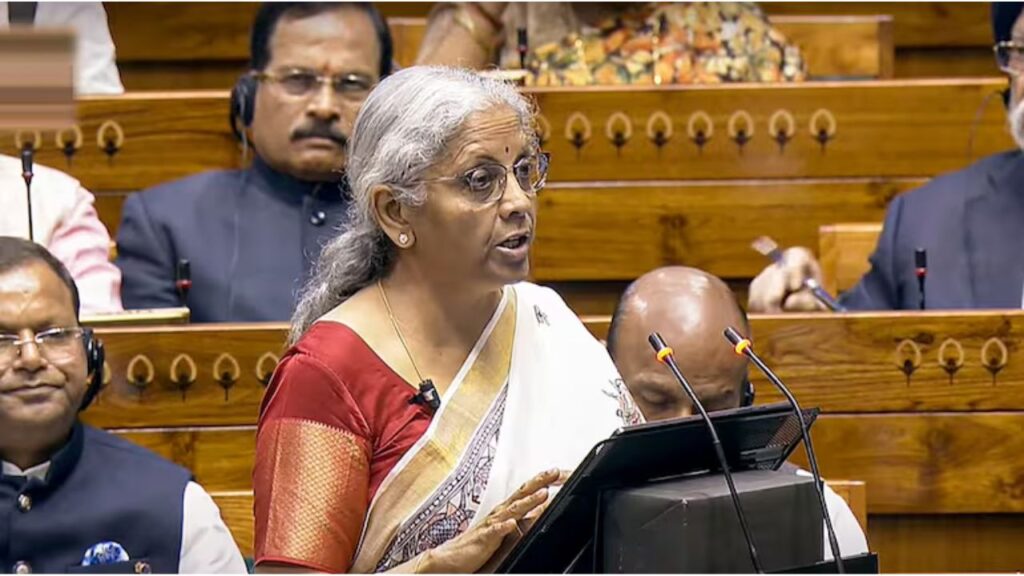


Finance Minister Nirmala Sitharaman is poised to create a historic milestone on Sunday as she presents the Union Budget for the ninth consecutive time, becoming the longest-serving finance minister to deliver back-to-back budgets in India’s parliamentary history. The upcoming Budget is expected to outline measures aimed at sustaining economic growth, maintaining fiscal discipline and introducing reforms to protect the economy from global uncertainties, including trade frictions and rising protectionism.
With this achievement, Sitharaman moves closer to the all-time record held by former Prime Minister Morarji Desai, who presented the Union Budget ten times across different tenures. Desai delivered six budgets between 1959 and 1964 and four more between 1967 and 1969. However, Sitharaman will hold the unique distinction of presenting the highest number of budgets consecutively — nine in a row under Prime Minister Narendra Modi’s leadership.
Former finance ministers P Chidambaram and Pranab Mukherjee also figure prominently in India’s budgetary history, having presented the Budget nine and eight times respectively, though not in uninterrupted succession.
Sitharaman was appointed as India’s first full-time woman finance minister in May 2019 after the Modi government secured a decisive second term. She continued to hold the key portfolio following the government’s return to power for a third term in 2024. Over the last six years and eight months, she has steered the economy through unprecedented challenges, including the Covid-19 pandemic, global geopolitical tensions and economic disruptions. During this period, India has consistently remained among the fastest-growing major economies in the world.
Ahead of the Budget Session, Prime Minister Narendra Modi highlighted the significance of the moment, noting that Sitharaman’s ninth consecutive Budget presentation would be recorded as a matter of pride in India’s parliamentary history.
India’s Union Budget tradition dates back to the early days of independence. The first Budget was presented on November 26, 1947, by the country’s first finance minister, R K Shanmukham Chetty. Since then, the annual exercise has become a crucial policy event that outlines the government’s economic direction and fiscal strategy.
Morarji Desai continues to hold the record for presenting the maximum number of budgets — ten in total — across his stints as finance minister under Prime Ministers Jawaharlal Nehru and Lal Bahadur Shastri. P Chidambaram follows closely, having delivered nine budgets between 1996 and 2014 under different governments. Pranab Mukherjee presented eight budgets, including five consecutive ones between 2009 and 2012 during the UPA administration.
Sitharaman also holds the record for delivering the longest Budget speech in India’s history. Her 2020 Budget address lasted two hours and forty minutes before being cut short with a few pages remaining. In contrast, the shortest Budget speech was delivered by Hirubhai Mulljibhai Patel in 1977, consisting of just 800 words during an interim Budget.
Several long-standing traditions around the Budget have evolved over time. Until 1999, it was presented at 5 pm — a colonial-era practice designed to align with business hours in the United Kingdom. This was changed to 11 am by then finance minister Yashwant Sinha. Another major reform came in 2017, when the presentation date was moved from February 28 to February 1, enabling quicker parliamentary approvals and timely implementation from the start of the financial year on April 1.
As Sitharaman prepares to unveil her ninth straight Budget, expectations remain high across sectors. Economists, industry leaders and citizens alike are looking for policy initiatives that encourage investment, strengthen infrastructure, support households and ensure fiscal stability amid an uncertain global economic climate.