


Consciousness has long stood at the heart of humanity’s deepest questions. What does it mean to be aware? Where does the sense of “I” arise from? Is consciousness merely a function of the brain, or is it something more fundamental to existence itself? Across centuries, spiritual traditions, philosophical inquiry, and modern science have all grappled with these questions, often arriving at different, yet intriguingly overlapping, insights.
In contemporary discourse, consciousness is no longer confined to spiritual reflection alone. It sits at the intersection of neuroscience, psychology, philosophy, and contemplative traditions. Yet spirituality continues to offer one of the most enduring and holistic frameworks for understanding consciousness, not as an abstract concept, but as lived experience.
Consciousness in Spiritual Traditions
Across ancient spiritual systems, consciousness is viewed as the core reality of human existence. In Indian philosophical thought, particularly within Vedantic and yogic traditions, consciousness is not something humans possess, but something they are. It is described as the silent witness behind thoughts, emotions, and sensory experiences.
Texts such as the Mandukya Upanishad explore consciousness through states of awareness, ranging from waking and dreaming to deep sleep and transcendent awareness. This layered understanding presents consciousness as fluid, expansive, and capable of self-realisation beyond the physical body or ego identity.
Similarly, Buddhist philosophy examines consciousness through mindfulness and impermanence, emphasising awareness as a process rather than a fixed entity. In Western mystical traditions, consciousness is often equated with divine presence, inner light, or soul awareness. Despite cultural differences, these traditions converge on a shared insight: consciousness is central to meaning, ethics, and inner freedom.
Consciousness and the Human Mind
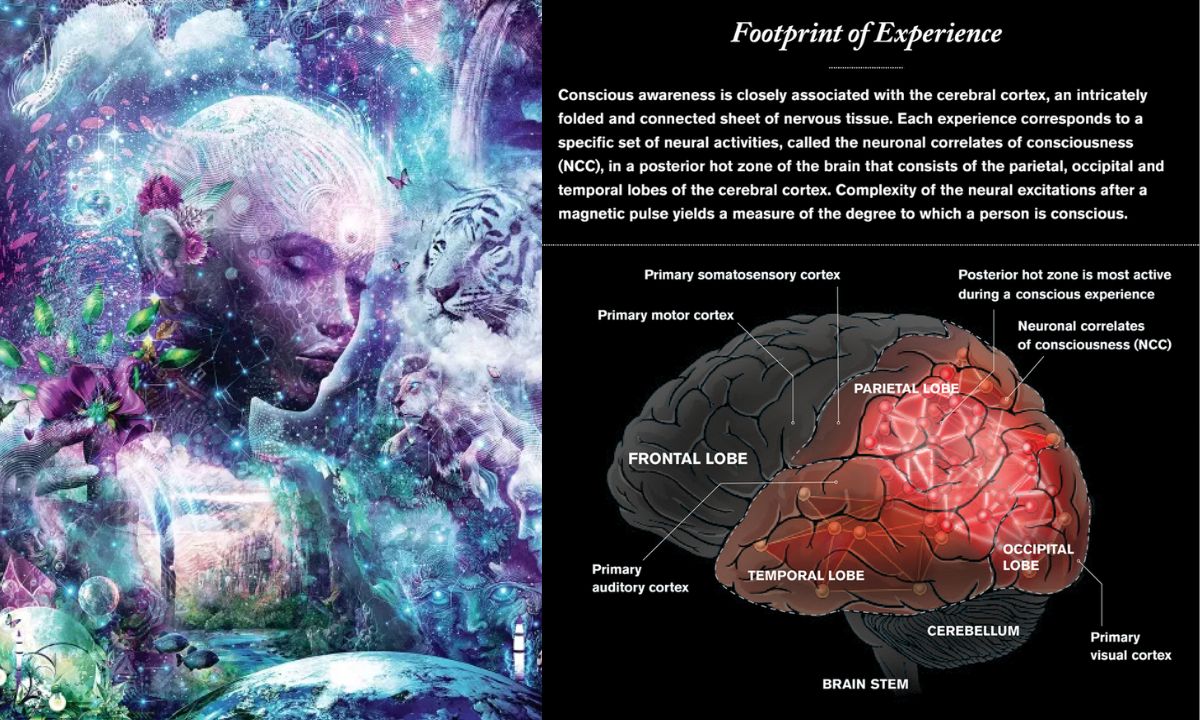
Modern neuroscience defines consciousness as the brain’s capacity to register awareness, perception, and subjective experience. Advances in brain imaging have identified neural correlates of consciousness, yet the fundamental question remains unresolved. How does subjective experience arise from physical matter?
This gap, often called the “hard problem of consciousness,” has reopened dialogue between science and spirituality. Researchers increasingly acknowledge that first-person experience, long explored in meditation and contemplative practices, may offer insights inaccessible through observation alone. As a result, practices like mindfulness, meditation, and breath awareness are now studied for their impact on attention, emotional regulation, and mental health.
A Bridge Between Inner Life and Ethics
One of the most profound contributions of spiritual perspectives on consciousness lies in ethical awareness. When consciousness is understood as shared or interconnected, individual actions acquire collective significance. This view challenges purely materialistic frameworks by placing responsibility, compassion, and self-restraint at the centre of human development.
In many spiritual traditions, heightened consciousness is linked to reduced ego, greater empathy, and ethical clarity. Awareness is not seen merely as perception, but as moral insight. This connection explains why spiritual teachings often emphasise self-observation as the foundation of social harmony and personal transformation.
Consciousness in a Fragmented World
In today’s hyperconnected yet fragmented world, conversations around consciousness carry renewed relevance. Rising mental health challenges, environmental crises, and social polarisation have prompted a search for deeper frameworks of meaning. Consciousness-based approaches encourage individuals to look inward while remaining engaged with the world, bridging personal well-being and collective responsibility.
Rather than opposing science, spirituality invites a complementary understanding of consciousness, one that integrates inner experience with empirical inquiry. This integrative approach resonates strongly with contemporary efforts to rethink education, leadership, healthcare, and sustainability through holistic lenses.
Why Consciousness Still Matters
Consciousness remains humanity’s most intimate mystery and its most powerful resource. It shapes perception, governs behaviour, and defines how societies understand truth, responsibility, and purpose. Spiritual traditions remind us that expanding consciousness is not about acquiring more information, but about cultivating clarity, presence, and wisdom.
As debates around artificial intelligence, mental health, and human identity intensify, consciousness stands as a reminder that progress is incomplete without self-awareness. In recognising consciousness as both a personal experience and a shared human foundation, spirituality continues to offer insights that remain deeply relevant to the modern world.
In understanding consciousness, we are ultimately exploring what it means to be human.