
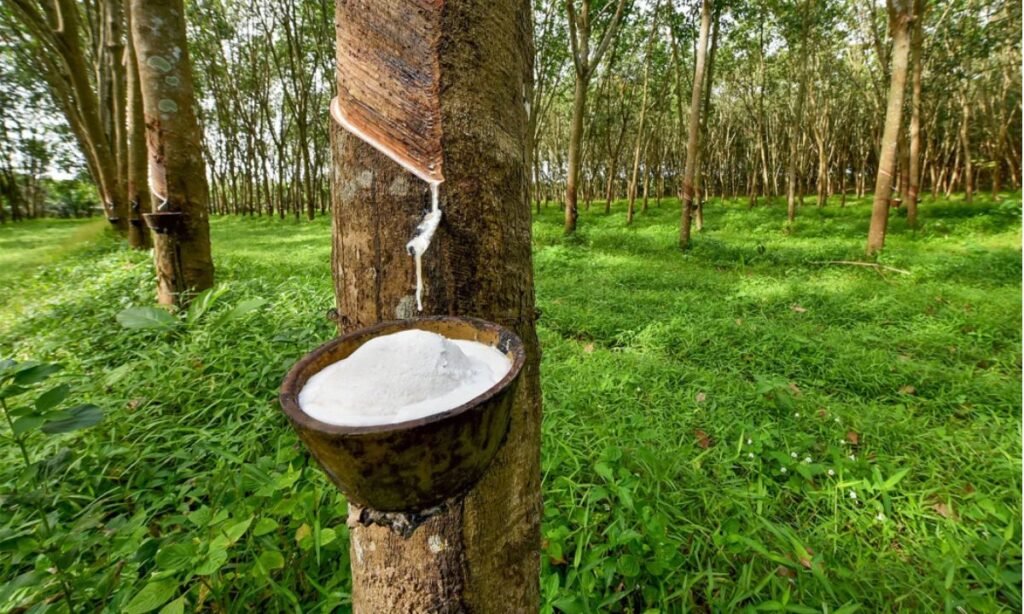


The global rubber industry is undergoing a quiet but decisive transformation. At the heart of this shift lies Southeast Asia, a region that produces nearly 90% of the world’s natural rubber and is increasingly shaping the future of how this critical commodity is grown, processed, and traded. For India, which is the 2nd largest consumer and the 6th largest producer of natural rubber, the region offers not just competition but a compelling blueprint for sustainable growth. Despite its strong domestic base, India continues to rely on imports for nearly 60% of its total natural rubber consumption, highlighting a structural gap that needs urgent attention.
Countries such as Thailand, Indonesia, Vietnam, and China have long dominated the global rubber supply. Their scale is unmatched, but what is now drawing attention is not just how much they produce but how they are beginning to produce it.
Rubber, essential to industries ranging from automotive to healthcare, has historically carried a high environmental and social cost. Large-scale monoculture plantations have contributed to deforestation, biodiversity loss, and ecosystem degradation. A 2023 study published in Nature and highlighted by Mongabay estimates that more than 4 million hectares of forest have been cleared for rubber plantations in Southeast Asia since 1993.
Alongside environmental concerns, the industry has also grappled with social challenges, particularly the vulnerability of smallholder farmers, who account for nearly 85% of global production. Issues such as price volatility, low incomes, and limited access to healthcare and education remain persistent.
What sets Southeast Asia apart today is its growing recognition that the future of rubber lies in sustainability, not as a compliance requirement, but as a competitive advantage.
Across the region, there is a visible shift towards agroforestry, where rubber cultivation is integrated with other crops. This approach not only restores biodiversity but also creates diversified income streams for farmers, improving resilience against market fluctuations.
Equally important is the move towards reducing chemical dependency. Organic and low-input farming practices are gaining traction, helping preserve soil health and water quality while lowering the environmental footprint of rubber cultivation.
Sustainability in rubber is increasingly being formalized through globally recognized certification systems. Organizations such as the Forest Stewardship Council and the Rainforest Alliance are playing a pivotal role in this transition.
FSC certification, traditionally associated with timber, has expanded into rubber, ensuring responsible forest management, biodiversity conservation, and respect for labour and indigenous rights. For producers, certification is no longer optional; it is becoming essential for accessing premium international markets, particularly in Europe, where regulations around deforestation are tightening.
Similarly, the Rainforest Alliance certification emphasizes climate-smart agriculture, fair labour practices, and community well-being. Its seal has become a recognizable mark of trust for increasingly conscious global consumers.
For India, where export competitiveness is closely tied to compliance and quality, these frameworks offer critical direction.
Beyond farming practices and certifications, technology is emerging as a powerful catalyst in Southeast Asia’s rubber transformation.
Innovations such as precision agriculture, remote sensing, and climate-resilient crop varieties are helping optimize productivity while conserving resources. At the same time, digital tools are addressing one of the industry’s most pressing challenges, traceability.
Blockchain-based solutions and platforms like TraceX are enabling end-to-end visibility across the supply chain. From plantation to final product, stakeholders can now verify origin, quality, and compliance with sustainability standards. This level of transparency is rapidly becoming a prerequisite for global trade.
One of the most defining characteristics of Southeast Asia’s progress is the collaborative approach driving it. Governments are introducing supportive policies, industry players are investing in innovation, and NGOs are actively advocating for environmental protection and farmer welfare.
Consumers, too, are influencing change. Rising awareness around sustainable sourcing is reshaping purchasing decisions, pushing brands to adopt responsible practices across their value chains.
India’s rubber industry today stands at a critical juncture. With strong domestic demand, a well-established plantation base, and growing industrial capacity, the country has the foundations to emerge as a global leader, not just in volume, but in value.
However, the lessons from Southeast Asia are clear:
• Sustainability is no longer optional; it is integral to market access and long-term viability.
• Smallholder empowerment is critical to building a resilient supply chain.
• Certification and traceability will define competitiveness in global markets.
• Technology adoption must accelerate to bridge efficiency and transparency gaps.
The transition underway in Southeast Asia is not without its challenges. But it represents a decisive move towards aligning economic growth with environmental responsibility and social equity.
For India, the opportunity lies not just in following this path but in adapting it, leveraging its own strengths in research, policy, and industry collaboration.
Conclusion
To truly achieve rubber excellence and long-term self-reliance, India must focus on three strategic priorities. First, there is an urgent need to reduce import dependency, as excessive reliance on global markets exposes the industry to price volatility and supply disruptions. Strengthening domestic production must become a national priority.
Second, enhanced government support for expanding and modernizing rubber plantations is essential. This includes incentivizing new plantations, supporting replantation with high-yield varieties, and promoting cultivation in non-traditional regions through scientific and climate-resilient approaches.
Third, the industry must actively explore the use of alternate materials and sustainable substitutes, alongside investments in recycling and innovation. This will not only reduce pressure on natural rubber demand but also align India with global sustainability trends.
By integrating these priorities with the lessons from Southeast Asia, India can build a resilient, competitive, and future-ready rubber ecosystem, one that balances growth with sustainability and positions the country as a true global leader in the rubber value chain.
– Anay Gupta, President of All India Rubber Industries Association