
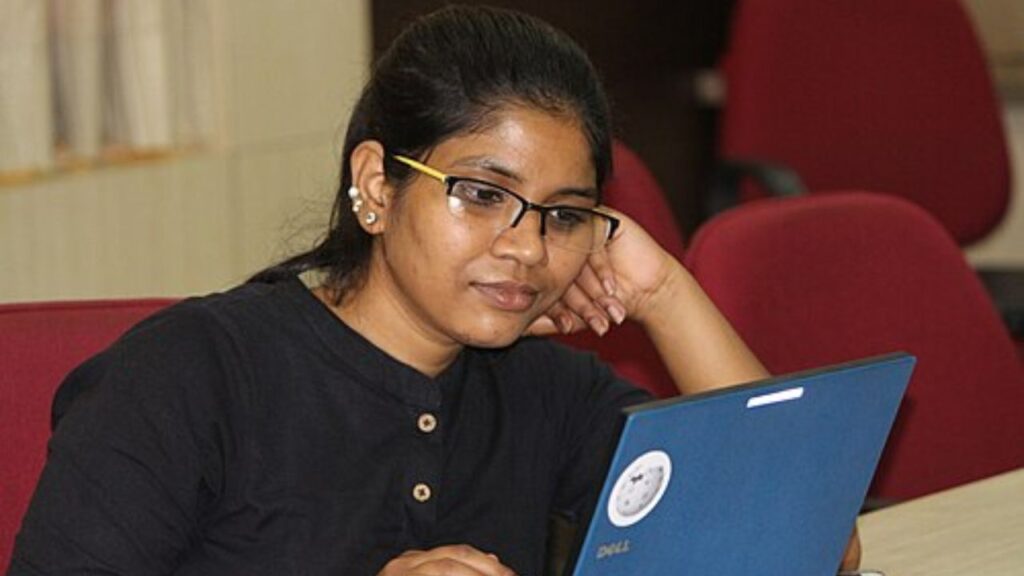


An Odia Wikimedia contributor, Aliva Sahoo reflects on her journey since 2016, speaking to UI NEWZ about community-driven knowledge building, women-focused content, public health research, and the growing importance of local language participation in Wikipedia’s global mission.
As Wikipedia completes 25 years, how do you view its relevance today, and do you see yourself continuing as a volunteer editor in the years ahead?
As Wikipedia turns 25, it honestly feels more relevant than ever. In a world overflowing with information, some of it reliable, some of it not, Wikipedia remains a place people can turn to for knowledge that is free, neutral, and built by a community that genuinely cares. For millions of students, researchers, and curious minds around the world, it’s often the very first stop.
I definitely see myself continuing as a volunteer editor in the years to come. For me, Wikipedia isn’t just a platform; it’s a shared space where learning meets service, and knowledge becomes a way of giving back. As long as I can contribute something meaningful that helps others, I’ll be proud to be part of this collective journey.
When did your journey with Wikipedia begin, and what motivated you to start volunteering as an editor?
My journey with Wikipedia officially began on January 10, 2016, when I joined through a Wikipedia workshop held in Puri, Odisha. During that workshop, I truly realised how powerful free knowledge can be, especially for people who do not have access to expensive books or formal learning resources. Coming from a social work background, I was deeply motivated by the idea that information itself can be a strong tool for empowerment. I started editing Wikipedia to contribute local knowledge, government schemes, health-related issues, women’s empowerment, and culture-related topics in my language, so that more people could easily understand, access, and benefit from this information.
What aspects of Wikipedia or its community initially drew you in, and which topics or communities did you engage with first?
What initially drew me to Wikipedia was its openness; anyone can contribute, learn, and grow, regardless of their background. The friendly and supportive behavior of the Wikimedia community made the learning process comfortable and encouraging for a new editor like me. Another important factor was the opportunity to contribute in Odia, my mother tongue. Since I have completed my graduation in Odia literature, working in my own language helped me connect more deeply with the platform and contribute with confidence.
I first engaged with the Odia Wikimedia community and began contributing articles related to women’s empowerment, culture, traditional musical instruments, foods, notable persons, and other culturally relevant topics.
Has being part of the Wikipedia editing community deepened your expertise or interest in any subject? Could you share a specific example?
Yes, being part of the Wikipedia editing community has significantly deepened my interest in category-based knowledge building and thematic research. Over time, I realised that working within a specific category allows an editor to explore a subject more holistically, rather than writing isolated articles. A strong example of this is my work with the Odia Wikimedia HIV/AIDS Knowledge Improvement Project. Through this category, I got the opportunity to research and create around 80 interrelated articles connected to HIV/AIDS. Working within this category helped me understand how different topics, such as health awareness, prevention, social stigma, policies, and community perspectives, can be systematically linked.
What have been some of your most meaningful contributions to Wikipedia, and how do you think they have created impact beyond the platform, such as in education, local history, or public understanding?
Some of my most meaningful contributions to Wikipedia have been writing and expanding women-focused content, particularly in the Odia language. I have created and improved articles related to women’s empowerment, women’s health, social challenges faced by women, and notable women personalities, with the aim of making reliable information accessible to a wider audience.
By organising women-related articles within relevant categories, I tried to ensure that readers could find connected information in one place, making learning more structured and meaningful. These contributions support education and public awareness, especially for students, grassroots workers, and women who seek information in their mother tongue. Beyond Wikipedia, this work helps highlight women’s experiences, strengthens gender-sensitive understanding, and contributes to documenting women’s roles in society, culture, and development for future generations.
What role do local or language-based communities play in strengthening Wikipedia as a global knowledge platform?
Local and language-based communities play a vital role in making Wikipedia truly global and inclusive. They bring regional knowledge, lived experiences, and cultural context that may not be well represented in dominant languages. By contributing in local languages, these communities ensure that knowledge reaches people in a form they can easily understand and relate to. Communities like the Odia Wikimedia community help document local history, culture, social issues, and grassroots realities, thereby enriching Wikipedia with diverse perspectives. They also create a supportive environment for new contributors, encouraging learning, collaboration, and sustained participation. Together, these local efforts strengthen Wikipedia as a global knowledge platform by ensuring that free knowledge is not limited by language, geography, or access barriers.