
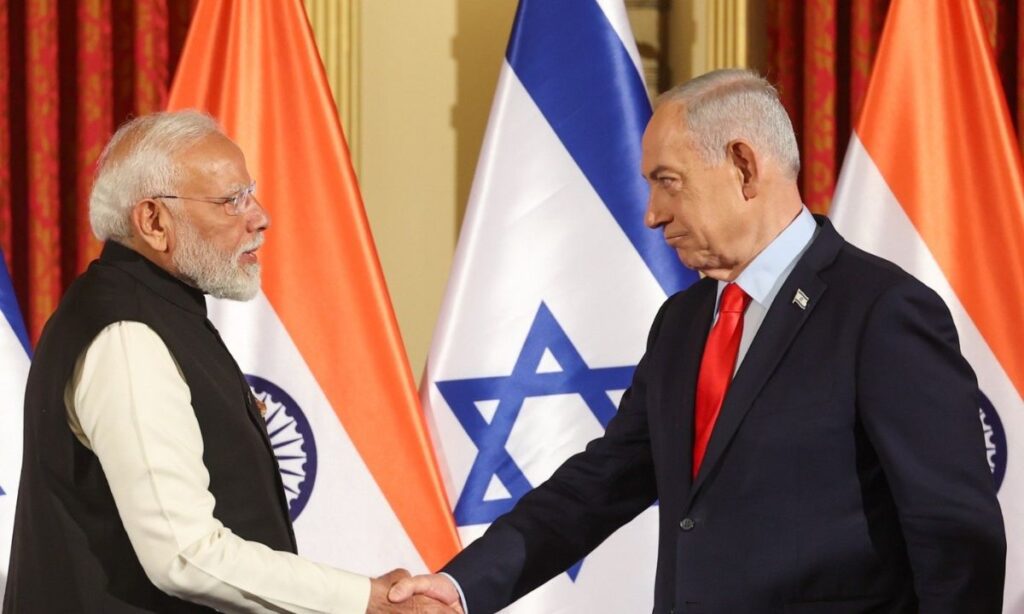


Jerusalem/New Delhi | February 2026: In a decisive move reshaping bilateral engagement, India and Israel have signed 27 Memoranda of Understanding (MoUs) and elevated ties to a Special Strategic Partnership following high-level talks between Narendra Modi and Benjamin Netanyahu.
While defence cooperation has long anchored the relationship, this new framework signals a transition toward a technology-led, innovation-centric, and economically integrated alliance – aligned with the realities of AI disruption, supply-chain shifts, climate stress, and workforce transformation.
This is not merely a diplomatic milestone; it is a blueprint for applied solutions.
1. Technology as Strategic Infrastructure
At the heart of the agreements lies a Critical & Emerging Technologies Partnership focusing on:
- Artificial Intelligence (AI)
- Quantum computing
- Semiconductors
- Cybersecurity
- Space technologies
- Critical minerals
Impact Lens:
In an era where technological sovereignty shapes national power, India and Israel are institutionalising joint R&D, startup collaboration, and policy coordination. Israel’s innovation ecosystem and India’s scale-driven digital infrastructure create a complementary synergy – particularly in AI governance, chip design, and cyber resilience.
The agreement between NPCI International Payments Ltd. and MASAV to explore UPI-based cross-border payment linkages reflects digital public infrastructure moving into global interoperability.
For India, it expands fintech diplomacy. For Israel, it offers scalable digital transaction architecture.
2. Agriculture & Climate Resilience: Scaling Innovation to Fields
Agriculture remains one of the most tangible success stories of India–Israel cooperation. The renewed partnership between the Indian Council of Agricultural Research and MASHAV will expand the India–Israel Innovation Centre for Agriculture.
Solutions Focus:
- Precision irrigation to combat water scarcity
- Satellite-based crop monitoring
- Integrated pest management
- Climate-resilient seed research
For India – facing climate volatility and rural livelihood stress – Israeli micro-irrigation and water technologies can significantly enhance productivity.
For Israel – a desert innovation leader – collaboration offers scale testing and emerging market integration.
The fisheries and aquaculture cooperation component also advances sustainable marine economy practices, aligning with blue economy priorities.
3. Labour Mobility with Safeguards
A key inclusion among the 27 MoUs is structured labour mobility protocols across manufacturing, hospitality, and services sectors.
Why this matters:
- Addresses Israeli labour shortages
- Expands overseas employment pathways for skilled Indian workers
- Introduces formal worker protection mechanisms
- Aligns skill certification standards
In a world grappling with irregular migration challenges, regulated labour mobility agreements offer a policy model balancing economic demand with worker welfare.
4. Financial Governance & Regulatory Cooperation
Collaboration between the International Financial Services Centres Authority and the Israel Securities Authority signals deeper fintech and capital markets integration.
This regulatory dialogue is particularly relevant as:
- Digital assets reshape finance
- Cross-border fintech platforms expand
- Regulatory sandboxes become innovation accelerators
Institutional cooperation reduces compliance friction while encouraging investment flow.
5. Education, Culture & Innovation Diplomacy
Beyond economics, the Cultural Exchange Programme (2026–2029) and AI-enabled education collaboration aim to deepen long-term people-to-people ties.
Academic exchange, joint research grants, and startup incubation linkages create:
- Youth innovation bridges
- Shared research ecosystems
- Soft power connectivity
This layered engagement ensures the partnership does not remain elite-driven but becomes society-linked.
6. Trade Diversification & FTA Acceleration
Leaders also pushed forward discussions on a potential Free Trade Agreement (FTA).
Economic Implication:
- Diversifies trade beyond defence
- Expands high-value tech exports
- Encourages MSME collaboration
- Strengthens resilient supply chains
As geopolitical tensions disrupt traditional trade corridors, India–Israel economic integration offers strategic hedging.
Beyond Agreements: What Makes This Moment Different?
Previous India–Israel engagements were often sector-specific. The 27 MoUs collectively represent:
✔ Institutionalised cooperation mechanisms
✔ Technology-driven partnership architecture
✔ Workforce mobility frameworks
✔ Financial regulatory convergence
✔ Climate-smart agricultural solutions
In essence, this is not symbolic diplomacy – it is systems-level integration.
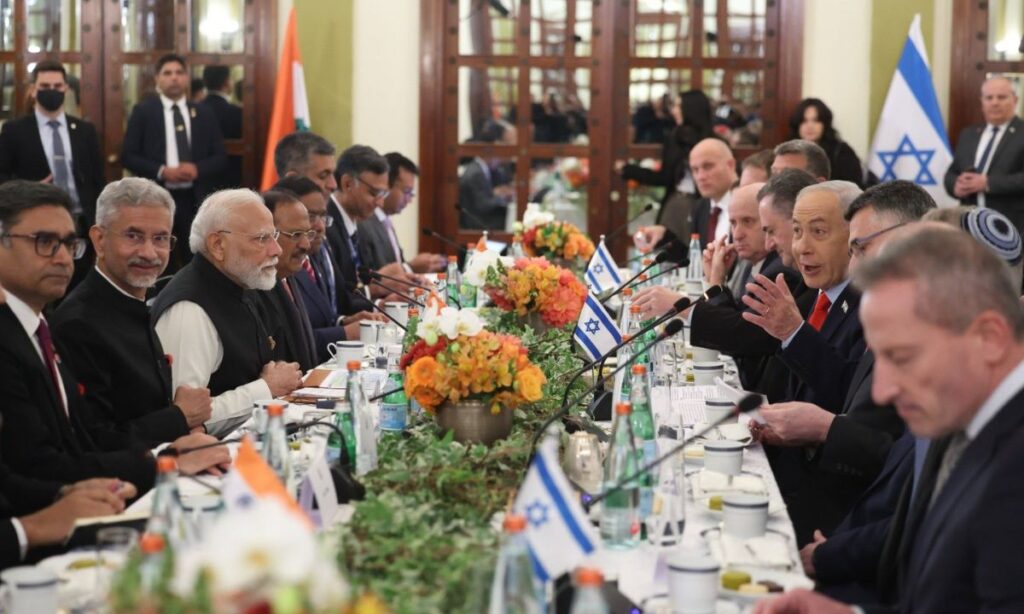
Strategic Convergence
Both leaders reiterated that “there is no place for terrorism in the world,” reaffirming shared security concerns. But the broader convergence is developmental:
- Innovation-led growth
- Democratic governance alignment
- Resilient economic architecture
- Digital sovereignty partnerships
In an increasingly polarised world, India and Israel are choosing pragmatic multi-sector collaboration over transactional engagement.
Conclusion: A Partnership Designed for the Future
The elevation to a Special Strategic Partnership signals maturity in bilateral ties. Technology, agriculture, labour mobility, finance, and cultural diplomacy now form interconnected pillars of cooperation.
For India, the agreements reinforce ambitions of becoming a global technology and manufacturing hub.
For Israel, they expand scale, market access, and strategic Asian partnerships.
If implemented effectively, the 27 MoUs could evolve into a model of innovation-led bilateral cooperation – where digital infrastructure, climate resilience, and workforce alignment define diplomacy in the 21st century.