



On the shimmering waters of Lake Naivasha, what once looked like a lush green carpet was, in reality, an ecological crisis. Thick mats of water hyacinth – one of the world’s most invasive aquatic plants – had choked the lake’s surface, threatening biodiversity, livelihoods, and public health.
For many, it was a problem too vast to solve. For Joseph Nguthiru, it was an opportunity to rethink waste, materials, and the future of sustainable innovation.
Today, his venture, HyaPak Ecotech, stands as a powerful example of how local challenges can inspire globally relevant solutions – transforming an environmental menace into a scalable, green alternative to plastic.
Water hyacinth has long been a silent destroyer of freshwater ecosystems. It spreads rapidly, forming dense mats that block sunlight from reaching underwater plants, disrupt oxygen flow, and suffocate aquatic life.
In lakes like Naivasha, this meant declining fish populations, damaged fishing equipment, and reduced income for local communities dependent on the water. The plant also created stagnant conditions ideal for mosquito breeding, increasing the risk of diseases such as malaria.
Globally, water hyacinth infestations cost economies millions in lost productivity and environmental damage each year. Governments and conservation groups have struggled to control its spread through mechanical removal, chemical treatment, or biological control – often with limited long-term success.
Nguthiru’s insight was simple yet transformative: instead of fighting the weed, why not use it?
Engineering a Circular Solution
At the heart of HyaPak Ecotech’s innovation lies the principle of the circular economy – designing systems where waste becomes a resource.
The process begins with harvesting water hyacinth from affected lakes. The plant is then dried, processed into pulp, and transformed into durable, biodegradable materials that mimic the functionality of plastic.
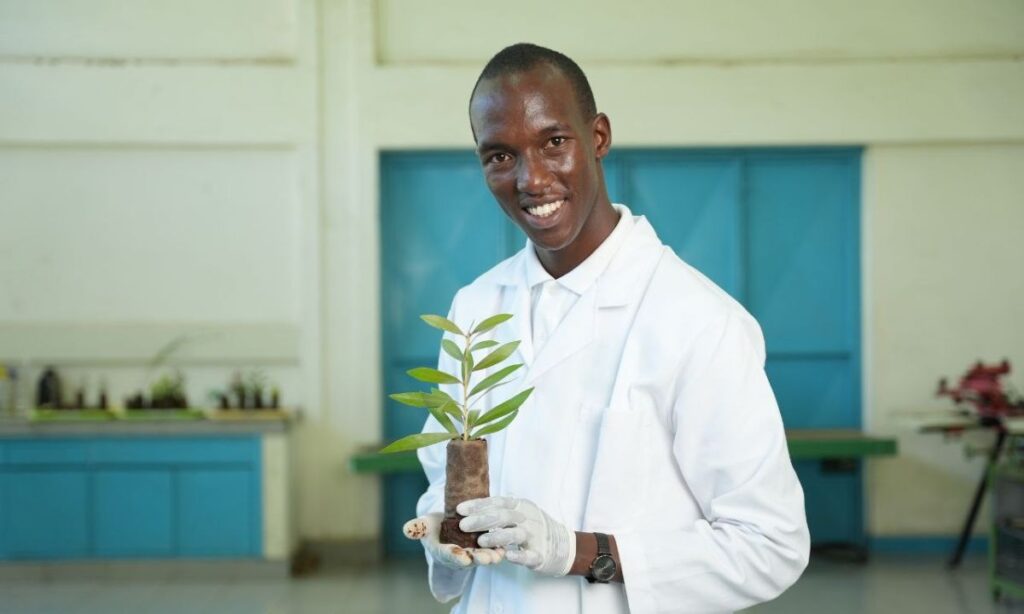
Among its flagship products are biodegradable seedling bags – a game-changer for agriculture. Unlike conventional plastic nursery bags that must be removed before planting, HyaPak’s versions can be planted directly into the soil. Over time, they decompose naturally, releasing nutrients that enhance plant growth.
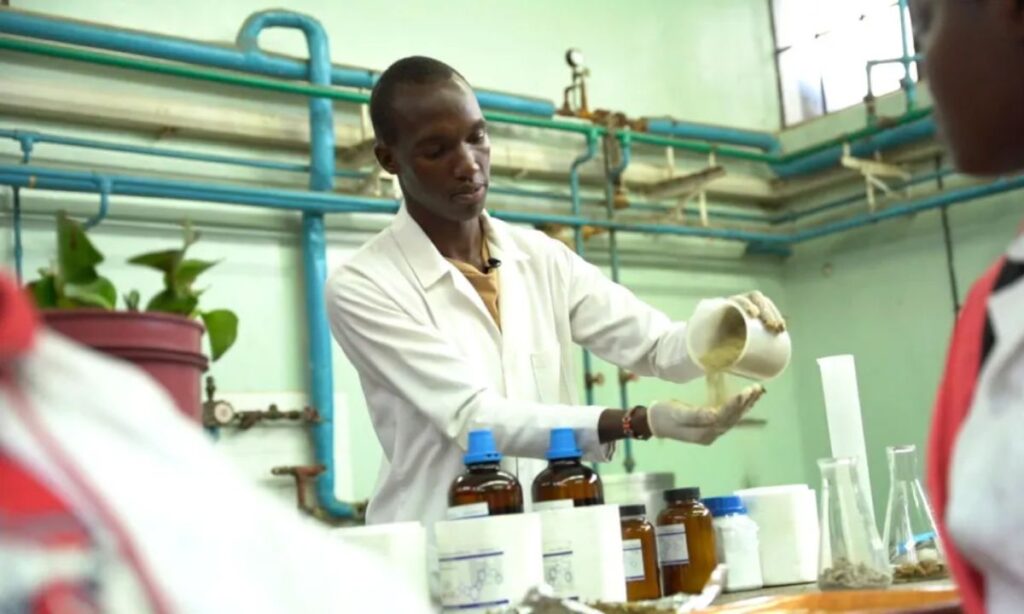
Field observations and internal data suggest:
- Up to 10% increased plant growth rates due to nutrient enrichment
- Around 20% improved water retention, reducing irrigation needs
- Approximately 1.6 units of carbon offset per seedling wrapper
Beyond agriculture, HyaPak produces sustainable packaging solutions – including wrappers and food containers – that offer the look and feel of plastic without its environmental cost. These materials break down naturally within months, leaving no harmful residues.
This approach not only reduces dependence on fossil-fuel-based plastics but also introduces a regenerative material cycle rooted in nature.
Local Innovation, Global Impact
What began as a local response to a lake’s ecological crisis has now evolved into a globally recognized solution. HyaPak Ecotech is exporting its biodegradable products to markets such as the United States and Germany – regions actively seeking sustainable alternatives amid rising regulatory pressure on single-use plastics.
This growth reflects a broader shift in the global economy, where sustainability is no longer a niche but a necessity. Governments, corporations, and consumers are increasingly demanding materials that align with climate goals and environmental responsibility.
At the same time, HyaPak’s operations are generating meaningful local impact. By harvesting water hyacinth, the company contributes to cleaning waterways, restoring ecosystems, and reducing public health risks.
It also creates jobs across the value chain – from collection and processing to manufacturing and distribution – empowering communities that were once negatively affected by the weed.
This dual impact – environmental restoration and economic opportunity – underscores the power of inclusive, community-driven innovation.
Rise of the Silicon Savannah
Kenya, often referred to as the “Silicon Savannah,” has emerged as a hub for technological and social innovation across Africa. From mobile money to renewable energy, the country has demonstrated how homegrown solutions can leapfrog traditional development pathways.
HyaPak Ecotech fits squarely within this narrative – blending engineering, sustainability, and entrepreneurship to address interconnected global challenges.
Nguthiru’s journey reflects a broader trend: innovators in emerging economies are not just adapting to global problems; they are actively shaping solutions that the world can adopt.
By leveraging local knowledge and resources, these innovators are redefining what it means to build scalable, impactful businesses in the 21st century.
Solving One Problem by Addressing Another
At its core, HyaPak’s model is elegantly simple: use one environmental problem to solve another.
Water hyacinth, once seen as a nuisance, becomes the raw material for biodegradable packaging. Plastic pollution, one of the world’s most pressing environmental crises, is addressed through nature-based alternatives.
This approach challenges traditional linear models of production and consumption. Instead of extracting resources, using them, and discarding waste, HyaPak demonstrates the viability of regenerative systems where materials continuously cycle through the economy.
It also highlights the importance of mindset. Innovation does not always require entirely new resources – sometimes, it begins with reimagining what already exists.
A Blueprint for the Future
As the world grapples with climate change, biodiversity loss, and mounting waste, solutions like HyaPak offer a blueprint for sustainable development. They show that environmental responsibility and economic growth are not mutually exclusive – they can, in fact, reinforce each other.
For policymakers, the lesson is clear: supporting local innovation ecosystems can unlock scalable solutions to global challenges. For businesses, it underscores the importance of investing in sustainable materials and circular systems.
And for communities, it serves as a reminder that even the most daunting challenges can be transformed into opportunities with the right combination of creativity, science, and determination.
The Impact Story
From being stranded in a hyacinth-choked lake during a class trip to building a globally recognized sustainable enterprise, Joseph Nguthiru’s journey is as inspiring as it is instructive.
It is a story of observation, resilience, and bold thinking – of seeing possibility where others saw only problems.
Today, as HyaPak Ecotech continues to grow, it stands as a beacon of what is possible when innovation is rooted in purpose.
In a world searching for answers to the plastic crisis, this Kenyan solution offers more than just an alternative material. It offers a new way of thinking – one where sustainability is not an afterthought, but the foundation of progress.
And perhaps most importantly, it reminds us that the seeds of global change are often found in local waters – waiting for someone bold enough to act.