
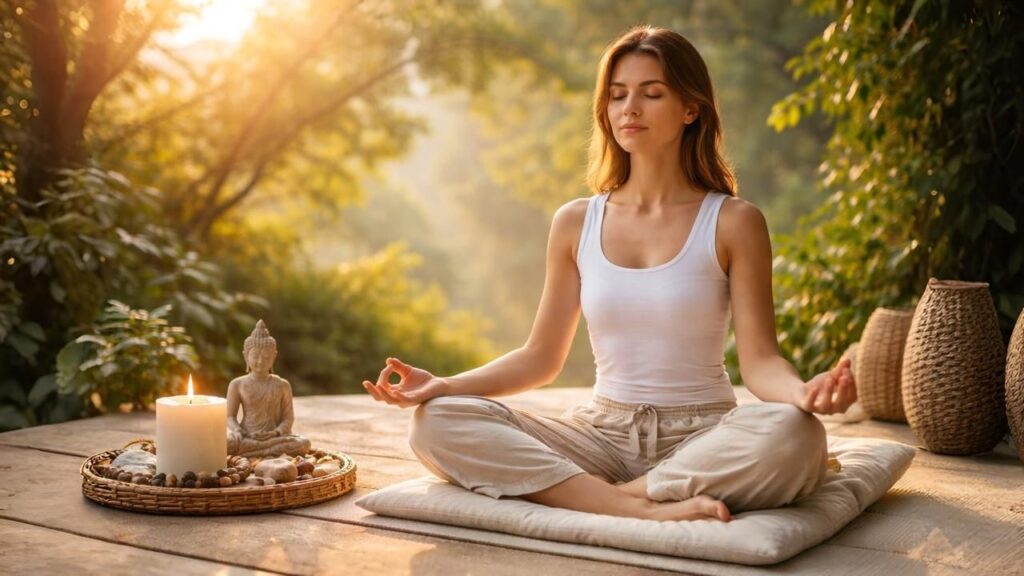


Feeling overwhelmed by stress, constant distractions, or racing thoughts? You’re not alone. Millions of people struggle with mental clutter in today’s fast-paced world. The good news is that mindfulness meditation, a simple, science-backed practice, can help you find calm and clarity in just a few minutes a day.
Unlike what many people think, meditation doesn’t require special equipment, religious beliefs, or hours of practice. It’s simply the act of paying attention to the present moment without judgment.
In this beginner-friendly guide, you’ll learn what mindfulness meditation is, how to start practicing today, and the proven benefits backed by research. Whether you have 5 minutes or 20, this guide will help you build a sustainable meditation habit.
What Is Mindfulness Meditation?
Mindfulness meditation is a mental practice that trains your brain to focus on the present moment. Instead of worrying about the future or dwelling on the past, you learn to observe your thoughts, feelings, and sensations as they happen, without trying to change them.
The practice originated from ancient Buddhist traditions but has been adapted into a secular, evidence-based technique used worldwide for mental health and wellness.
Studies indicate that regular mindfulness practice can reduce stress, improve emotional regulation, and enhance concentration, even with just 10-15 minutes of daily practice.
Why Practice Mindfulness Meditation?
Scientifically Proven Benefits
Research shows that mindfulness meditation offers several mental and physical health benefits:
Mental Health Benefits:
- Reduces symptoms of anxiety and depression
- Improves emotional resilience and self-awareness
- Enhances focus and attention span
- Decreases rumination (repetitive negative thoughts)
Physical Health Benefits:
- Lowers cortisol (stress hormone) levels
- Improves sleep quality
- May reduce blood pressure in some individuals
- Supports immune system function
Daily Life Benefits:
- Better decision-making and problem-solving
- Improved relationships through better emotional control
- Increased productivity and creativity
- Greater sense of calm and well-being
Experts suggest that mindfulness works by activating the prefrontal cortex (the thinking brain) and calming the amygdala (the emotional stress center), creating a more balanced mental state.
How to Practice Mindfulness Meditation: A 5-Minute Beginner’s Method
You don’t need any special skills or equipment to start. Here’s a simple technique you can try right now:
Step 1: Find a Quiet, Comfortable Space
Choose a spot where you won’t be disturbed for a few minutes. You can sit on a chair, cushion, or even lie down, whatever feels comfortable. The key is to be alert but relaxed.
Step 2: Set a Timer
Start with just 5 minutes. Use your phone timer or a meditation app. This removes the need to check the clock and helps you stay focused.
Step 3: Close Your Eyes and Breathe Naturally
Gently close your eyes and take a few deep breaths. Then let your breathing return to its natural rhythm, no need to control it.
Step 4: Focus on Your Breath
Notice the sensation of breathing. Feel the air entering your nostrils, filling your lungs, and leaving your body. You might notice your chest or belly rising and falling.
Step 5: Notice When Your Mind Wanders
Your mind will wander; this is completely normal and expected. You might think about work, dinner plans, or random memories. When you notice this happening, gently bring your attention back to your breath. No judgment, no frustration, just return to breathing.
Step 6: End Gently
When your timer goes off, slowly open your eyes. Take a moment to notice how you feel before jumping back into your day.
That’s it! This simple practice is the foundation of mindfulness meditation.
Common Challenges and How to Overcome Them
“My mind won’t stop thinking”
This is the most common beginner experience, and it’s not a failure. The goal isn’t to stop thoughts but to notice them without getting caught up in them. Each time you bring your attention back to your breath, you’re strengthening your mindfulness muscle.
“I don’t have time”
Start with just 3-5 minutes. You can practice during your morning routine, lunch break, or before bed. Even brief sessions provide benefits when practiced consistently.
“I feel restless or uncomfortable”
Physical discomfort is normal at first. Adjust your posture, try different positions, or reduce your session length. Some people prefer walking meditation or practicing with eyes open initially.
“I’m not sure if I’m doing it right”
There’s no “perfect” meditation. If you’re paying attention to the present moment and gently redirecting your focus when you get distracted, you’re doing it correctly.
Building a Sustainable Meditation Practice
Start small and be consistent. It’s better to meditate for 5 minutes daily than 30 minutes once a week.
Tips for consistency:
- Practice at the same time each day (morning or evening works well)
- Link it to an existing habit (after brushing teeth, before breakfast)
- Use guided meditation apps if you prefer voice instruction
- Track your progress with a simple calendar or app
- Be patient with yourself, benefits build gradually over weeks
When to Seek Professional Support
Mindfulness meditation is generally safe and beneficial. However, if you’re dealing with severe anxiety, depression, trauma, or other mental health conditions, meditation should complement, not replace, professional treatment.
Consult a mental health professional if you experience:
- Persistent sadness or hopelessness
- Overwhelming anxiety or panic attacks
- Intrusive thoughts or memories during meditation
- Any concerns about your mental well-being
Final Takeaway
Mindfulness meditation is one of the simplest yet most powerful tools for managing stress and improving mental clarity. You don’t need experience, expensive equipment, or hours of free time, just 5 minutes of your day and a willingness to practice.
Start today with the simple breathing technique outlined above. Be patient with yourself, practice consistently, and observe how small moments of mindfulness can create meaningful changes in your daily life.
The journey of a thousand miles begins with a single breath. Take yours now.
FAQs
Q1: Do I need to sit cross-legged on the floor?
No. You can sit in a chair, on a cushion, or even lie down. The important thing is to be comfortable and alert. Choose whatever position helps you stay focused without falling asleep.
Q2: How long before I see benefits?
Many people notice subtle improvements in stress levels and focus within 1-2 weeks of daily practice. Research shows that measurable brain changes can occur after 8 weeks of consistent meditation.
Q3: Is mindfulness meditation religious?
While mindfulness has roots in Buddhist traditions, modern mindfulness meditation is a secular practice. It doesn’t require any religious beliefs and is used in hospitals, schools, and workplaces worldwide.
Q4: Can I use meditation apps?
Yes! Apps like Headspace, Calm, Insight Timer, or simple YouTube guided meditations are excellent for beginners. They provide structure and guidance as you build your practice.
Q5: What if I fall asleep during meditation?
This is common, especially if you practice lying down or when very tired. Try sitting upright, practicing earlier in the day, or keeping your eyes slightly open. Getting adequate nighttime sleep also helps.
(Health Disclaimer: This article is for informational and educational purposes only. Mindfulness meditation is not a substitute for professional medical or mental health treatment. If you’re experiencing mental health concerns, please consult a qualified healthcare provider.)