



AI regulation is considered one of the major challenges governments are currently facing. It refers to the comprehensive set of governmental strategies, including the implementation of regulations, the adoption of legislative measures, and the establishment of institutional arrangements, aimed at guiding the development, deployment, and overall use of AI technologies within a jurisdiction. The influence of AI systems on highly sensitive areas such as healthcare, finance, national security, and public administration has made the need for establishing governance frameworks that are logical and evidence-based increasingly important.
Comparing national AI governance policies is essential for several reasons. First, it reveals diverse regulatory philosophies that reflect different cultural values, economic priorities, and governance traditions. Second, given AI’s inherently transnational nature, understanding cross-border regulatory divergences is critical for multinational businesses, researchers, and policymakers seeking interoperability. Third, comparative analysis enables mutual learning, allowing jurisdictions to adapt successful strategies while avoiding documented pitfalls. Finally, as AI development accelerates, coordinated international approaches become increasingly necessary to address shared challenges such as AI safety, algorithmic accountability, and the protection of human rights.
This article examines the AI regulation policy landscapes of major global economies: the United States, China, India, the European Union, the United Kingdom, and Japan. Each jurisdiction has adopted distinct approaches—ranging from innovation-first frameworks to comprehensive risk-based regulation, reflecting their unique governance structures, technological capabilities, and societal values. Through systematic comparison, this analysis identifies patterns, tensions, and opportunities for international cooperation in AI governance.
Country/Region AI Governance Policy Profiles
United States
- National AI Strategy Framework
The United States has established its AI regulation framework through the National Artificial Intelligence Initiative Act of 2020, enacted as part of the National Defense Authorization Act. This landmark legislation established the National AI Initiative to coordinate federal AI research and development efforts across government agencies. The Act mandates the creation of the National AI Initiative Office within the White House Office of Science and Technology Policy (OSTP) to oversee implementation.
The National AI Initiative Act (codified at 15 U.S.C. § 9401 et seq.) establishes several key objectives: leading the world in trustworthy AI development, preparing the workforce for AI integration, and coordinating AI activities across civilian agencies, the Department of Defense, and the Intelligence Community. The initiative is scheduled to operate for ten years from its January 2021 enactment.
- Executive Branch Leadership
U.S. AI policy has been shaped significantly by executive action. The Biden Administration issued Executive Order 14110 on October 30, 2023, titled “Safe, Secure, and Trustworthy Development and Use of Artificial Intelligence.” This comprehensive order directed over 50 federal entities to implement more than 100 specific actions across eight policy areas, including AI safety and security, innovation and competition, worker support, and international cooperation.
However, Executive Order 14110 was rescinded on January 20, 2025 by the incoming Trump Administration through Executive Order 14148, which shifted policy emphasis toward removing barriers to AI innovation and establishing American AI leadership as a national priority. The current administration’s AI Action Plan focuses on three pillars: accelerating innovation, building AI infrastructure, and leading international diplomacy and security.
- Technical Standards and Risk Management
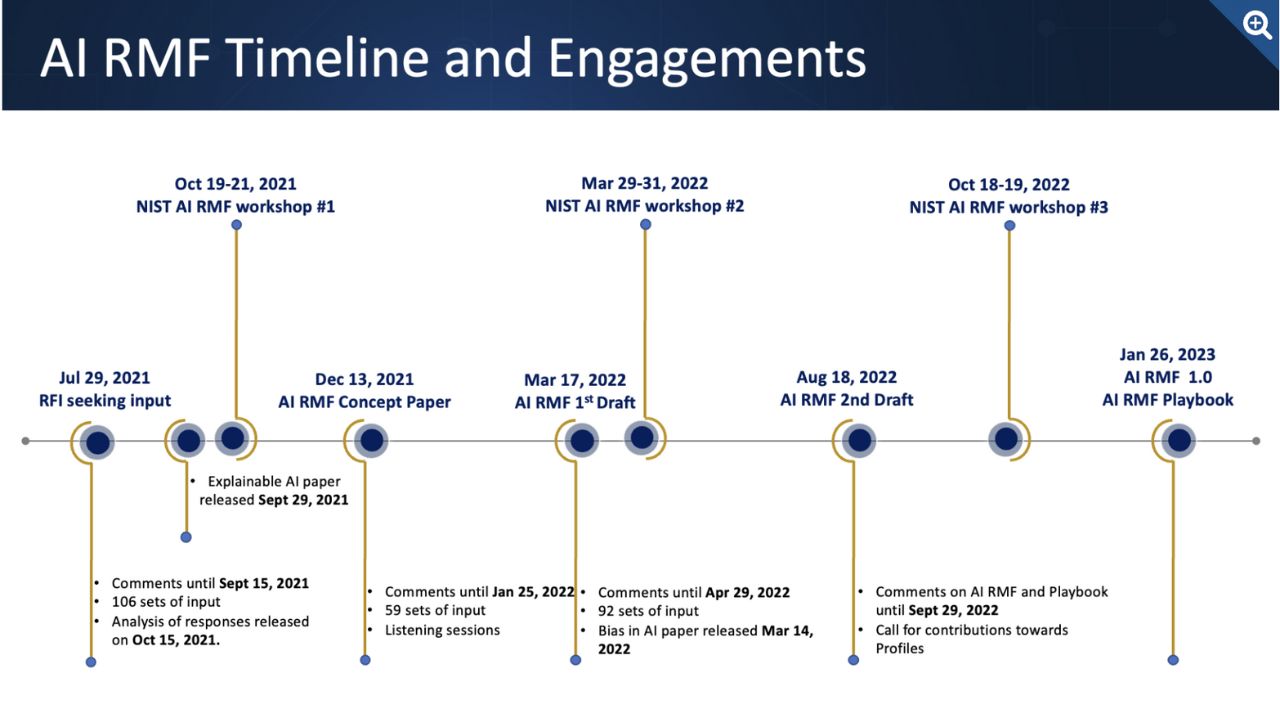
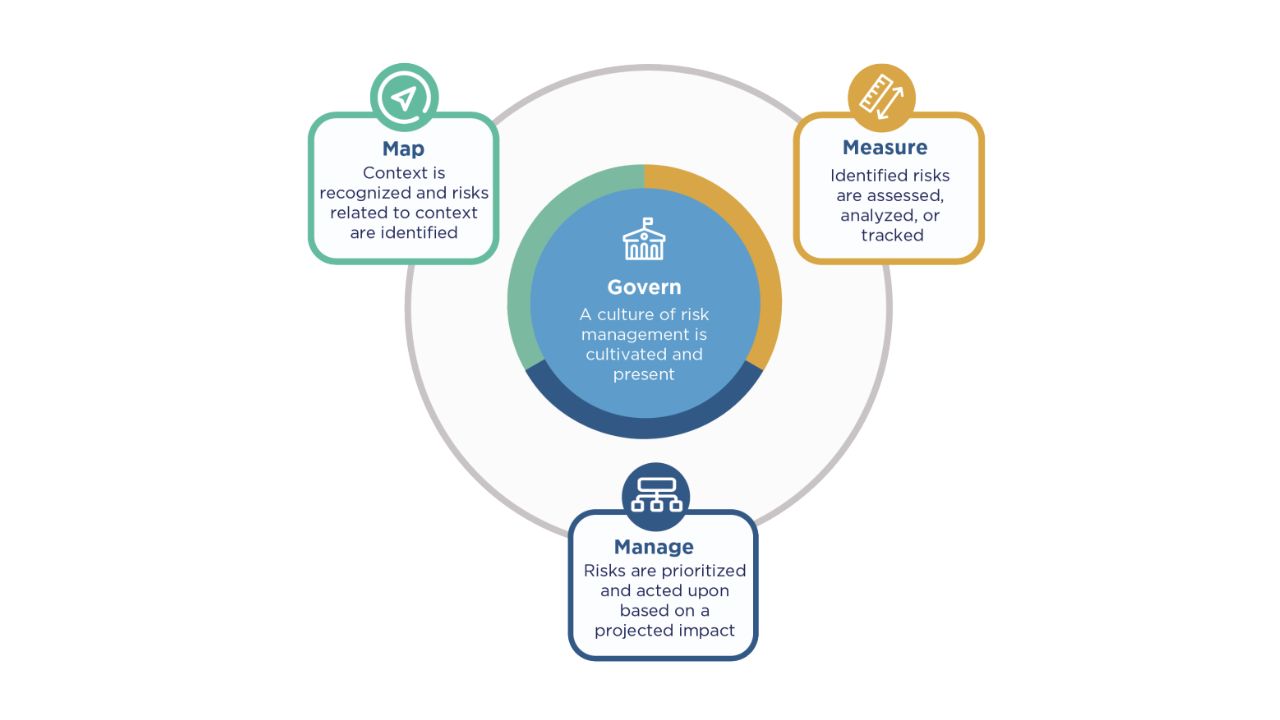
The National Institute of Standards and Technology (NIST) plays a central role in developing voluntary AI standards. NIST released the AI Risk Management Framework (AI RMF 1.0) in January 2023, following extensive multi-stakeholder consultation. The AI RMF provides a voluntary, flexible approach organized around four core functions: Govern, Map, Measure, and Manage. The framework has gained international recognition and has been referenced in regulatory developments worldwide.
NIST’s Congressional mandates and executive directives continue to evolve, with recent emphasis on developing guidelines for generative AI, establishing AI evaluation methods, and advancing cybersecurity measures for AI systems.
- Policy Objectives
The U.S. approach emphasizes maintaining global AI leadership through innovation, protecting national security interests, leveraging existing regulatory authorities, and promoting voluntary consensus standards. The policy landscape reflects a federalist structure where both federal agencies and state governments play regulatory roles, creating a complex compliance environment.

China
- National Development Strategy
China’s AI regulation policy is anchored in the New Generation Artificial Intelligence Development Plan, issued by the State Council in July 2017. This comprehensive strategy sets ambitious targets: achieving AI parity with leading nations by 2020, reaching world-leading levels by 2025, and becoming the world’s primary AI innovation center by 2030, with a core AI industry valued at 1 trillion yuan ($140.9 billion) and related industries exceeding 10 trillion yuan.
The Development Plan outlines China’s strategic approach across six key areas: establishing AI technologies and platforms, developing intelligent products and industries, fostering AI talent, creating standards and regulations, addressing security challenges, and promoting international cooperation. The plan emphasizes AI’s role in economic restructuring, military modernization, and social governance.
- Implementation Architecture
China’s AI governance operates through a centralized, top-down model coordinated by the State Council. Provincial and local governments have developed complementary strategies aligned with national objectives. Research indicates that while the central government prioritizes geostrategic and security dimensions, local implementations vary based on regional capacities and economic conditions.
The Chinese government has established multiple AI innovation zones and research institutes, with Beijing hosting approximately 28% of the country’s 2,200 AI enterprises. Major cities including Shanghai, Shenzhen, and Guangzhou have developed specialized AI industrial parks and innovation centers.
- Regulatory Framework
China’s AI regulation extends beyond innovation policy to encompass content control, data governance, and algorithmic management. The government has issued various regulations addressing algorithmic recommendations, deepfake technologies, and generative AI services. Analysis by Nature Machine Intelligence notes that China’s approach emphasizes AI ethics, security evaluations, and alignment with socialist values.
- Strategic Objectives
China’s AI strategy prioritizes economic transformation, scientific leadership, military applications, and social management. The approach reflects state-directed capitalism, with significant government investment, coordinated industrial policy, and emphasis on domestic technological self-sufficiency, particularly in semiconductors and advanced computing infrastructure.

India
- National Strategy for AI
India’s AI regulation policy framework centers on the National Strategy for Artificial Intelligence released by NITI Aayog (the government’s national policy think tank) in June 2018. Branded as “#AIforAll,” the strategy adopts an explicitly inclusive approach focused on solving societal challenges rather than pursuing AI development as an end in itself.
The NITI Aayog strategy identifies five priority sectors for AI deployment: healthcare (improving access and affordability), agriculture (enhancing farmer income and productivity), education (expanding quality and accessibility), smart cities and infrastructure (managing urban growth), and smart mobility and transportation (improving efficiency and safety). This sectoral approach distinguishes India’s policy from more general innovation frameworks adopted elsewhere.
- Institutional Framework
India’s AI governance involves multiple government bodies. The Principal Scientific Adviser’s office coordinates AI-related research missions, while the Ministry of Electronics and Information Technology (MeitY) leads policy development. In 2024, the Indian government approved the IndiaAI Mission with over Rs 10,300 crore ($1.2 billion) in funding to expand AI infrastructure, support startups, and develop indigenous AI models.
NITI Aayog has also published responsible AI framework documents (Part 1 in February 2021 and Part 2 in August 2021), establishing ethical principles for AI development grounded in Indian legal and regulatory contexts. These documents emphasize safety, equality, inclusivity, and privacy as core values.
- Implementation Mechanisms
India’s approach emphasizes creating enabling infrastructure including Centers of Research Excellence (CORE) for fundamental research and International Centers of Transformational AI (ICTAI) for application-based development. The government has also integrated AI initiatives with India’s Digital Public Infrastructure (DPI), including Aadhaar (digital identity), UPI (payments), and other foundational platforms.
- Policy Priorities
India’s AI strategy reflects its development priorities: addressing barriers including limited AI expertise, inadequate data ecosystems, resource constraints, and lack of awareness. The government emphasizes public-private partnerships, international collaboration, and ensuring AI benefits reach underserved populations. The approach balances innovation promotion with ethical guidelines but has been criticized for limited enforcement mechanisms and unclear implementation timelines.

European Union
- EU AI Act
The European Union has established the world’s first comprehensive horizontal AI regulation through the Artificial Intelligence Act (Regulation EU 2024/1689), published in the Official Journal on July 12, 2024, and entering into force on August 1, 2024. The EU AI Act represents a landmark in technology regulation, applying risk-based requirements to AI systems across virtually all economic sectors.
The full text of the AI Act categorizes AI applications by risk level: prohibited practices (unacceptable risk), high-risk systems (significant safety or fundamental rights concerns), limited-risk applications (transparency requirements), and minimal-risk systems (generally unregulated). Additionally, the Act establishes specific requirements for general-purpose AI models, particularly those with systemic risk.

- Risk-Based Regulatory Architecture
The AI Act’s classification system defines prohibited practices including social scoring systems, manipulative AI, indiscriminate facial recognition in public spaces, and AI systems exploiting vulnerable groups. High-risk AI systems, covering areas such as biometric identification, critical infrastructure, employment, education, law enforcement, and migration—must meet stringent requirements for data governance, technical documentation, transparency, human oversight, and accuracy.
The European Commission’s regulatory framework establishes enforcement mechanisms through national competent authorities in each Member State, coordinated by the European AI Office. Penalties for non-compliance can reach up to €35 million or 7% of global annual turnover, whichever is higher.
- Institutional Governance
The AI Act creates new governance bodies including the European AI Office (coordinating implementation across Member States), the European Artificial Intelligence Board (facilitating cooperation among national authorities), and an Advisory Forum (including stakeholder representatives). Member States must designate notifying bodies for conformity assessments and establish market surveillance authorities.
- Strategic Objectives
The EU’s approach prioritizes fundamental rights protection, democratic values, establishing a single market for trustworthy AI, preventing regulatory fragmentation, and positioning Europe as a global standard-setter. The AI Act’s extraterritorial reach—applying to providers and users outside the EU whose AI outputs are used within the Union—gives it global significance similar to the General Data Protection Regulation (GDPR).
United Kingdom
- National AI Strategy
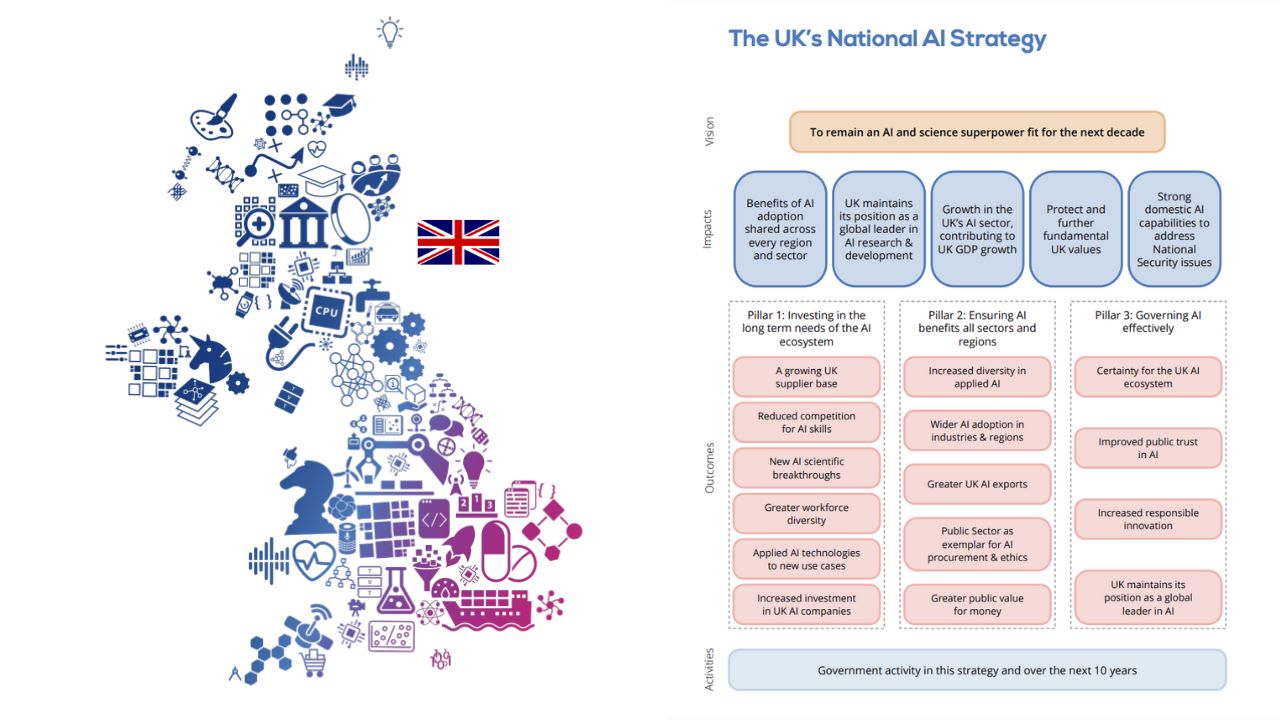
The United Kingdom published its National AI Strategy in September 2021, setting a ten-year vision to maintain the UK’s position as a global AI superpower. The strategy is organized around three pillars: investing in long-term AI ecosystem needs, supporting transition to an AI-enabled economy, and ensuring appropriate governance of AI technologies.
The official strategy document emphasizes the UK’s existing strengths, including world-class universities (with the Alan Turing Institute as the national center for AI and data science), a thriving AI startup ecosystem, and a favorable regulatory environment. The government has committed over £2.3 billion in AI investment since 2014.
In 2022, the UK government published the AI Action Plan to demonstrate progress on strategy implementation. More recently, in January 2025, the AI Opportunities Action Plan was launched to accelerate AI adoption across the economy, including establishment of AI Growth Zones with enhanced infrastructure support.
- Regulatory Approach
The UK has adopted a pro-innovation regulatory framework based on existing sectoral regulators rather than creating AI-specific legislation. This “light-touch” approach assigns responsibility to established regulators (e.g., the Information Commissioner’s Office for data protection, the Financial Conduct Authority for financial services) to apply cross-cutting AI principles within their domains.
In February 2025, the government published the AI Playbook providing public sector organizations with guidance on safe and effective AI use. The UK has also established the AI Safety Institute to conduct research on AI evaluation methods and contribute to international safety standards.
- International Leadership
The UK has positioned itself as a convener for international AI governance discussions, hosting the AI Safety Summit at Bletchley Park in November 2023. The summit produced the Bletchley Declaration, signed by 28 countries, emphasizing the need for collective management of AI risks.
- Policy Objectives
UK AI policy prioritizes economic growth and productivity, maintaining research excellence, attracting global talent (through visa reforms and talent programs), fostering AI adoption across sectors, and leading international AI safety and ethics discussions. The approach reflects the UK’s ambition to balance innovation enablement with appropriate safeguards while leveraging its position between the US and EU regulatory models.

Japan
- AI Promotion Act
In May 2025, Japan’s Parliament approved the Act on the Promotion of Research and Development and the Utilization of AI-Related Technologies (AI Promotion Act), making Japan the second major Asia-Pacific economy to enact comprehensive AI legislation. The Act establishes policy drivers to position Japan as “the world’s most AI-friendly country” while maintaining safety and trustworthiness standards.
The AI Promotion Act is a “basic law” that outlines principles and governmental responsibilities without imposing specific penalties or detailed regulations. It establishes an AI Strategy Headquarters within the Cabinet, chaired by the Prime Minister and including all Cabinet ministers, to formulate and implement national AI policy.
- Soft-Law Governance Model
Japan has consistently favored voluntary guidelines over prescriptive regulation. The Ministry of Internal Affairs and Communications (MIC) and Ministry of Economy, Trade and Industry (METI) published AI Guidelines for Business Ver 1.0 in April 2024, with Version 1.1 released in March 2025. These guidelines align with international frameworks including the OECD AI Principles and the G7 Hiroshima AI Process.
Japan’s AI Strategy 2022 emphasizes building AI infrastructure, developing human capital, promoting societal implementation, and ensuring international competitiveness. The government published Social Principles of Human-Centered AI in 2019, establishing values including human dignity, fairness, transparency, and international cooperation.
- International Engagement
Japan played a leading role in establishing the Hiroshima AI Process during its 2023 G7 presidency. This initiative produced the world’s first international framework for generative AI governance, including International Guiding Principles and an International Code of Conduct for organizations developing advanced AI systems.
Japan has also established an AI Safety Institute to conduct research on evaluation methods, with particular focus on healthcare and robotics applications.
- Policy Philosophy
Japan’s AI governance reflects its “agile governance” approach, prioritizing innovation and trust-building through soft law, emphasizing interoperability with international standards, and relying on existing sectoral laws rather than creating AI-specific restrictions. Recent analysis confirms Japan’s continued preference for voluntary measures and incremental regulation, with government strategic leadership focused on reducing compliance costs for businesses while managing emerging risks.
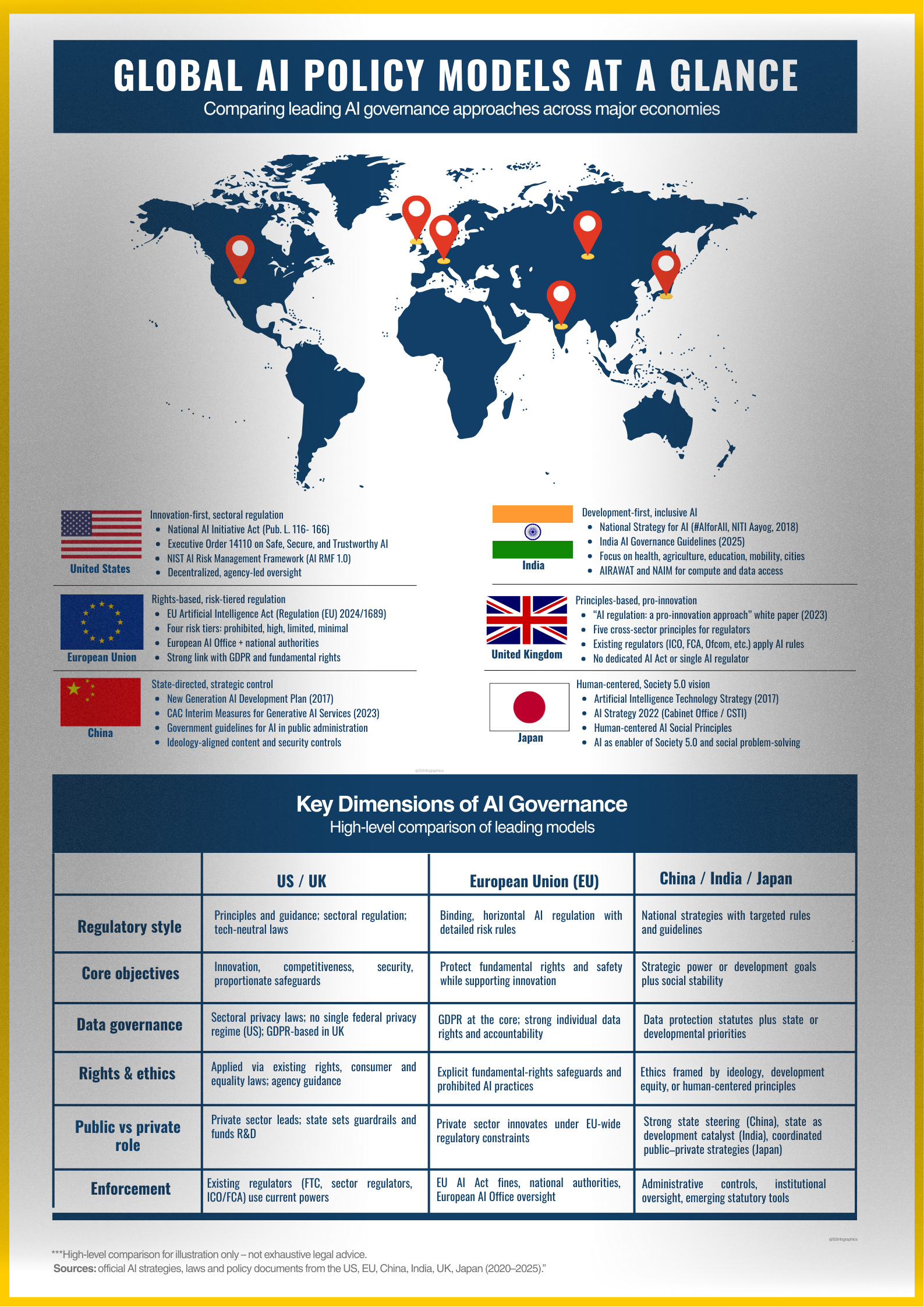
Comparative Analysis
Policy Objectives and Strategic Emphasis
The surveyed jurisdictions reveal three distinct strategic orientations toward AI governance. The innovation-first model (United States, United Kingdom, Japan) prioritizes economic competitiveness, maintains light regulatory touch, emphasizes voluntary standards, and leverages existing regulatory frameworks. These countries view AI primarily as a source of economic advantage and national strength.
The security and social stability model (China) integrates AI development with national security objectives, emphasizes state control over data and algorithms, coordinates through centralized planning, and balances innovation with social management priorities. AI is treated as strategic technology requiring state guidance.
The rights-protective model (European Union) places fundamental rights and ethical considerations first, establishes comprehensive regulatory frameworks, prioritizes transparency and accountability, and accepts potential innovation trade-offs to ensure safety. The EU frames AI governance as essential to protecting democratic values.
India’s approach combines elements of all three models: promoting innovation for economic development while addressing social needs and maintaining democratic safeguards.
Regulatory Styles and Legal Instruments
Binding Legislation: The EU AI Act represents the most comprehensive binding legal framework, with mandatory requirements, conformity assessments, and significant penalties. China employs binding regulations in specific domains (algorithmic recommendations, generative AI content) while maintaining broad state authority over technology sectors.
Principle-Based Guidance: The US relies heavily on voluntary frameworks (NIST AI RMF), executive actions (though subject to administration changes), and sector-specific regulations. Japan explicitly adopts non-binding guidelines aligned with international principles. The UK employs cross-cutting principles applied by existing regulators.
Enabling Legislation: India’s NITI Aayog strategy and Japan’s AI Promotion Act establish policy directions and institutional frameworks without imposing immediate operational requirements. Both emphasize creating enabling conditions for AI development.
Implementation and Enforcement Mechanisms
Enforcement approaches vary dramatically. The EU establishes dedicated AI governance bodies with substantial regulatory and investigative powers, backed by significant financial penalties and market access restrictions. China employs administrative measures including content restrictions, operational suspensions, and reputational sanctions through state media.
The US approach distributes enforcement across existing agencies (FTC, EEOC, DOJ) applying established legal authorities to AI contexts. The UK assigns AI governance to sectoral regulators with existing enforcement powers. Japan and India currently lack significant enforcement mechanisms, relying on voluntary compliance and reputational incentives.
Data Governance Linkages
All jurisdictions recognize data governance as integral to AI policy. The EU’s AI Act builds on GDPR foundations, with explicit requirements for data quality, documentation, and rights protection. China’s Personal Information Protection Law (PIPL) and Data Security Law establish comprehensive frameworks emphasizing data localization and security reviews.
The US lacks federal comprehensive data privacy legislation, creating fragmented requirements across states and sectors. India is implementing the Digital Personal Data Protection Act (2023), while the UK maintains GDPR-aligned protections post-Brexit. Japan’s Act on the Protection of Personal Information (APPI) establishes consent requirements for data processing.
Ethics Frameworks and Human Rights Protections
The EU AI Act explicitly anchors requirements in the Charter of Fundamental Rights, prohibiting practices that violate human dignity and establishing extensive fairness and non-discrimination requirements. India’s Responsible AI governance framework emphasizes constitutional values including equality and dignity.
The US approach emphasizes AI Bill of Rights principles (though non-binding) and anti-discrimination laws applied to AI systems. The UK references ethical AI principles without codification. Japan’s Social Principles establish human-centric values. China’s approach emphasizes “socialist core values” and social harmony alongside innovation.
Public Sector vs. Private Sector Roles
China employs significant state direction with government-led infrastructure development, coordinated industrial policy, and state-owned enterprises playing major roles. India similarly emphasizes government infrastructure provision (compute resources, datasets) while enabling private innovation.
The US, UK, and Japan rely primarily on market-driven innovation with government roles limited to research funding, standards development, procurement, and regulatory oversight. The EU balances market dynamics with regulatory intervention to ensure compliance with fundamental rights requirements.
Key Differences and Similarities (Summary Table)
| Dimension | United States | China | India | European Union | United Kingdom | Japan |
| Primary Framework | National AI Initiative Act (2020); NIST AI RMF (voluntary) | New Generation AI Development Plan (2017) | NITI Aayog National Strategy (2018); IndiaAI Mission (2024) | AI Act Regulation 2024/1689 (binding) | National AI Strategy (2021); sector-based regulation | AI Promotion Act (2025); voluntary guidelines |
| Regulatory Philosophy | Innovation-first; light touch; existing authorities | State-directed innovation; social stability | Inclusive development; sectoral focus | Rights-protective; comprehensive regulation | Pro-innovation; principle-based | Agile governance; soft law |
| Primary Objective | Economic/security leadership | National competitiveness; social management | Societal benefit; inclusive growth | Fundamental rights protection | Economic growth; research excellence | Trust-building; innovation |
| Enforcement Approach | Distributed across agencies | Centralized administrative measures | Limited enforcement; guidelines | Dedicated AI authorities; significant penalties | Sectoral regulators | Voluntary compliance |
| Risk Management | Voluntary frameworks (NIST) | State-mandated security reviews | Ethical principles; sectoral guidelines | Mandatory risk-based requirements | Principle-based; regulator-specific | Voluntary guidelines; monitoring |
| Data Governance | Fragmented (state/federal) | Comprehensive; localization emphasis | Emerging framework (DPDP Act 2023) | GDPR-integrated; data quality requirements | GDPR-aligned | APPI consent-based |
| International Stance | Leadership assertion; bilateral focus | Strategic competition; selective cooperation | Global South representative; partnership | Standard-setting; regulatory export | Convening role; bridge-building | International cooperation; G7/OECD leadership |
Evaluation
Strengths and Weaknesses of Each Approach
United States
- Strengths: The U.S. benefits from world-leading AI research capacity, robust venture capital funding, flexible regulatory environment enabling rapid innovation, and strong talent attraction. The NIST AI RMF has gained international recognition as a practical risk management tool.
- Weaknesses: The voluntary nature of most guidelines limits enforceability. Frequent shifts in executive policy create uncertainty. Fragmented data protection creates compliance complexity. Heavy reliance on existing regulatory authorities may prove inadequate for AI-specific challenges.
China
- Strengths: China’s centralized approach enables coordinated industrial policy, massive state investment in infrastructure, rapid deployment at scale, and integration of AI across civilian and military applications. The development plan provides clear long-term direction.
- Weaknesses: Limited transparency in AI governance raises international concerns. Strict content controls may constrain AI capabilities. Data localization requirements create barriers to global collaboration. Emphasis on social control applications raises human rights concerns internationally.
India
- Strengths: India’s sectoral focus ensures AI addresses concrete societal challenges. The inclusive development emphasis aligns with democratic values. Emphasis on responsible AI principles establishes ethical foundations. The strategy leverages India’s digital public infrastructure and technical workforce.
- Weaknesses: Limited enforcement mechanisms reduce policy effectiveness. Resource constraints limit infrastructure development. Implementation timelines remain unclear. Coordination challenges across multiple government bodies slow progress.
European Union
- Strengths: The AI Act establishes comprehensive, legally binding requirements that prioritize fundamental rights. The risk-based approach provides regulatory clarity. Strong enforcement mechanisms (including substantial penalties) ensure compliance. The framework establishes EU as global standard-setter.
- Weaknesses: The comprehensive regulatory approach may create compliance burdens, particularly for small and medium enterprises. Implementation complexity across 27 Member States may lead to inconsistent application. Innovation trade-offs remain to be assessed. The focus on controlling risks may disadvantage European AI competitiveness.
United Kingdom
- Strengths: The UK’s pro-innovation approach reduces regulatory burden while maintaining oversight. Leveraging existing regulators avoids creating new bureaucratic structures. The position between US and EU models enables regulatory arbitrage opportunities. Strong research institutions support policy development.
- Weaknesses: The principle-based approach may lead to inconsistent application across sectors. Lack of AI-specific legislation creates regulatory uncertainty for some applications. Post-Brexit, reduced EU market access may limit UK AI sector growth. Coordination across multiple regulators may prove challenging.
Japan
- Strengths: Japan’s agile governance model enables rapid adaptation to technological change. International cooperation emphasis promotes standards harmonization. The soft-law approach reduces compliance burdens. Focus on trust-building balances innovation and safety.
- Weaknesses: Voluntary compliance may prove insufficient for high-risk applications. Limited enforcement mechanisms reduce effectiveness. The innovation-first approach may inadequately address emerging safety concerns. Resource allocation for AI safety infrastructure remains limited.
Cross-Learning Opportunities
- EU to US/UK/Japan: The EU’s comprehensive risk assessment methodology provides systematic approaches that innovation-first jurisdictions might adapt. The detailed conformity assessment procedures establish best practices for high-risk AI applications. The EU’s experience with multi-stakeholder governance offers lessons for coordination.
- US to EU: The NIST AI RMF’s flexibility and practical orientation could inform EU implementation guidance. The U.S. approach to AI procurement standards may offer efficient methods for public sector adoption. American investment mechanisms could provide models for EU industrial strategy.
- Japan/UK to EU: These countries’ agile governance approaches demonstrate how principle-based frameworks enable innovation while maintaining accountability. Their experience with voluntary industry commitments may inform proportionate regulation for lower-risk applications.
- China to Others: China’s coordinated industrial policy demonstrates effective government-led infrastructure development. The experience with AI deployment at scale provides practical lessons, though governance concerns limit direct transferability to democratic contexts.
- India to Others: India’s sectoral approach targeting specific societal challenges offers a model for development-focused AI strategies. The integration with digital public infrastructure demonstrates how AI can amplify existing technological investments. India’s emphasis on multilingual and culturally appropriate AI provides lessons for diverse societies.
Global Implications & Recommendations
Impact on International Cooperation
The divergent regulatory approaches examined create both opportunities and challenges for international AI governance. On one hand, they reflect legitimate differences in values, priorities, and institutional capacities. On the other hand, they risk creating regulatory fragmentation that increases compliance costs, reduces interoperability, and hampers cross-border collaboration.
The existence of multiple models—innovation-first, security-focused, and rights-protective—shapes emerging global norms. The EU AI Act’s extraterritorial reach may drive global baseline standards, similar to GDPR’s impact on data protection. However, China’s alternative model demonstrates that technology governance need not converge on Western democratic frameworks. India’s development-focused approach represents Global South perspectives often absent from governance discussions.
Standards Development and Technical Cooperation
The OECD AI Principles, adopted by 47 countries and updated in 2024, provide a foundation for interoperability. These principles, emphasising inclusive growth, human rights, transparency, safety, and accountability, offer a common language across jurisdictions while allowing implementation flexibility.
The G7 Hiroshima AI Process, led by Japan, produced international frameworks for advanced AI systems, including guiding principles and codes of conduct. These voluntary instruments complement binding national regulations while promoting responsible practices globally.
Technical standards organisations (ISO/IEC JTC 1/SC 42 on AI, IEEE standards activities) provide venues for developing interoperable technical specifications. However, geopolitical tensions may limit full participation, potentially creating competing technical standards ecosystems.
Recommendations
For Policymakers:
- Pursue Regulatory Coherence: Jurisdictions should actively engage in bilateral and multilateral forums to harmonize definitions, risk categories, and conformity assessment approaches where feasible. While perfect alignment is unrealistic, reducing unnecessary divergence lowers compliance costs without compromising legitimate policy objectives.
- Establish Mutual Recognition Mechanisms: Countries with compatible governance philosophies (e.g., democratic values-based approaches) should negotiate mutual recognition agreements for AI conformity assessments, enabling certified systems in one jurisdiction to operate in others with minimal additional requirements.
- Invest in Safety Science: All jurisdictions should prioritize research on AI evaluation methods, safety techniques, and impact assessment tools. International collaboration on safety research serves shared interests regardless of regulatory approach.
- Address Capability Gaps: Developed nations should support AI capacity building in developing countries through technical assistance, knowledge transfer, and infrastructure access. This reduces global digital divides and enables broader participation in AI governance discussions.
- Maintain Regulatory Agility: Given AI’s rapid evolution, regulatory frameworks should incorporate sunset provisions, regular reviews, and adjustment mechanisms. Locking in premature requirements risks obsolescence or unintended consequences.
For Industry:
- Adopt International Standards: Organizations should implement internationally recognized frameworks (OECD AI Principles, ISO/IEC AI standards, NIST AI RMF) regardless of legal requirements, demonstrating responsible practices and preparing for potential regulation.
- Engage in Multi-Stakeholder Governance: Industry should actively participate in international standard-setting, contribute to regulatory consultations across jurisdictions, and support public-private partnerships on safety research.
- Implement Portable Compliance: Companies operating globally should design AI systems with “compliance by design” approaches that meet the strictest applicable requirements, enabling deployment across multiple jurisdictions.
For International Organizations:
- The United Nations should strengthen its role in inclusive AI governance discussions, ensuring developing countries shape global norms. The Global Digital Compact provides a foundation for comprehensive digital cooperation.
- The OECD should continue refining its AI Principles, updating implementation guidance, and expanding the OECD.AI Policy Observatory to track regulatory developments and facilitate cross-learning.
- Regional bodies (African Union, ASEAN, Organization of American States) should develop regional AI governance frameworks reflecting local priorities while maintaining interoperability with global principles.
Conclusion
This comparative analysis reveals three fundamental approaches to AI governance: innovation-first models prioritizing economic competitiveness and market-driven solutions (US, UK, Japan), comprehensive regulatory frameworks emphasizing rights protection and mandatory requirements (EU), and state-directed approaches integrating AI with national strategic objectives (China). India’s development-focused model, emphasizing societal benefit and inclusive growth, represents an alternative path particularly relevant for developing nations.
No single approach offers a universally optimal solution. The U.S. model leverages market dynamism and regulatory flexibility but risks inadequate protection in high-risk domains. The EU framework prioritizes fundamental rights and safety but may constrain innovation and competitive positioning. China’s centralized model enables rapid deployment but raises governance transparency concerns. Japan’s agile approach balances flexibility and trust but may lack enforcement for serious harms. India’s sectoral strategy addresses concrete needs but faces implementation challenges. The UK’s regulatory positioning attempts to capture benefits of multiple models but confronts coherence questions.
Several trends appear likely to shape AI governance trajectories:
- Continued Divergence and Competition: Rather than converging on a single model, jurisdictions will continue developing distinctive approaches reflecting their values and interests. Regulatory competition may drive innovation in governance mechanisms themselves. However, excessive fragmentation risks creating prohibitively complex compliance environments.
- Incremental Harmonization in Technical Layers: While high-level governance philosophies will differ, technical standards (evaluation methods, documentation requirements, safety practices) may converge through international cooperation. Organizations like ISO/IEC and IEEE provide neutral forums for this convergence.
- Emergence of Regional Blocs: Rather than universal harmonization, regional regulatory ecosystems may emerge, a “Brussels Effect” zone following EU standards, an Asian zone influenced by Japanese and potentially Chinese approaches, and an Americas zone shaped by US policy. Trade agreements may formalize these regional approaches.
- Geopolitical Dimensions: AI governance increasingly reflects broader strategic competition, particularly between the United States and China. This competition shapes alliance patterns, technology transfer policies, and international cooperation possibilities. How democracies collectively address AI governance, balancing innovation and rights protection—will significantly influence global technology trajectories.
The coming decade will test whether the international community can establish shared frameworks for managing AI’s transformative potential while respecting legitimate governance diversity. Success requires sustained diplomatic engagement, meaningful stakeholder participation, investment in safety science, and political commitment to prioritizing shared interests in AI safety and flourishing humanity over narrow competitive advantages.
As AI systems become more capable and consequential, the quality of our governance frameworks will substantially determine whether these technologies amplify human potential or exacerbate existing inequalities and create new risks. The comparative analysis presented here provides foundation for informed policy dialogue, mutual learning, and—ultimately—more effective governance of AI in service of human wellbeing globally.
References:
- National Artificial Intelligence Initiative Act of 2020: https://www.congress.gov/bill/116th-congress/house-bill/6216
- U.S. Code Title 15, Chapter 119 (National AI Initiative): https://uscode.house.gov/view.xhtml?path=/prelim@title15/chapter119&edition=prelim
- Executive Order 14110 (Federal Register): https://www.federalregister.gov/documents/2023/11/01/2023-24283/safe-secure-and-trustworthy-development-and-use-of-artificial-intelligence
- NIST AI Risk Management Framework: https://www.nist.gov/itl/ai-risk-management-framework
- National Strategy for Artificial Intelligence (NITI Aayog): https://www.niti.gov.in/sites/default/files/2023-03/National-Strategy-for-Artificial-Intelligence.pdf
- EU AI Act Information Portal: https://artificialintelligenceact.eu/
- European Commission AI Policy: https://digital-strategy.ec.europa.eu/en/policies/regulatory-framework-ai
- National AI Strategy PDF: https://assets.publishing.service.gov.uk/media/614db4d1e90e077a2cbdf3c4/National_AI_Strategy_-_PDF_version.pdf
- AI Opportunities Action Plan (2025): https://www.gov.uk/government/news/ai-to-power-national-renewal-as-government-announces-billions-of-additional-investment-and-new-plans-to-boost-uk-businesses-jobs-and-innovation
- AI Playbook: https://gds.blog.gov.uk/2025/02/10/launching-the-artificial-intelligence-playbook-for-the-uk-government/
- CSIS Analysis (Japan AI Governance): https://www.csis.org/analysis/norms-new-technological-domains-japans-ai-governance-strategy
- Japan AI Strategy 2022: https://www8.cao.go.jp/cstp/ai/aistratagy2022en.pdf
- OECD Implementation Report: https://www.oecd.org/en/publications/the-state-of-implementation-of-the-oecd-ai-principles-four-years-on_835641c9-en.html