


External Affairs Minister S. Jaishankar has warned that the world could face a “major food crisis” in the coming months, as conflicts, fertiliser shortages, disruptions to grain shipments and emerging climate risks place additional pressure on global food systems.
Speaking at an interaction hosted by the Asia Society in New York, Jaishankar said the ongoing conflicts in Ukraine and the Iran-Gulf region were having a significant impact on economies of the Global South. He particularly highlighted pressures on energy supplies, fertiliser availability and the movement of food commodities.
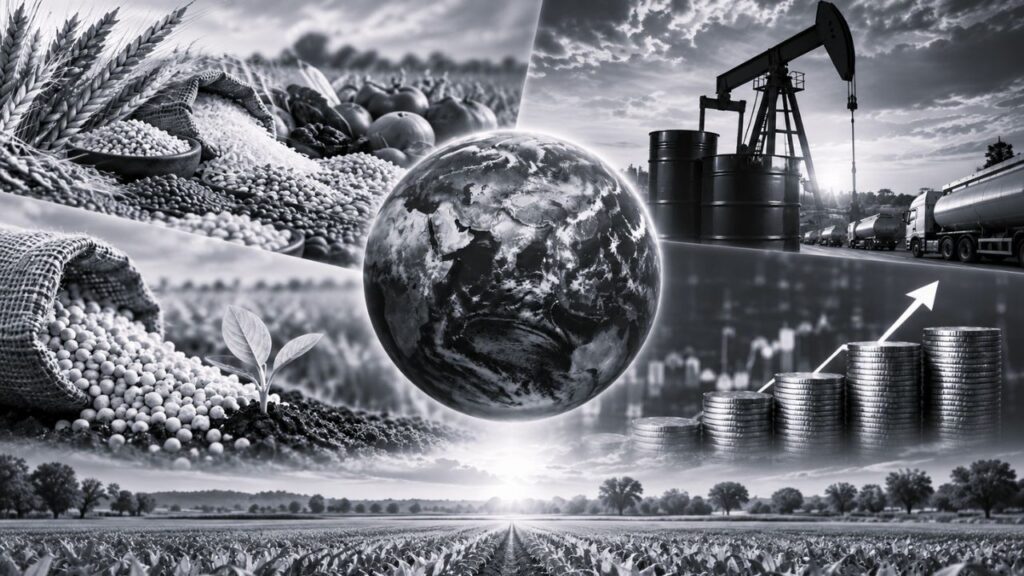
His warning comes against the backdrop of what he has described as a broader “4F crisis” – Fuel, Food, Fertiliser and Finance.
At the Partnership for Multilateralism Summit earlier in September, Jaishankar said the 4F crisis “cannot be left to itself” and called for frameworks and guardrails to address supply-chain chokepoints and disruptions. He also emphasised the importance of de-risking and diversifying supply chains.
Why fertiliser is central to the food-security challenge
The fertiliser component of the crisis is particularly important for agriculture because energy, fertiliser and food markets are closely connected.
The Food and Agriculture Organization (FAO) said in September that the global food-security situation was being affected by a series of simultaneous shocks. At a UN General Assembly ministerial meeting on fertiliser access and food security, FAO Director-General QU Dongyu said the Middle East conflict had disrupted energy and fertiliser markets.
According to FAO, the Gulf region supplies around 30–35% of global urea, 50% of sulphur exports and 20–30% of ammonia. The organisation also reported that DAP prices had risen by 26%, while an estimated 1.5–3 million tonnes of monthly fertiliser trade had been delayed.
These disruptions matter well beyond the fertiliser industry. Higher input costs can affect planting decisions, crop economics and ultimately food prices, particularly in countries that rely heavily on imported agricultural inputs.
The World Bank’s 2026 Commodity Markets Outlook had already projected that global fertiliser prices could rise substantially this year, with its April outlook forecasting a 31% increase in fertiliser prices, driven largely by higher urea prices. It warned that declining fertiliser affordability could affect farmers’ incomes and future crop yields.
Grain trade faces another layer of uncertainty
Jaishankar also pointed to potential disruptions to grain shipments from major exporting regions, particularly around the Black Sea.
The concern comes at a time when food markets are already responding to geopolitical and climate-related pressures. FAO’s September food-price monitoring update said that supply concerns, adverse weather, the Middle East conflict and Black Sea trade logistics had contributed to higher quotations for several major food commodities.
The World Bank has similarly warned that the interaction between energy prices, fertiliser costs, transport disruptions and weather risks could push food prices higher than earlier projections. Its analysis noted that higher transportation costs and reduced fertiliser application could contribute to domestic food inflation and worsen food insecurity in vulnerable countries.
The climate factor
Adding another layer to the outlook is the possibility of an El Niño-related weather shock.
Jaishankar referred to the prospect of a “super El Niño” alongside fertiliser shortages and disruptions to grain movement when discussing the potential food crisis.
Climate variability can affect agricultural production through changes in rainfall, temperature and extreme-weather events. The combination of climate-related production risks with geopolitical disruptions makes food-system planning more complex because supply shocks can occur simultaneously rather than sequentially.
The World Bank has identified El Niño conditions, rising energy and fertiliser costs, growing biofuel demand and possible trade restrictions among the factors that could push global food prices above current projections.
Why the “4F” crisis matters to the Global South
The four elements identified by Jaishankar are closely interconnected.
Fuel affects farm machinery, irrigation, transportation, storage and processing.
Fertiliser affects crop productivity and the cost structure of farming.
Food is the final outcome of a production and distribution system exposed to these pressures.
Finance determines how governments, farmers and businesses absorb shocks, maintain investment and protect vulnerable populations.
The financial dimension is particularly important for developing economies. The United Nations Sustainable Development Group said in a September policy brief that higher food, fuel and transport costs are colliding with debt burdens, climate shocks and limited fiscal space across developing countries.
The IMF has also noted that higher energy prices can feed into fertiliser and food costs, while tighter financial conditions and capital movements can add pressure on emerging and developing economies.
From food security to agricultural resilience
The emerging 4F challenge therefore extends beyond the question of whether enough food is available globally.
It raises broader questions about where food and agricultural inputs come from, how diversified supply chains are, how affordable fertilisers remain for farmers, how vulnerable countries respond to energy shocks, and whether sufficient financial resources are available to cushion disruptions.
For agriculture, this places renewed emphasis on resilient supply chains, efficient fertiliser use, diversification of input sources, climate-resilient farming practices, improved storage and logistics, and access to affordable agricultural finance.
It also highlights the importance of international cooperation. At the Partnership for Multilateralism Summit, Jaishankar argued that where supply-chain chokepoints and disruption risks emerge, countries should pursue de-risking and diversification rather than allowing vulnerabilities to accumulate.
The immediate outlook remains uncertain. Food markets have not uniformly entered a global crisis, and the eventual impact will depend on the duration and intensity of geopolitical disruptions, weather conditions, trade flows and the ability of countries to respond.
But the convergence of food, fuel, fertiliser and finance pressures is putting agricultural resilience firmly back at the centre of the global policy conversation.
For farmers and food systems, the lesson is increasingly clear: food security is not only about producing more food. It is also about securing the energy, inputs, finance, infrastructure and supply chains that make food production possible.