
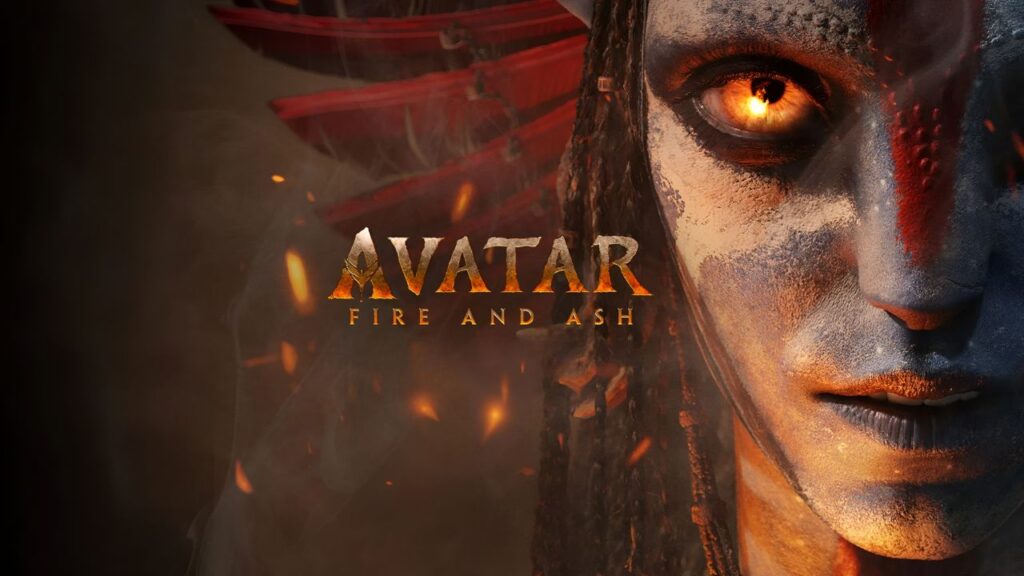


James Cameron’s Avatar franchise returns to theatres today with Fire and Ash, the third chapter in his ambitious five-film saga. Released December 19, 2025, the latest installment arrives nearly three years after The Way of Water captivated global audiences with its underwater cinematography and environmental themes. With an estimated budget exceeding $400 million, Fire and Ash represents one of the most expensive films ever made, and Cameron’s vision continues to push technological boundaries in filmmaking.
Avatar: Fire and Ash
Fire and Ash takes a notably darker turn as the Sully family grapples with profound grief following Neteyam’s death in the previous film. Jake Sully, now fully committed as a Na’vi leader, and Neytiri navigate not only their personal loss but also an unprecedented threat: the Ash People, a new Na’vi tribe that has rejected the traditional worship of Eywa.
Led by the fierce Varang, the Ash People emerge from volcanic regions of Pandora, their culture shaped by fire and devastation rather than the lush forests audiences have grown familiar with. This ideological conflict introduces moral complexity rarely seen in the franchise, as Na’vi clash against Na’vi for the first time. The film explores themes of loss, endurance, and finding hope amid devastation, with Cameron crafting what amounts to an examination of how communities survive catastrophic change.
The narrative follows Lo’ak as the story’s narrator, while Kiri’s mysterious connection to Pandora deepens in unsettling ways. Stephen Lang’s Quaritch returns as a recombinant, adding further layers to the conflict as his alliance with the Ash People creates unexpected dynamics.
Visuals, Technology and Direction
Cameron once again demonstrates why he remains cinema’s foremost technical innovator. The visual effects work in Fire and Ash pushes beyond even The Way of Water’s groundbreaking achievements. The volcanic landscapes, ash-covered territories, and fire-based sequences showcase cutting-edge CGI that creates genuinely immersive environments.
The film runs 3 hours and 17 minutes, making it the longest entry in the franchise. While some critics note the runtime feels excessive, with potential to trim 30-40 minutes without sacrificing narrative essentials, the spectacle demands appreciation on the largest possible screens. IMAX and 3D presentations enhance the experience significantly, with Cameron’s high frame rate technology delivering fluid action sequences and subtle environmental details.
The cinematography captures both intimate family moments and large-scale battle sequences with equal precision. From giant mechanized crabs deployed by the RDA forces to intimate emotional confrontations, the technical execution remains flawless.
Performances and Emotional Depth
Sam Worthington and Zoe Saldaña anchor the film with mature, emotionally resonant performances as Jake and Neytiri. Saldaña particularly shines in portraying a mother hardened by loss, her grief manifesting in strained relationships with both her family and her spiritual beliefs. The performance capture technology allows subtle emotional nuances to translate effectively, validating Cameron’s long-standing defense of the medium as legitimate acting.
Sigourney Weaver returns as Kiri, bringing vulnerability and mystery to the teenager’s expanding role. The young cast members, including Britain Dalton as Lo’ak and Trinity Jo-Li Bliss as Tuk, deliver convincing performances that ground the fantastical elements in genuine family dynamics.
Oona Chaplin makes a powerful impression as Varang, creating a complex antagonist whose motivations stem from survival rather than pure villainy. Her presence elevates the film beyond simple good-versus-evil dynamics.
Critical Reception and Box Office Trajectory
Early critical response has been mixed but generally favorable. Rotten Tomatoes reports 69% positive reviews from 210 critics, with consensus acknowledging the visual brilliance while noting narrative familiarity. Metacritic’s weighted score of 61 indicates generally favorable reception, though some reviewers express franchise fatigue with repeated story beats.
The film earned $12 million in Thursday previews domestically, with projections suggesting a $340-380 million opening weekend globally. While impressive, these numbers trail The Way of Water’s preview performance, suggesting audience enthusiasm may be cooling despite the franchise’s continued technical excellence.
Setting Up Avatar 4 and Beyond
Fire and Ash deliberately leaves narrative threads open for future installments. Cameron has confirmed that Avatar 4 and Avatar 5 depend on this film’s commercial performance, with the director stating he would “write a book” to resolve storylines if the theatrical market doesn’t support continued production.
The film expands Pandora’s geography and cultures significantly, introducing wind traders and other communities that promise further exploration in subsequent chapters. The ideological conflicts established here, particularly around differing relationships with Eywa, suggest deeper philosophical territory for future films to explore.
Final Verdict
Avatar: Fire and Ash delivers exactly what Cameron promises: a visually stunning, technically masterful return to Pandora that pushes cinematic boundaries. The emotional depth and moral complexity represent genuine growth for the franchise, even if the extended runtime and familiar narrative patterns occasionally undermine momentum.
For audiences seeking spectacle and immersive world-building, Fire and Ash justifies its theatrical experience. Cameron’s commitment to practical, performance-driven storytelling within fantastical environments continues setting industry standards. Whether it reaches the commercial heights of its predecessors remains uncertain, but as a cinematic achievement, Fire and Ash cements the Avatar franchise’s place in blockbuster history.
The film opens exclusively in theatres today, with IMAX and 3D presentations recommended for optimal experience.
Watch: Avatar: Fire and Ash