
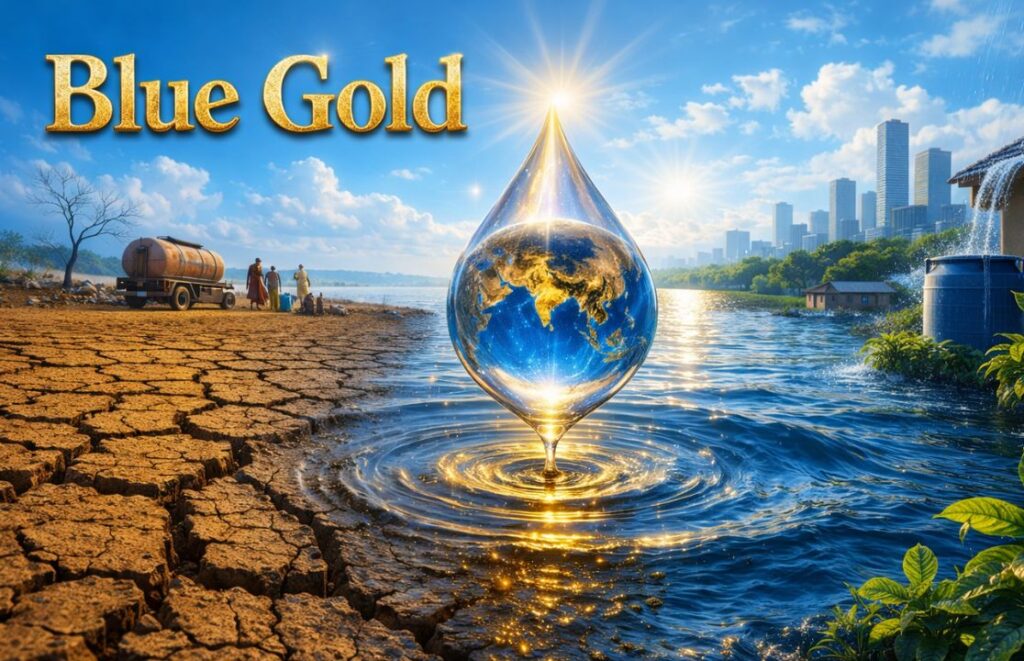


Water has always been essential to life. Today, it is also becoming one of the most valuable economic and strategic resources in the world. Often called “Blue Gold,” water is no longer seen as abundant. It is now a scarce and highly valuable asset shaping economies, policies, and everyday survival.
Across the world, cities are facing shortages, groundwater levels are declining, and climate change is intensifying stress on water systems. What was once freely available is now being managed, priced, and even contested.
Reality of Limited Freshwater
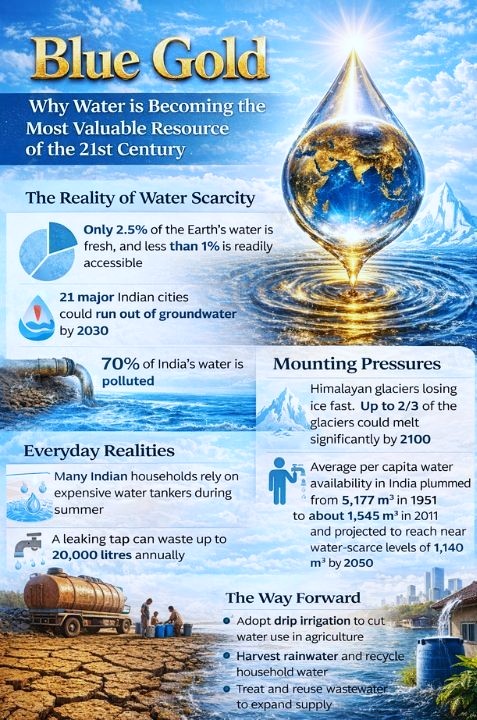
Only about 2.5 percent of Earth’s water is freshwater. Of that, less than 1 percent is easily accessible for human use. This limited share must support agriculture, industries, and domestic needs for billions of people.
India presents a stark imbalance. It has nearly 18 percent of the global population but only around 4 percent of freshwater resources. This mismatch is putting severe pressure on water availability.
Recent assessments highlight a worrying trend. Nearly 80 percent of India’s water is used in agriculture, often through inefficient methods. At the same time, around 70 percent of water is contaminated, reducing usable supply significantly.
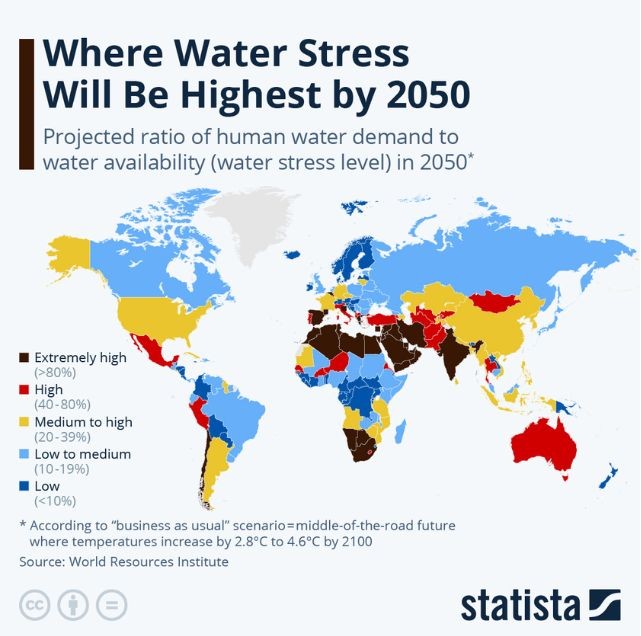
Melting Glaciers and Climate Pressure
Climate change is accelerating the water crisis. The Himalayas, often called Asia’s water tower, are witnessing rapid glacier retreat.
Studies suggest that up to two-thirds of Himalayan glaciers could shrink significantly by 2100 if global warming continues at current rates. These glaciers feed major rivers like the Ganga and Brahmaputra, which sustain hundreds of millions of people.
This creates a dangerous paradox. In the short term, melting glaciers may increase river flow. In the long term, it will reduce water availability drastically.
Water as an Economic Resource
The term “Blue Gold” reflects water’s growing economic value. It is now central to agriculture, industry, and energy production.
Agriculture consumes nearly 70 percent of global freshwater. In India, inefficient irrigation systems lead to large-scale wastage. Traditional methods use far more water compared to modern systems like drip irrigation.
Industries are also major consumers. From manufacturing to data centres, water is essential. As scarcity rises, companies are investing in water recycling and efficient usage systems.
In some parts of the world, water trading and pricing mechanisms have emerged. This indicates a shift from water as a free public resource to a regulated economic asset.
Urban Water Crisis and Inequality
Urban areas are facing growing water stress. Rapid population growth has outpaced infrastructure development.
Many cities rely heavily on groundwater extraction, which is being depleted faster than it can recharge. As a result, households increasingly depend on private water tankers, raising costs.
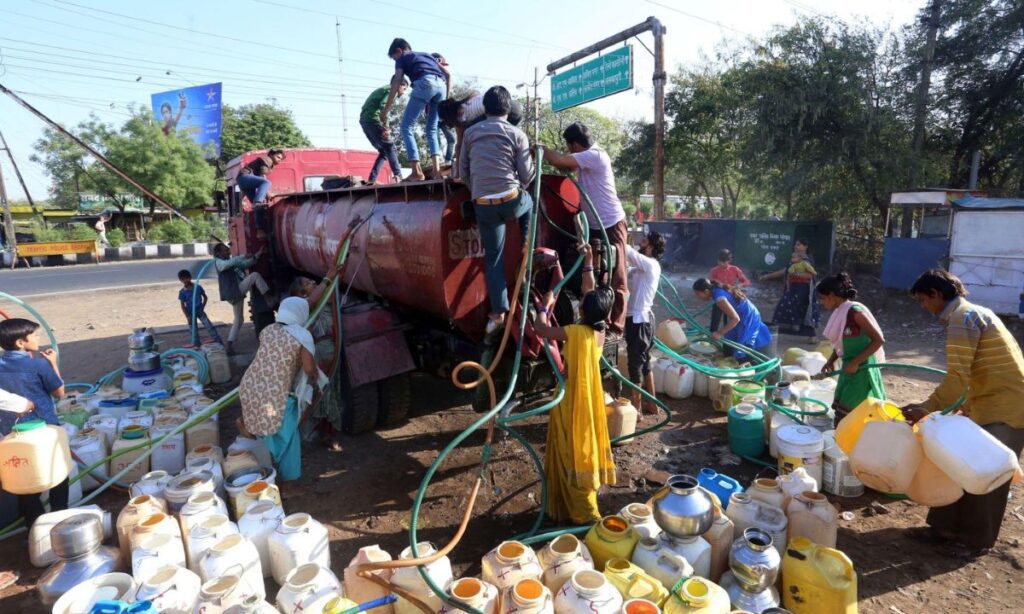
Water scarcity also deepens inequality. Poor communities often pay more for water and have limited access to clean sources.
In rural areas, declining groundwater forces people, especially women and children, to travel long distances to collect water. This impacts education, health, and livelihoods.
Hidden Cost of Everyday Wastage
Water scarcity is not just a policy issue. It is also shaped by everyday behaviour.
Small actions can make a large difference:
- A running tap while brushing can waste around 30 litres daily
- Leaking taps can waste thousands of litres each year
- Using buckets instead of showers can cut water use significantly
Estimates suggest that a single household can save between 10,000 to 25,000 litres of water annually through simple conservation practices.
Rainwater harvesting and reuse of household water can further reduce dependency on external sources.
Groundwater Depletion and Falling Availability
India’s groundwater situation is critical. Data shows that per capita water availability has declined sharply from 5,177 cubic metres in 1951 to around 1,545 cubic metres in 2011. It is projected to fall further to nearly 1,140 cubic metres by 2050, approaching water-stressed levels.
Over-extraction, combined with poor recharge systems, is pushing many regions towards crisis.
Even household-level data reflects this strain. While many homes have access to piped water, supply remains inconsistent, forcing reliance on stored or purchased water.
Solutions: From Crisis to Conservation
Addressing the water crisis requires coordinated action across all levels.
1. Efficient Water Use
Modern irrigation systems like drip and sprinkler methods can reduce water consumption significantly.
2. Rainwater Harvesting
Capturing rainwater at household and community levels can recharge groundwater and reduce dependency.
3. Wastewater Treatment
Recycling wastewater can create an additional source of usable water, especially in cities.
4. Policy and Regulation
Strong governance is needed to regulate groundwater extraction and promote sustainable practices.
5. Behavioural Change
Public awareness is crucial. Conservation must become part of daily habits.
Conclusion: Every Drop is an Investment
Water is no longer just a natural resource. It is a defining factor for economic stability, social equity, and environmental sustainability.
The concept of “Blue Gold” reflects a deeper reality. Water is becoming as valuable as traditional resources like oil or minerals.
The choices made today will determine the future. Whether water becomes a source of conflict or a foundation for sustainable growth depends on collective action.
Saving water is not just responsibility. It is an investment in the future.